

BOGOTA (AP) - Colombia's government rejected Ecuador's President Daniel Noboa's proposal to eliminate tariffs on Colombian imports, citing it as "deliberate interference" in Colombia's ongoing electoral process. The situation arose following Noboa's discussions with Colombian presidential candidate Abelardo de la Espriella, during which he expressed a commitment to jointly combat narcoterrorism and announced plans to eliminate a security tax on Colombian goods starting June 1.
In response, Colombia's Foreign Ministry issued a statement on Saturday, emphasizing that the repeal of tariffs imposed by Ecuador on bilateral trade was based on a resolution from the Andean Community of Nations. The ministry rebuffed Noboa's portrayal of his actions as a "goodwill gesture," categorizing his remarks as an "intrusion by a foreign leader" and a violation of the principle of non-intervention in internal affairs.
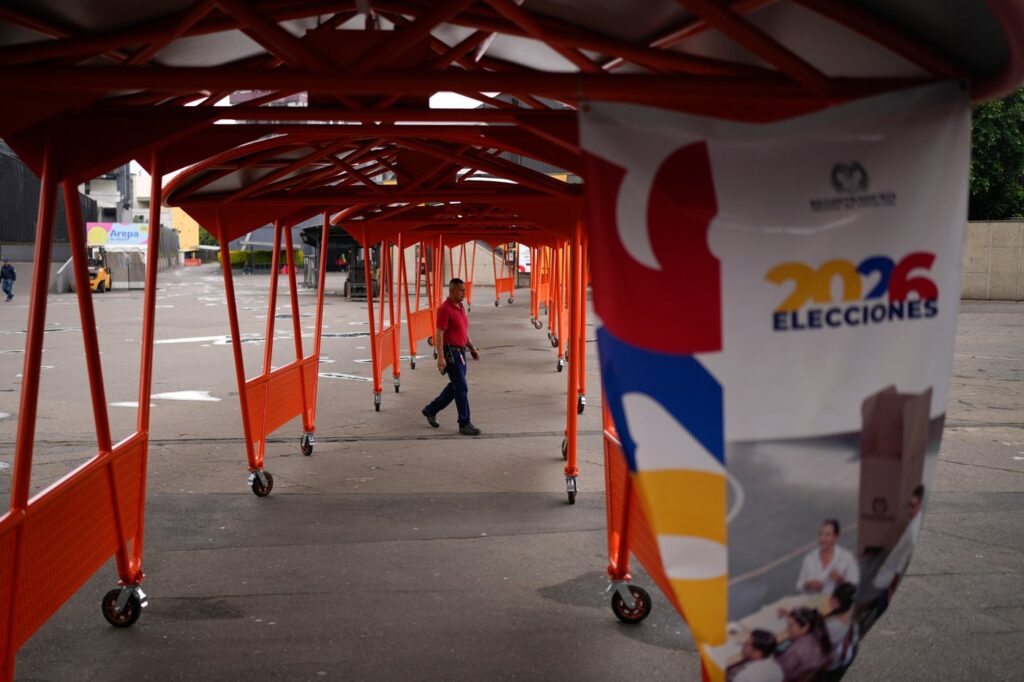
Colombians are set to vote on Sunday to elect a successor to President Gustavo Petro, who has been in office since 2022. Abelardo de la Espriella, representing the political movement Defenders of the Homeland, is currently among the frontrunners in the election polls. Noboa did not clarify how his decision regarding tariffs would stand if the ruling party candidate, Iván Cepeda, were to win the election.
The trade conflict between Ecuador and Colombia escalated in January when President Noboa implemented a security tax on Colombian imports, citing inadequate border control and a significant trade deficit exceeding $1 billion. The tariff, which started at 30%, was gradually increased to 50% before reaching 100%. Just days before Noboa's announcement regarding the proposed tariff elimination, he stated the tax would be reduced to 75% effective June 1.
In retaliation, the Petro administration imposed reciprocal tariffs of up to 75% on Ecuadorian products and banned energy sales to Ecuador, intensifying the trade tensions between the two nations. In light of these ongoing issues, both countries summoned their ambassadors for discussions.
Earlier this month, the Andean Community of Nations determined that the reciprocal tariffs must be abolished, asserting that they obstruct free trade. The organization issued a deadline for both countries to comply with this mandate and is currently evaluating appeals against the resolution.








