

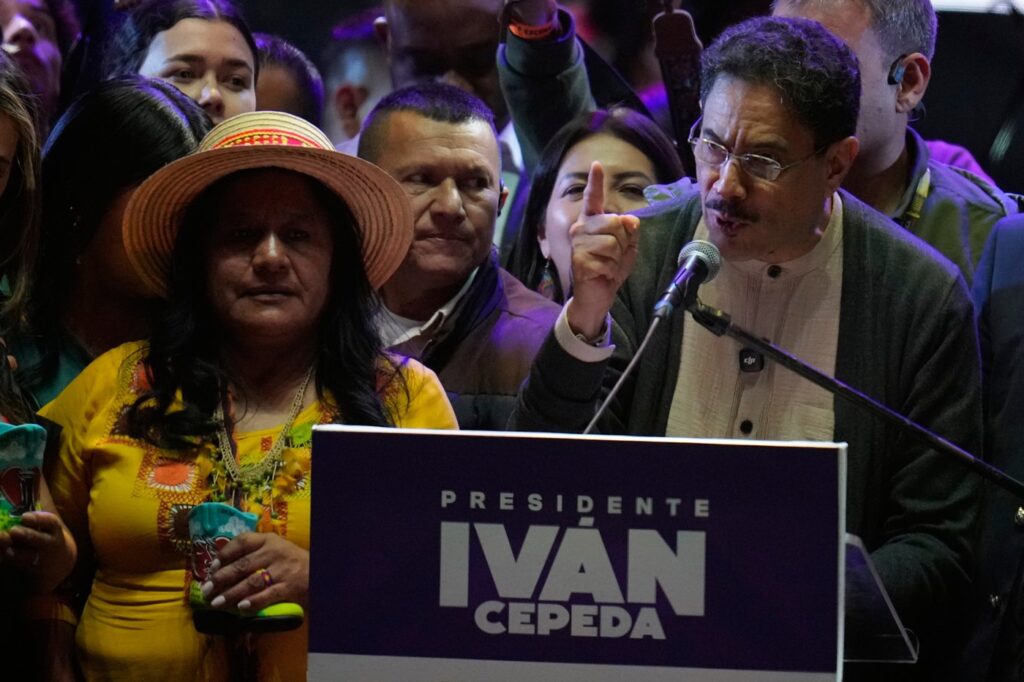
BOGOTÁ, Colombia (AP) Colombians are voting this Sunday in the first round of the presidential election, which presents a significant decision-making moment for the nation. The election is characterized by starkly different visions for achieving peace in a country that has faced decades of armed conflict. This electoral process serves as a referendum on the policies of the outgoing President Gustavo Petro, occurring exactly ten years after Colombia signed a historic peace agreement with the Revolutionary Armed Forces of Colombia (FARC).
The peace agreement was initially viewed as a hopeful step towards ending the long-standing violence, but the resurgence of violence in recent years has raised serious concerns. In the lead-up to the elections, Colombia has witnessed an alarming increase in violent incidents, including drone strikes and armed attacks. Tragically, the assassination of 39-year-old political hopeful Miguel Uribe Turbay at a rally last June underscores the grave risks associated with the current political climate.
Among the 14 candidates on the ballot, the election has narrowed to a three-horse race featuring significantly divergent approaches to the issue of peace. Senator Ivan Cepeda, a well-known ally of President Petro, has emerged as a frontrunner in the polls. Cepeda is committed to advancing Petro's "total peace" initiative, which aims to negotiate with remaining rebel groups, despite criticisms suggesting that past peace efforts have often failed due to exploitation by criminal organizations.
Against Cepeda, Abelardo de la Espriella and Paloma Valencia advocate for more aggressive measures against armed groups. De la Espriella, a controversial lawyer known as "The Tiger," is gaining popularity for advocating a heavy-handed approach similar to El Salvador's tactics against gangs, which have sparked debates over potential human rights violations. Valencia, a political protégé of former president Álvaro Uribe, aligns herself with a history of strong-arm tactics used during Uribe's administration to combat FARC rebels, even at a significant civilian cost.
Both de la Espriella and Valencia have expressed admiration for former U.S. President Donald Trump's aggressive policies towards Latin America, advocating for firmer crackdowns on criminal organizations, reflecting a broader trend in regional politics. The current election dynamics suggest that if no candidate achieves at least 50% of the vote—a rare occurrence in Colombian elections—the top two candidates will face a runoff in June.
Public opinions on how to tackle violence and the overarching conflict remain divided. Maria Eugenia, a 57-year-old seamstress in Bogotá, expressed support for an all-out offensive against the growing number of criminal groups, indicating a willingness to accept potential collateral damage for the sake of peace and stability. While acknowledging the complexities of such an approach, she believes that decisive action is necessary to address ongoing violence in rural areas.
In contrast, 26-year-old Cristian Morales expressed skepticism towards aggressive confrontation strategies. He believes that iterating on Petro's peace plans is a safer route to long-term resolution rather than a swing to more extreme tactics. Morales emphasizes the importance of dialogue to resolve underlying issues, arguing that seeking solutions through discussion rather than armed conflict is essential for lasting peace.
As the election unfolds, Colombia grapples with critical choices for its future, as candidates' varying strategies reflect deep societal divisions on how best to achieve peace in a nation still haunted by its violent past.








