

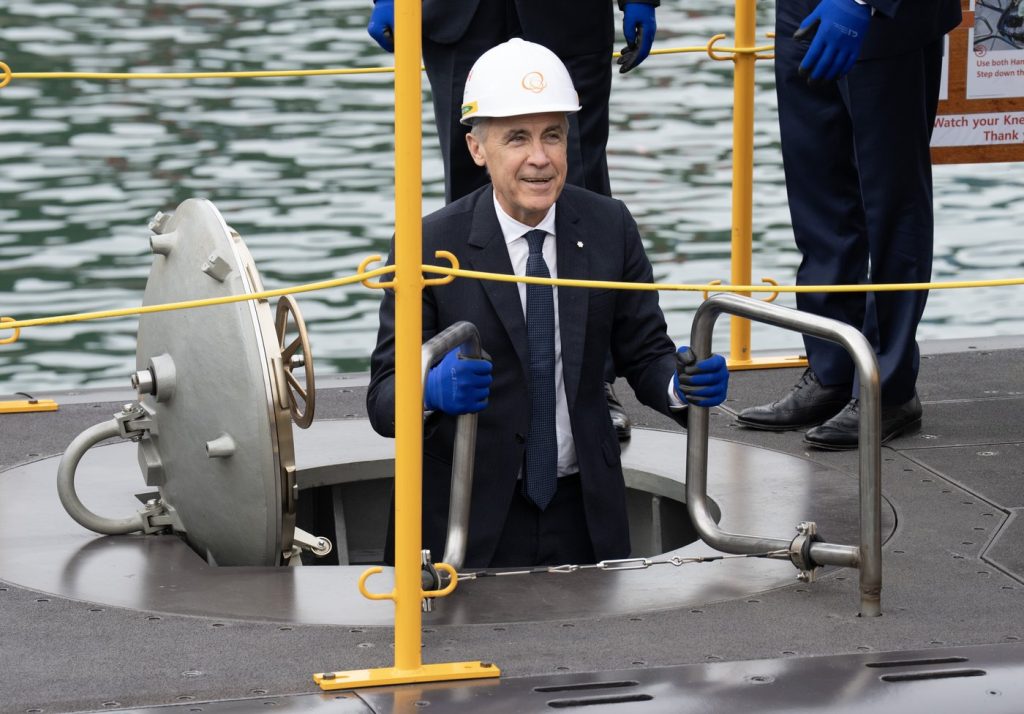
The competition to construct Canada's next submarine fleet is nearing its conclusion, with the federal government evaluating two rival bids for the substantial contract, expected to be worth tens of billions of dollars. The two contenders, South Korea's Hanwha Oceans and Germany's TKMS (ThyssenKrupp Marine Systems), have engaged in a fierce competition to supply the Royal Canadian Navy with approximately 12 submarines.
This procurement process has progressed unusually quickly, with reports indicating that the government’s internal analysis of the bids is likely complete. TKMS CEO Oliver Burkhard remarked on the competitive nature of the process, expressing his readiness and excitement for the potential outcome.
Prime Minister Mark Carney’s government is propelling the submarine project forward at an unprecedented speed for such a significant procurement initiative. Secretary of State Stephen Fuhr, responsible for military equipment purchasing, mentioned that a decision on the winning bid is expected by the end of June, potentially marking one of the largest military procurements in Canadian history accomplished within a year.
Traditionally, procurement projects for major naval combat ships extend beyond five years. However, Burkhard noted that Canada's current pace is remarkable—“light speed”—setting a precedent for similar projects in other nations, focusing on the economic benefits associated with submarine purchases.
The German bid emphasizes strengthening the NATO alliance, with promises of interoperability with German and Norwegian fleets. Burkhard asserts that choosing TKMS represents a proven approach rather than a promise, referencing the company’s extensive experience in supplying NATO’s conventional submarine fleet.
On the other hand, Hanwha, although a less established player in the global submarine market, is pushing aggressively to make its name known. CEO Glenn Copeland described the company's ambitions to provide diverse military hardware for Canada, comparing its readiness to household names like LG and Hyundai. The South Korean firm has launched an expansive advertising campaign in Canada, aiming to build brand recognition while touting promises of speedy delivery and significant economic development.
Hanwha claims its bid, valued by KPMG at $60 billion in economic opportunities, would generate 22,500 full-time jobs annually and produce $94 billion in GDP. In contrast, TKMS has recently revised its economic projections, pledging $160 billion in economic activity, $86 billion in GDP, and over 650,000 jobs throughout the project duration.
As Canada races to replace its aging fleet of four Victoria-class submarines, which are expected to be decommissioned by 2035, both bidders have committed to aggressive delivery timelines. Hanwha proposes to deliver four submarines by 2034, with subsequent deliveries of one submarine each year thereafter. Although TKMS initially projected its first delivery for 2034, it has recently adjusted its timeline to offer four submarines by 2036 to accommodate its commitments to Germany and Norway.
The public discourse around the bidding process has focused more on geopolitical alliances and economic advantages rather than the specific capabilities of the submarines themselves. Earlier this year, the Canadian government extended the bid timeline unexpectedly and urged companies to consider manufacturing initiatives that could positively impact Canada’s automotive sector.
Both companies have initiated partnerships with Canadian firms, but Hanwha has engaged in a broader outreach, targeting various sectors, including steel manufacturing and automotive parts. This includes a significant agreement with Algoma Steel in Sault Ste. Marie, which involves substantial financial commitments. Conversely, TKMS emphasizes the quality and strategic relevance of its partnerships, highlighting relationships with premier Canadian companies.
Overall, as the end of June approaches, the outcome of this submarine procurement could reshape Canada’s naval capabilities and deliver extensive economic benefits, anchored in the promising future of local defense and manufacturing sectors.








