

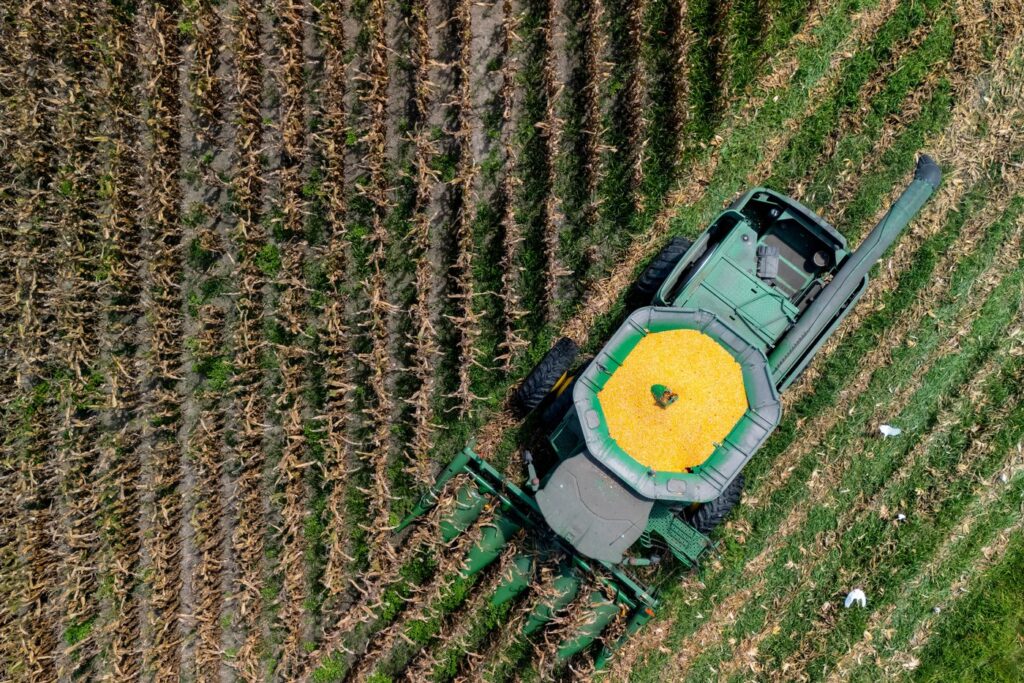
NEW YORK (AP) - On Monday, President Donald Trump announced adjustments to tariffs on certain imports, affecting steel, aluminum, copper, and agricultural equipment. This move included a reduction in tariffs on farming equipment and the extension of these lower rates to additional categories of industrial equipment.
In an executive order, Trump reduced the tariffs on agricultural machinery, such as combines and harvesters, as well as heating, ventilation, and air conditioning (HVAC) systems, from 25% to 15%. Additionally, he broadened the existing category of industrial equipment that is subject to a 15% tariff to encompass mobile machinery like bulldozers and forklifts, particularly when imported from countries that maintain a trade agreement with the United States.
The executive order specified that countries utilizing at least 85% melted and poured or smelted and cast steel or aluminum by weight could qualify for a reduced duty rate of 10%. This policy aims to promote the use of U.S. metals by foreign manufacturers. The new tariff rates are effective immediately and are set to remain in place until the end of 2027.
Trump justified these temporary modifications, stating, "In my judgment, this temporary modification appropriately accounts for these products' roles in productive economic activity in the United States." Tariffs on copper, steel, and aluminum were initially implemented during Trump's first term in 2018 under Section 232 of the Trade Expansion Act of 1962. This legislation allows for tariffs on imports that are considered a threat to national security, and Trump renewed these tariffs in April 2025.
Since the initial imposition of tariffs, Trump has made numerous adjustments to tariffs on metal products. For example, in June 2025, he raised nearly all tariffs on steel and aluminum imports from 25% to an aggressive 50%. Furthermore, in April 2026, he established a flat 50% tariff rate on goods that are made entirely or almost entirely of aluminum, steel, or copper, such as steel coils and aluminum sheets. He also instituted a 25% tariff for derivative products made predominantly from these metals.
Experts have weighed in on the political implications of these tariff adjustments. Barry Appleton, a law professor and co-director of New York Law School’s Center for International Law, suggested that these changes are more politically motivated, aimed at addressing concerns in the agricultural sector ahead of the midterm elections. He highlighted a troubling trend in the farming community, noting, "Farm bankruptcies are soaring, farm sentiment is declining, and Republican senators are openly warning their party is heading toward midterm losses in key agricultural states." Appleton concluded that this proclamation serves as a strategic gesture from the White House to gain favor with voters in agricultural regions before the polls close.
In summary, President Trump’s latest executive order alters key tariff rates affecting essential sectors, including agriculture and industrial machinery. The adjustments are designed to balance economic interests and reflect the current political landscape as the midterm elections approach.








