

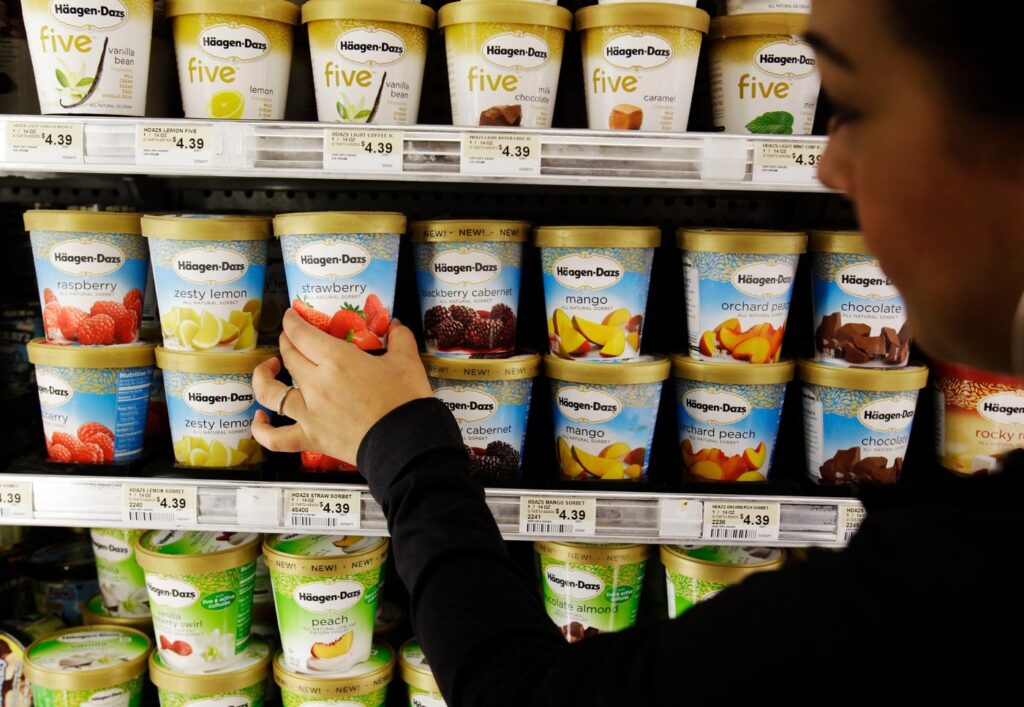
HONG KONG (AP) — General Mills has announced the sale of its Häagen-Dazs ice cream shops in mainland China to an investor group that includes Ningji, a Chinese tea brand. This strategic move enables the buyers to have exclusive rights to market and operate Häagen-Dazs brand ice cream in shops and gifting businesses throughout mainland China. General Mills, headquartered in Minneapolis, will maintain its role as a supplier of Häagen-Dazs ice cream to Chinese retail and food service sectors.
No financial details regarding the transaction have been disclosed, but the deal is projected to finalize by the end of 2023. General Mills did not provide immediate information regarding the total number of Häagen-Dazs stores in China when requested on Tuesday. However, the company noted in its latest annual report that it operates 332 ice cream parlors globally.
Ningji, the buyer in this arrangement, has quickly expanded, operating around 3,000 retail tea outlets in China since it launched its chain of stores in 2021. The company has garnered investment from prominent backers such as ByteDance, the creator of TikTok, and Shunwei Capital, which positions it as a notable player in the Chinese market.
Yaling Jiang, an independent consumer analyst, commented on Häagen-Dazs' pricing strategies in China, indicating that the brand has been charging premium prices while failing to deliver adequate product value and cultural relevance. She noted that the brand's rich, traditional ice cream offerings with higher fat content seem to have "passed their peak" in a market increasingly favoring low-fat and airy gelato options.
The sale comes amid a broader trend where foreign companies are transitioning ownership of their operations to Chinese investors. This shift is a response to the stagnation of consumer confidence and the slowdown of economic growth in China. The changing market dynamics have encouraged companies to adapt and rethink their strategies.
In line with this trend, Starbucks announced in November that it would enter a joint venture with Boyu Capital, a Chinese private equity firm. This deal is valued at approximately $4 billion and allows Boyu Capital to acquire up to a 60% stake in Starbucks' operations in China. Such moves reflect the corporate strategy by foreign brands to better navigate the complexities of the Chinese market.
Additionally, in February, Restaurant Brands International, the parent company of the Burger King franchise, established a joint venture with the Chinese investment firm CPE for operating and expanding the Burger King restaurant chain in China. CPE’s investment in this venture is about $350 million, giving it approximately 83% ownership of the business.
Overall, the sale of Häagen-Dazs ice cream shops signifies a significant shift in brand ownership dynamics within the Chinese market and illustrates the growing influence of local investors in the region. As foreign companies adapt to the evolving consumer landscape, the results of these changes will likely shape the future of premium brands in China.








