

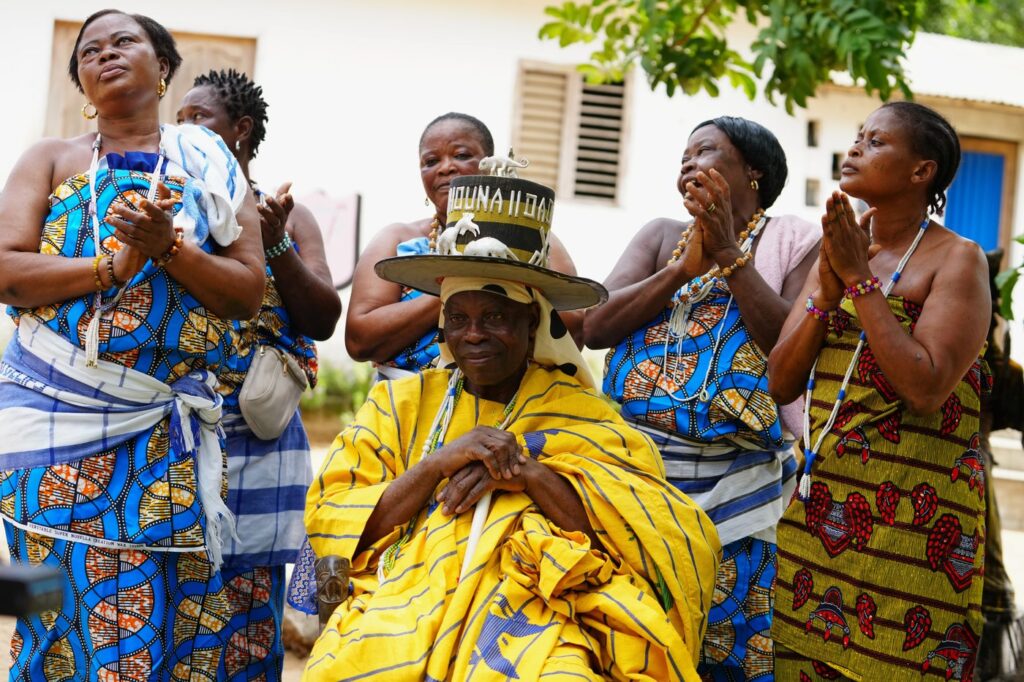
In Ouidah, Benin, democracy found its footing in 1991, a significant year when military dictator Mathieu Kérékou lost an election he had orchestrated. This unexpected outcome was particularly notable given Kérékou's long-standing authoritarian rule and his prior efforts to suppress Voodoo, a central aspect of the country's cultural identity.
After Kérékou's defeat, opposition leader Nicéphore Soglo emerged victorious, bringing Voodoo, or Vodun, back into the fold as a celebrated part of national heritage. Soglo emphasized the importance of tolerance, a value that Kérékou would later attempt to claim when he returned to power in 1996 through a successful reelection bid. Fast forward two decades, Benin has become a beacon of democracy within a region frequently referred to as “the coup belt,” particularly in light of numerous military coups since 2020. The recent inauguration of President Romuald Wadagni on May 24, who replaced Patrice Talon after two terms, marks a continuation of this democratic tradition.
Benin’s resilience as a democracy is closely linked to the enduring presence of the Vodun religion, which Kérékou initially sought to eliminate but ultimately could not suppress. The Vodun community, consisting of dedicated practitioners and scholars, asserts that no authoritarian leader can fully extinguish faith, especially in a nation where Voodoo is deeply ingrained in the cultural fabric. Daagbo Hounon Houna II, the Vodun supreme leader, noted, “The return to democracy recognized the existence of traditional religion," highlighting Kérékou's eventual recognition that African religions deserved respect.
Kérékou’s journey from military major to Marxist-Leninist dictator impacted how he engaged with various religions, including Vodun. Initially, he dismissed Vodun as primitive while simultaneously employing spiritual advisors known as marabouts. The backlash from Vodun practitioners was palpable, with many believing that Kérékou’s fear of being cursed led to his eventual accommodations of Vodun practices. Houna II observed that “the more you attack their religion, the more you raise their spirits,” emphasizing the unyielding connection between Voodoo and the people of Benin.
About half of Benin's approximately 14 million population identifies as Christian, according to the U.S. State Department. However, prominent politicians like Mahougnon Kakpo assert that Vodun remains the “first religion of all Beninese.” Kérékou himself, despite his public stances, is said to have engaged in Vodun practices. Vodun’s animistic nature celebrates the spirit world, utilizing ceremonies that include animal sacrifices, incantations, and vibrant dance rituals. Its origins trace back to Ouidah, which served as a significant port during the trans-Atlantic slave trade and now hosts prominent Vodun leaders.
Houna II elaborated on the enduring spirit of Vodun, indicating that its practitioners were unafraid to confront authority to preserve their ancestral traditions, regardless of the costs involved. Kérékou, despite initially attempting to consolidate power over religious authority, experienced significant pushback, which has led to his portrayal as “the chameleon” among the people. While other postcolonial leaders in Africa, such as Gnassingbé Eyadéma of Togo and Mobutu Sese Seko of Congo, successfully established personality cults while suppressing traditional religions, Kérékou ultimately failed against the resilience of Vodun.
In 1991, Kérékou’s political defeat represented a watershed moment in West African history, as it was the first instance of a sitting president being ousted through a democratic vote. When he returned as a civilian democrat in 1996, he embraced Vodun, culminating in the recognition of a national Vodun holiday every January 10. His efforts to court the Vodun vote in Ouidah evidenced a shift in his political strategy, influenced by the deep-rooted connection Beninese people have with their traditional beliefs.
In light of Vodun’s historical significance, adherents and practitioners vividly recall the struggles faced during the slave trade and the subsequent resilience demonstrated in acts of rebellion. The culture and practices of Vodun extend beyond Benin, influencing followers in the Caribbean, where similar Vodou traditions developed. The perseverance of Vodun amidst adversity reflects a powerful narrative of resistance and cultural identity that continues to shape Benin today.








