

OTTAWA – A recent study published by the Canadian Climate Institute has raised concerns regarding Ottawa's energy deal with Alberta, asserting that it will have minimal impact on reducing Canada’s greenhouse gas emissions. The analysis indicates that the benefits associated with the Alberta memorandum of understanding (MOU) are insufficient to counteract the anticipated increase in oil production due to systemic inefficiencies in the revised carbon pricing framework in Alberta.
Dave Sawyer, the principal economist at the Canadian Climate Institute and the author of the study, emphasized the need for a more detailed examination of the MOU. He cautioned that the newly established "tightening rates"—which dictate the permissible emissions levels for industries under Alberta's carbon pricing system—could jeopardize the overall effectiveness of the environmental policies in place. Sawyer urged policymakers to reconsider whether these tightening rates genuinely serve to reduce emissions or merely provide a façade of compliance.
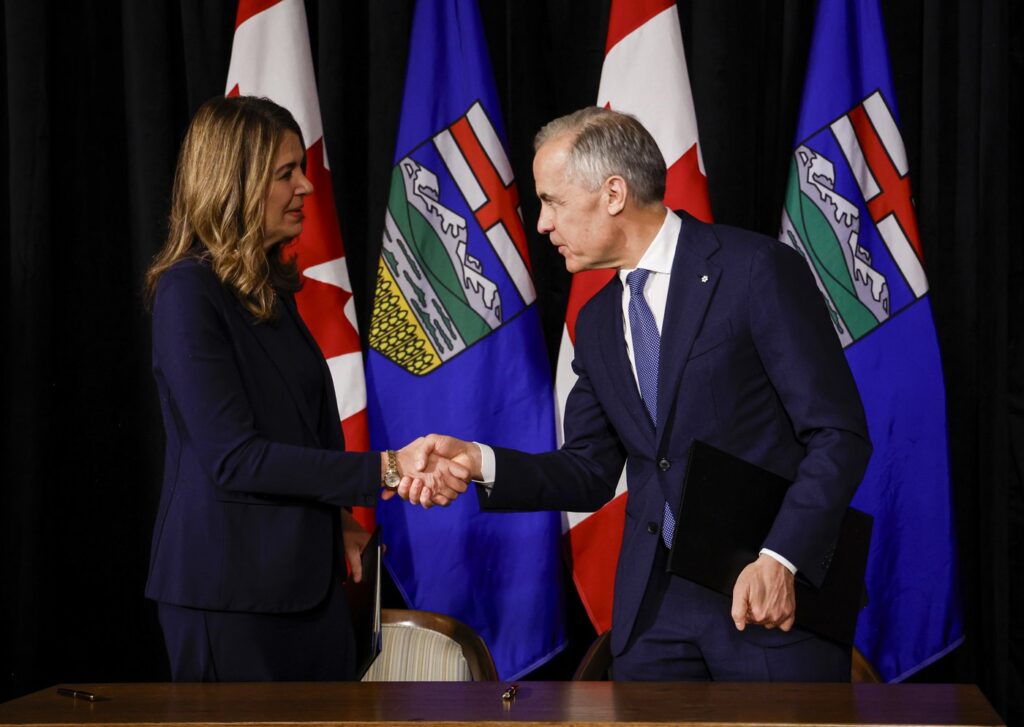
In May 2026, Prime Minister Mark Carney and Alberta Premier Danielle Smith signed an implementation agreement that aims to elevate Alberta's effective carbon price to $130 per tonne by 2040. Concurrently, the headline price is slated to reach $100 per tonne by 2027, with an incremental increase to $130 by 2035. The disparity between the effective carbon price and the headline price arises from how companies accumulate credits to adhere to their emission limits, with the new agreement offering more leniency on emissions compared to the previous federal carbon price backstop.
Despite Ottawa promoting this new pricing model as a stronger alternative, the Canadian Climate Institute's research points out that it is less stringent than the previous federal standard. The current system is constructed in such a way that market forces are unlikely to drive carbon credit prices high enough to fulfill the government's emission reduction objectives. This misalignment could dissuade investments needed for cutting emissions, leading to an oversupply of carbon credits after 2030 as producers capitalize on the relaxed benchmarks.
The study suggests that this oversupply may strip the market of its effectiveness, causing the carbon pricing system to maintain prices without effectively encouraging emission reductions. Instead of fostering actual cuts in greenhouse gas outputs, the system risks resulting in mere paper compliance, misleading stakeholders regarding the progress of emission control efforts.
One proposed solution to address the anticipated credit surplus includes the potential for Ottawa to buy credits in order to stimulate scarcity in the market. However, Sawyer has expressed skepticism about this approach, declaring that it may not be worth the investment and could see funds wasted on ineffective strategies.
Following the initial reports regarding the MOU's details, the market price for carbon credits briefly surged to $40 per tonne—up from a low of $17 per tonne the previous year—before subsequently declining to a range of $30 to $35 per tonne after full announcement of the agreement's specifics. The report contends that this policy intervention ultimately does little to amend Canada’s long-term emissions trajectory, effectively leaving it unchanged from before the MOU was formalized and resulting in marginal adjustments to a system already considered weakened.








