

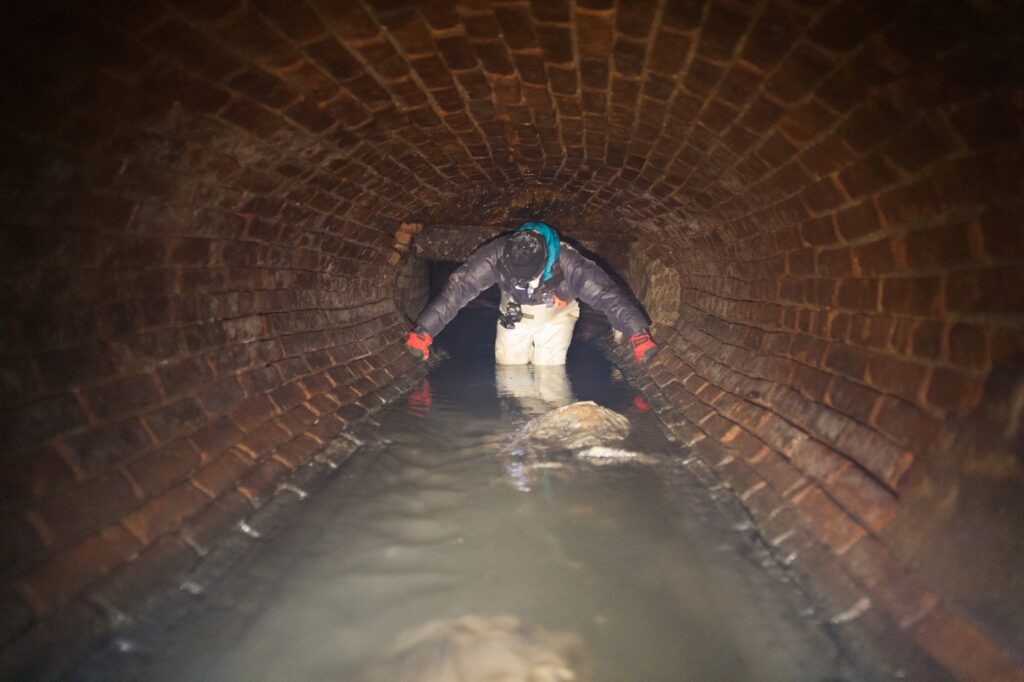
Former urban explorer Steve Duncan, now 48 and residing in Maryland, has recently reflected on his experiences navigating New York City's extensive sewer system. He emphasized that while the typical concerns like rats, odors, and germs are present, the true nuisance was the cockroaches. "They’re all over the place, crawling on walls, dropping down on you," Duncan shared, recalling the unpleasantness of his underground adventures.
Duncan's remarks come after surveillance videos captured groups entering and exiting the sewer system in Brooklyn and Queens, prompting police investigations. Law enforcement has stated that the activity, although illegal and dangerous, does not pose a public threat. The city boasts a staggering 7,400 miles (12,000 kilometers) of sewer pipes, some of which house large, 19th-century sewer mains that can exceed 6 feet (1.8 meters) in diameter. These spaces are often adorned with handmade bricks and elegant arches, stemming from the naturally occurring waterways that were repurposed into sewers due to industrialization.
Exploring these subterranean environments involves considerable planning. The groups visible in the surveillance footage appeared to have spent up to three hours underground, a duration that may seem long but is manageable given the conditions. Duncan noted that rainfall before their outings would have reduced waste flow, making early morning excursions more optimal for exploration. "Heavy rainfall days earlier would have mostly cleared the system," he added, indicating that the explorers were likely informed about their timing.
Despite the thrill, Duncan warned of the dangers that lurk in sewer environments rich with pathogens. He recounted his own experiences of landing in the hospital due to severe infections gained from his explorations, which ultimately led him to retire from such activities. Seasoned explorers often carry gas meters to check for hazardous gases, including flammable hydrogen sulfide produced during decomposition. He mentioned that while the odor of a well-functioning sewer is not as overwhelming as anticipated, it can turn foul in certain circumstances, smelling "like death."
The motivations behind these underground excursions have raised suspicions among residents. Many of those seen on the videos were equipped with waterproof hip waders, headlamps, and tools that some believed indicated sinister intentions. Engineering professor Magued Iskander pointed out that sewers can act as exit or entry points for various activities, hinting at potential criminal usage. Historically, there have been instances of treasure hunters in sewer systems; for example, three men were charged last year for searching for gold and valuables in a Brooklyn sewer, and previous incidents involved city workers emerging from maintenance holes under similar circumstances.
Retired New York Police Department detective David Sarni highlighted the vulnerabilities of the city's infrastructure, questioning whether such pathways could be exploited for harmful activities. He emphasized a need for vigilance concerning the accessibility of important urban systems. In contrast, Duncan, while acknowledging these concerns, clarified that neither greed nor malice drove his explorations. Rather, he and many others from his generation were motivated by the desire to discover and experience the city from a different perspective. Throughout his travels beneath cities like New York, London, and Paris, he found little of monetary value but was enriched by the unique insights gained from such daunting endeavors.
In sum, Duncan's reflections bring to light not only the allure and challenges present in the urban exploration of sewer systems but also the broader implications regarding safety and urban infrastructure within New York City.








