

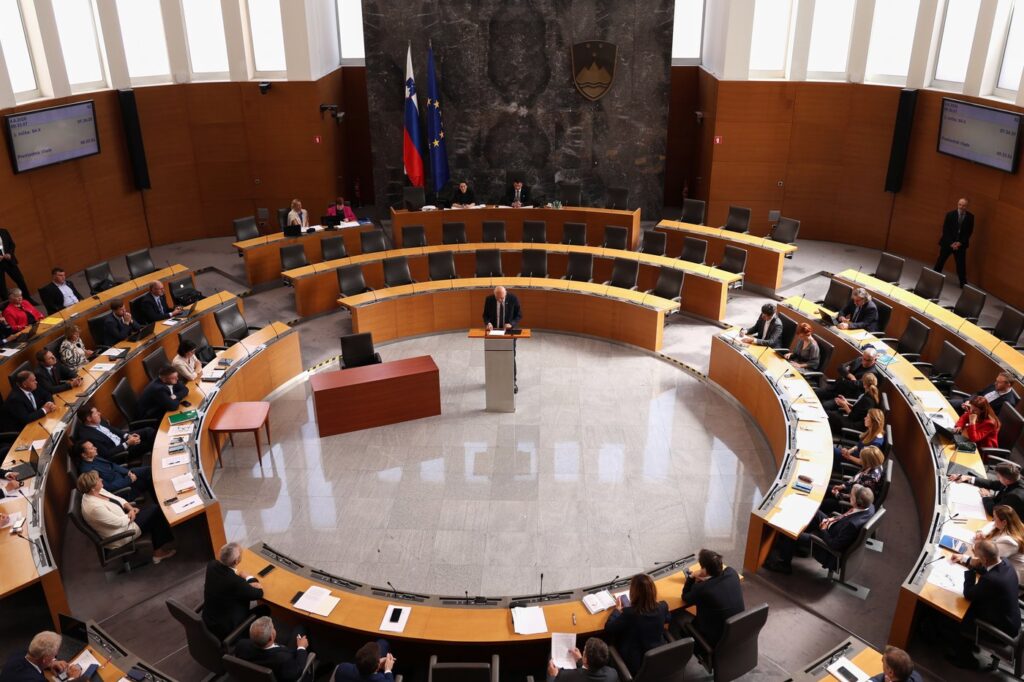
LJUBLJANA, Slovenia (AP) — Slovenia’s parliament approved a new government led by Prime Minister Janez Jansa on Thursday, which signifies a notable shift towards the political right in the European Union member state. The vote concluded with the support of 49 lawmakers against 30 in the 90-member assembly.
The approval followed a parliamentary election in March 2022 that resulted in no outright winner. The Freedom Movement, led by former liberal Prime Minister Robert Golob, garnered the most votes but could not secure a parliamentary majority. Consequently, Jansa, aged 67, was appointed as Prime Minister last month, leading the populist Slovenian Democratic Party (SDS) to form a coalition government with several right-leaning parties. The government also received support from the Truth party, which gained prominence as an anti-vaccination movement during the COVID-19 pandemic.
This marks Jansa's fourth term in office. A seasoned politician, he is known for his admiration of former U.S. President Donald Trump and had previously allied closely with former populist Hungarian Prime Minister Viktor Orbán, who faced a significant defeat in the April elections. Jansa has historically maintained a strongly anti-immigrant stance, particularly during the 2015 migration crisis in Europe. His previous tenure from 2020-2022 was marked by accusations of undermining democratic institutions and press freedoms, which sparked protests and drew scrutiny from the European Union.
In his address following the parliamentary vote, Jansa emphasized that his government would work “for all of Slovenia and for all generations.” He expressed confidence in his 15-member Cabinet, highlighting their “rich experience.” Jansa made commitments to lower taxes and criticized what he described as an “incredibly overblown bureaucracy” in Slovenia, compared to other European counterparts. He also extended an invitation to opposition parties for collaborative efforts on significant issues moving forward.
The newly appointed Cabinet includes Tone Kajzer, who served as Slovenia's ambassador to the U.S., now named as the foreign minister. Franci Matoz, Jansa's former legal advisor, has been appointed interior minister, a decision that has met with public outcry. Jansa, who supports Israel, has been vocal against the previous Golob government's decision to recognize a Palestinian state, and his administration is anticipated to mend the currently strained relations between Slovenia and Israel.
The March 22 election was shrouded in controversy, including allegations of foreign influence and corruption, reflecting the deep political divide in Slovenia, where approximately 2 million citizens oscillate between liberal and conservative ideologies. The new government's direction under Jansa's leadership could lead to intensified political polarization as it navigates through pressing national and international issues.








