

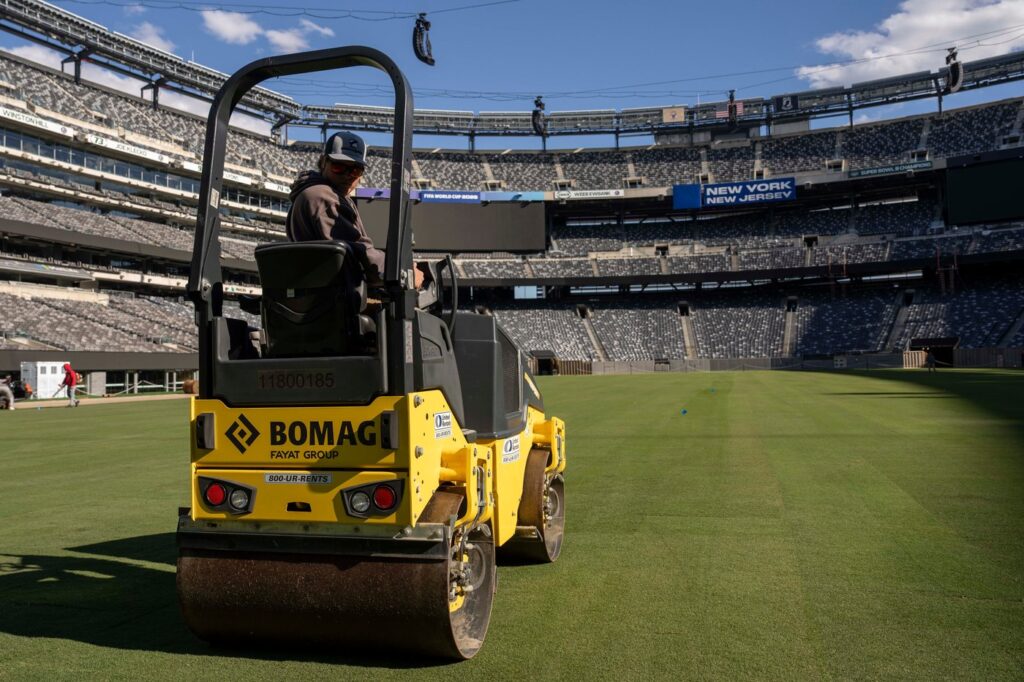
The World Cup pitches are extensive and meticulously prepared, aiming for an aesthetic that doesn’t distract from the game itself. The objective of the pitch crews is for fans to enjoy the matches without noticing the conditions underfoot. Uneven patches and divots can influence player performance, making the condition of the pitch a priority. John Sorochan, a professor of turfgrass science at the University of Tennessee, emphasizes the importance of the pitch managers' work in ensuring both beauty and functionality.
Efforts from Tennessee and Michigan State over the past eight years have focused on developing a hybrid grass suitable for the 16 stadiums in Canada, Mexico, and the United States that will be used during the 2026 World Cup. FIFA's stringent guidelines necessitate that pitches primarily feature natural grass, maintaining uniformity for competitive fairness. This World Cup is especially challenging, hosting 48 teams across a total of 104 matches.
Out of the 16 venues, eight, including seven in the United States and one in Canada, previously employed artificial turf. The exceptions in these selected stadiums are noted, as most serve as homes for NFL teams. Additionally, several of these locations are equipped with roofing systems that may affect sunlight exposure.
Seattle's Lumen Field, home to the NFL’s Seahawks, was among the early adopters of transitioning to grass ahead of the tournament. The installation involved a complex process of adding a drainage and ventilation system, along with over 10 inches of sand, topped with locally sourced sod reinforced with artificial fibers. This venue is set to host six matches, with grass installation beginning in March. U.S. captain Lindsey Heaps reported positively on the grass quality, noting her lack of awareness about its presence, suggesting a successful outcome.
SoFi Stadium in Los Angeles faced timing challenges in its grass installation, receiving sod sourced from Washington state just 30 days before its first match in May. The pitch experts had to account for diverse climates across the tournament locations, with Monterrey's warmer, more humid conditions contrasting with BC Place's cooler atmosphere. Consequently, they developed two grass blends: Bermuda grass for hotter areas and a mixture of perennial rye with Kentucky bluegrass for cooler venues and indoor settings.
AT&T Stadium, referred to as Dallas Stadium for the tournament, will host more matches than any other venue, with nine scheduled encounters. Its new sod, cultivated in Colorado, was transported using refrigerated trucks to Arlington. A unique challenge here was the stadium's retractable roof, which limited sunlight to the field. To solve this issue, engineers installed pink grow lights from the ceiling, marking a novel approach to pitch maintenance. Ewen Hodge, the World Cup's head of pitch infrastructure, remarked on the benefits of this innovative lighting system.
The advancements in turf management sparked by developments since the last U.S. World Cup in 1994 have significantly improved field quality. Sorochan recalls his experiences during the 1994 tournament, highlighting the lack of grow lights and current technology that has since transformed field management. The upgraded grass systems can support various events beyond soccer, allowing for quick installation and breakdown, unifying the demands of different sports.
Moreover, Sorochan points to future innovations, including hydroponic systems that efficiently recycle water, allowing for sustainable practices in grass cultivation that can benefit local communities. This ongoing research and technological advancement imply a promising future for turf management, setting a new standard for handling sports venues.








