

Gordon S. Wood, the distinguished historian and prolific author, known for his influential works on the early years of American independence, passed away at the age of 92. Wood, a professor emeritus at Brown University, died after being struck by a car in a supermarket parking lot in East Providence, Rhode Island.
Throughout his career, Wood authored numerous books and essays, though he never reached the popular acclaim of historians such as David McCullough and Doris Kearns Goodwin. Nevertheless, his scholarship became foundational in discussions surrounding the formation of the United States and the legacy of the American Revolution. Respected by his peers, Wood was often seen as the embodiment of traditional historiography, prioritizing factual accuracy over ideological biases.
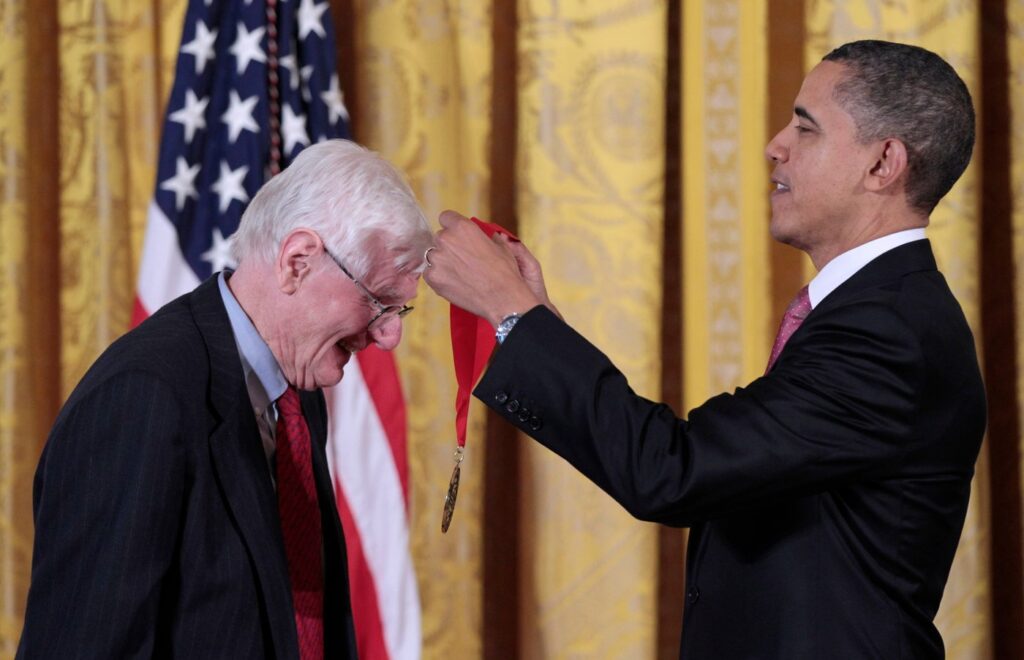
In recognition of his contributions, President Barack Obama awarded him the National Humanities Medal in 2011, highlighting Wood’s insightful scholarship into the nation’s founding and the drafting of the U.S. Constitution.
In recent years, younger historians criticized Wood for his perceived adherence to outdated perspectives, alleging that he downplayed the experiences of slaves, women, and Indigenous peoples. Despite these criticisms, Wood’s early works remained influential; his 1970 book "The Creation of the American Republic" won the Bancroft Prize, while his 1993 work "The Radicalism of the American Revolution" earned him a Pulitzer Prize. Additionally, "Empire of Liberty," published in 2009, became a finalist for the Pulitzer.
Wood’s influence extended beyond academia and into popular culture. He was referenced in the 1997 film "Good Will Hunting," where the protagonist, portrayed by Matt Damon, mocks a Harvard undergraduate by saying, "You’re gonna be in here regurgitating Gordon Wood." A notable but uncomfortable endorsement came when former House Speaker Newt Gingrich cited "The Radicalism of the American Revolution" as essential reading, which Wood recalled as a “kiss of death” among his liberal peers.
Identifying himself as neither radical nor reactionary, Wood carved out a middle ground between traditional "great man" narratives and the more egalitarian approaches that arose in the 1960s. He acknowledged the historical oversight of women's and minority contributions, yet cautioned against neglecting major political events in favor of smaller narratives. Wood challenged Progressive Era historian Charles Beard’s framing of the U.S. Constitution as merely a tool for the rich while recognizing that the founders were not infallible sages obsessed solely with their interests.
In discussing the American Revolution, Wood emphasized its complexity, arguing that it was a transformative event that reshaped social relationships rather than merely a shift of power from one class to another. He articulated the belief that the Revolution fundamentally altered American society, creating a new societal framework unique in the world’s history.
Wood also engaged with contemporary historical debates, welcoming breakthroughs such as Annette Gordon-Reed's revelations about Thomas Jefferson and his enslaved concubine, Sally Hemings. In "Empire of Liberty," he acknowledged slavery's corrosive influence on the ideals of liberty and equality. However, he resisted burgeoning narratives such as The New York Times’ 1619 Project that posited slavery as a primary motivation for the Revolution, arguing for a nuanced understanding of historical motivations and contexts.
Reflecting on the evolution of historical scholarship, Wood noted the errors made by historical figures and warned against “Presentism,” the anachronistic judging of past figures by contemporary standards. He believed that history should foster a sense of humility and prudence.
Born in Concord, Massachusetts, a town rich in literary history, Wood developed his passion for history during college after a lackluster experience in high school. He graduated summa cum laude from Tufts University before completing his master’s and Ph.D. at Harvard University under the mentorship of renowned Revolutionary War historian Bernard Bailyn.
Wood authored several notable works, including "Revolutionary Characters" and "The Americanization of Benjamin Franklin," and contributed essays to prominent publications such as The New York Review of Books. He also collaborated with filmmaker Ken Burns on a documentary about Thomas Jefferson and served as an advisory panel chair for the National Constitution Center in Philadelphia.
Wood leaves behind a legacy of deep engagement with American history, described as a "simple hedgehog" who focused on the Revolutionary period, which he considered the most crucial event in American history. He lamented that students often knew more about the Civil War than the Revolution, advocating for a more profound understanding of the nation’s origins.
Gordon Wood’s contributions continue to resonate within the fields of history and education, reflecting an unwavering commitment to understanding the complexities of American history.








