

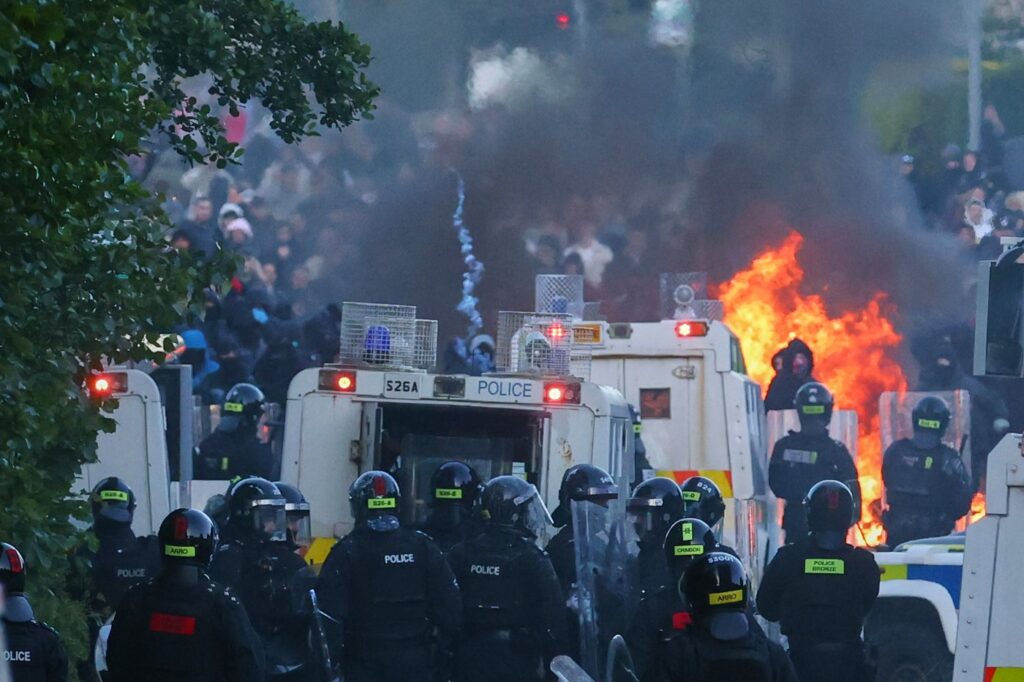
Riots erupted in Belfast, Northern Ireland, following a stabbing attack by a man from Sudan that resulted in the victim suffering serious injuries. This violent incident sparked considerable anti-immigrant sentiment and subsequent unrest across various parts of Northern Ireland. The escalation of tensions and violence reflects deep-seated issues surrounding immigration and community relations in the region.
The stabbing occurred on Monday night, June 8, 2026, leading to widespread protests and riots in the days that followed. On Tuesday, June 9, demonstrators gathered in North Belfast and East Belfast, expressing outrage over the attack and directing their anger towards the local immigrant population. The situation escalated quickly, with protests intensifying and resulting in clashes between demonstrators and the police.
On June 10, 2026, law enforcement responded to the unrest with a heavy presence. Police in riot gear were deployed to control the situation, using water cannons to disperse the increasingly aggressive crowds in Newtownabbey. Images captured during the riots display police officers as they manage street protests, with one notable photo showing officers attempting to clear the area of demonstrators.
The riots not only put law enforcement on high alert but also contributed to significant property damage. Protesters set fires to vehicles and attempted to damage police vehicles, resulting in a chaotic atmosphere. In East Belfast, eyewitness accounts described scenes of burning cars as groups of people protested the stabbing incident. A significant number of businesses and homes were affected, leading to a growing sense of unrest among community members.
Several individuals, including both protesters and law enforcement officials, sustained injuries during the confrontations. Images from the scene depict a burned-out grocery store with apartments above, illustrating the destruction that the violence wrought on the local community. Additionally, the aftermath of the riots saw residents beginning to clean up debris and assess damages to their properties, showcasing the immediate impact of the violence.
Amid the protests, communities expressed divergent views on immigration and societal cohesion. Many locals voiced fears and frustrations over rising violence attributed to immigration, while others emphasized the need for unity and understanding among different ethnic groups in Northern Ireland. The atmosphere remained charged, as reports continued to surface of confrontations and the police presence in the area was noticeably heightened in the days following the stabbing.
The disturbances in Belfast not only highlighted specific incidents of violence but also brought to the forefront deeper societal questions regarding integration, community safety, and the challenges of managing immigration within a historically complex socio-political landscape. Northern Ireland's past, characterized by divisions and conflicts, complicates the current discourse surrounding these issues, making the aftermath of the stabbing incident a critical moment for public reflection and policy consideration.
As the city grappled with the implications of the violence, conversations around the need for improved community relations and strategic support for both locals and immigrants began to emerge. Stakeholders across various sectors, including local authorities and community leaders, underscored the importance of addressing the root causes of discontent to foster a safer and more inclusive society in the face of uncertainty.








