

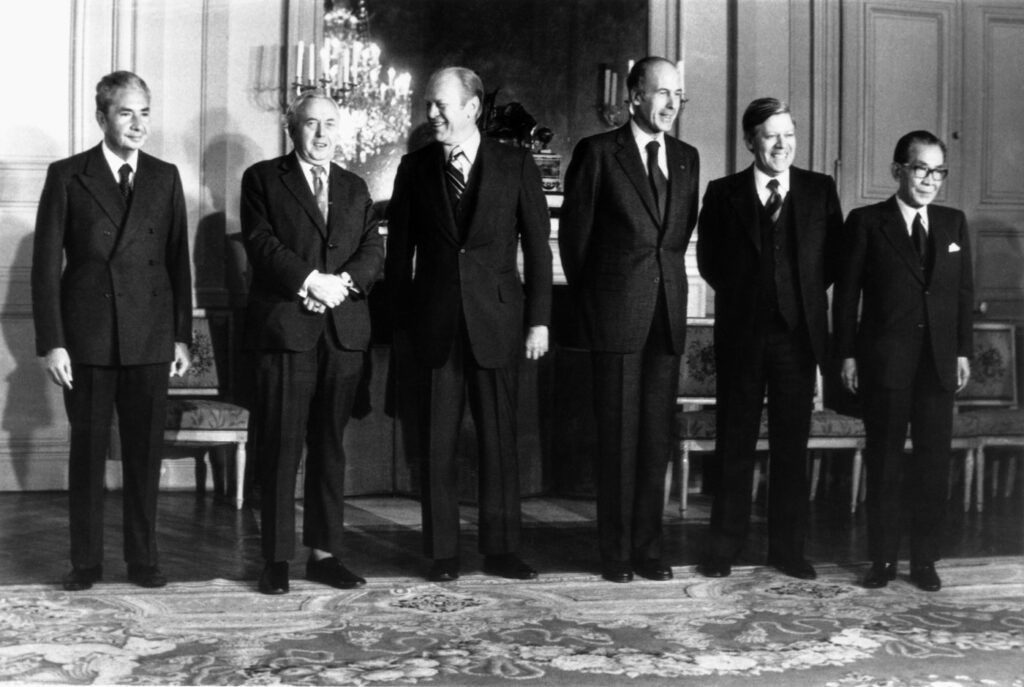
The initial summit meeting that laid the groundwork for the G7 took place at the Château de Rambouillet, near Paris, from November 15 to November 17, 1975. This gathering included U.S. President Gerald Ford and leaders from five other major industrial nations: French President Valéry Giscard d’Estaing, British Prime Minister Harold Wilson, West German Chancellor Helmut Schmidt, Italian Prime Minister Aldo Moro, and Japanese Prime Minister Takeo Miki. The collaboration among these six nations marked a significant step toward establishing a platform for addressing global economic challenges.
During the opening session of the summit, President Ford called on his counterparts to work together to transform the ongoing economic slump into prosperity by 1977. His statements reaffirmed a belief that economic recovery was possible despite recessionary fears. Ford noted that America’s economic recovery was stronger than initially predicted and forecasted a growth rate of 6 to 7 percent through 1976.
The atmosphere at the Château de Rambouillet, a historic 14th-century palace located 30 miles outside Paris, set a unique backdrop for discussions among the leaders. The meeting is remembered for its informal yet significant discussions, which included a consensus emerging among the leaders that the worst of the economic downturn might already be in the past. A French spokesperson noted a "remarkable convergence of views," reflecting a positive outlook from the participants.
The inaugural summit’s dinner showcased a contrast to typical lavish state meals; it consisted of simple stuffed chicken and good, albeit unremarkable, wines. A relaxed atmosphere prevailed, with leaders dressed in casual attire, aligning with the French preference for a low-key approach to such occasions. The leaders, sitting around a lengthy table, had access to interpreters to facilitate communication during the discussions.
Aside from economic concerns, various topics were broached during the talks. Japanese Prime Minister Takeo Miki stressed the need for a freer flow of international commerce, highlighting the adverse impacts of declining world trade on Japan. British Prime Minister Harold Wilson advocated for a strengthened international framework to control nuclear proliferation, signaling a commitment to global security initiatives.
President Ford, along with Giscard d’Estaing and Aldo Moro, attended a Catholic church service on the summit's second day, which added a personal touch to the diplomatic proceedings. Each leader was accommodated in luxurious apartments within the chateau, with President Ford residing in what was described as the "most comfortable apartment" featuring elegant furnishings and a direct phone line to the White House.
The discussions aimed to align policies on several major issues, including the reform of the international monetary system, energy policy coordination, and strategies to combat inflation and unemployment. The leaders sought to foster economic growth that could alleviate the high unemployment rates affecting Western countries. They acknowledged the divergent views on monetary reforms, particularly between the French desire for a more fixed exchange rate system compared to the preference of the U.S. and U.K. for flexibility.
In summary, this initial meeting at the Château de Rambouillet represented a pivotal moment in international economic relations. The leaders of these six industrialized nations, while not expecting to reach definitive agreements or decisions, aimed to establish a collaborative framework to address pressing economic challenges. They sought to enhance communication and cooperation on crucial global issues, ultimately laying the groundwork for the influential G7 summits of the future.








