

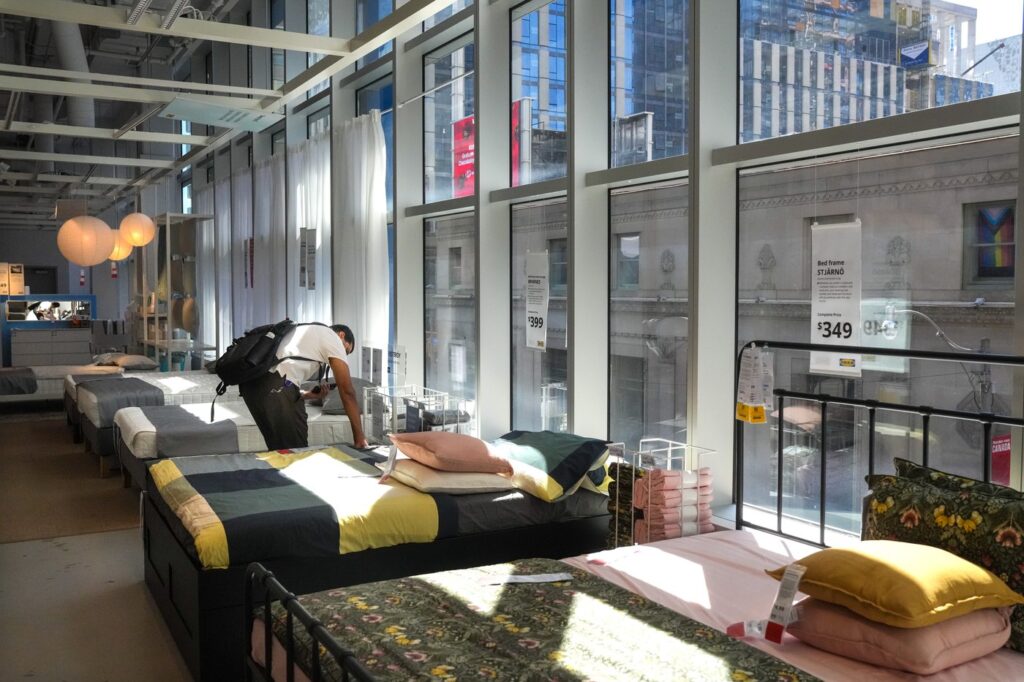
The opening of Ikea's latest location in London, Ontario, scheduled for this fall, marks a significant shift in the retailer's approach to store formats. Unlike the traditional labyrinthine layout typical of most Ikea locations, this new store will be a compact 43,000 square feet, significantly smaller than the usual size of 300,000 square feet found in conventional stores. This smaller store will carry a curated selection of just 2,700 products, allowing customers to complete their shopping visits in a matter of minutes rather than hours.
Janet McGowan, the area manager, emphasized that this format reflects an evolution in Ikea's strategy. As she observed at a larger 65,000 square foot Ikea in downtown Toronto, the move to smaller store formats is part of a broader trend among retailers looking to penetrate urban markets where availability of spacious retail locations is limited. Retailers such as Uniqlo, No Frills, Best Buy, Sleep Country, and Sephora have also adopted smaller formats in Canada, hoping to tap into consumer bases in high-density areas while reducing the costs and time associated with opening new stores.
McGowan stated that small store formats are advantageous for both the retailer and the consumer. They provide a quicker shopping experience while also making it easier for Ikea to establish new locations, as they are less costly and take about 25 percent less time to open compared to larger stores. This allows the brand to expand its global footprint more realistically.
Beyond Ikea, other brands are also focusing on small format stores. In 2024, for instance, Best Buy and Bell Canada partnered to launch 167 small locations, including one at Union Station in downtown Toronto. This area, near major transit hubs and the Financial District, is particularly attractive to retailers as it draws a high volume of foot traffic from busy commuters and local students. Retail consultant Elisha Ballantyne noted that small-format stores are strategically positioned to cater to urban dwellers who may not have easy access to larger retail options in suburban areas.
However, the decision to downsize isn't without trade-offs. Smaller stores inherently limit product variety, and brands often cannot offer their full inventory. For example, when Loblaw Cos. Ltd. launched its No Frills stores, they reduced the available product types from 10 to 5 for certain grocery items. In Ikea's case, the smaller format focuses on items that cater to urban lifestyles, such as compact furniture suitable for smaller living spaces, balcony gardening supplies, and easily assembled products for city residents.
Ikea's adaptation has been responsive to consumer preferences. For example, after noticing a demand for houseplants in the urban environment around its Toronto store, Ikea began stocking greenery that had initially been excluded from the smaller format. As a result, the store now receives multiple plant deliveries each week.
Nevertheless, not all small format ventures have been successful. Ikea closed one of its small locations at Scarborough Town Centre after less than three years, attributing the closure to the store's limited product range and changing consumer behaviors leaning towards online shopping. McGowan mentioned that for those wanting the full Ikea experience, larger stores are still available within a 15-minute drive.
Despite certain setbacks, the small store trend continues to grow. Recently, Sephora opened its first compact location in Canada, tailoring its product offerings to fit a 2,000 square foot space. In Toronto, the food emporium Eataly is successfully maintaining its smaller outpost in the Distillery District, which began as a pop-up shop.
As retailers adapt to evolving consumer needs, McGowan believes more brands will explore small store formats. She warned that in a competitive retail landscape, brands must transform and adjust to meet consumer demands to ensure their longevity in the market.








