

Six months after President Donald Trump warned states against regulating artificial intelligence (AI), several states are taking steps to implement their own regulations. With Congress stalling on federal AI legislation, states are increasingly scrutinizing the interaction of AI technologies, particularly focusing on chatbots and their interaction with children, employer usage, and developer accountability to prevent AI-related catastrophes.
Initial broader attempts to regulate AI were met with resistance from governors who deemed them too burdensome for industry growth. However, lawmakers are now turning their focus to more targeted legislation. This new approach examines areas of life where AI is integrated but may not be publicly recognized.
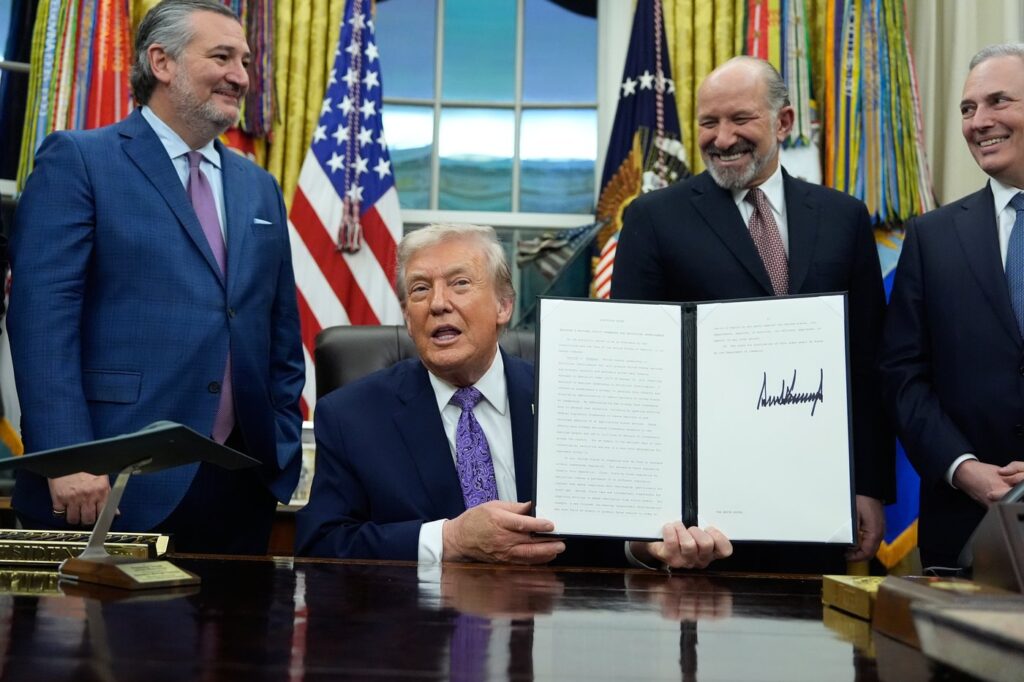
Trump's executive order aimed at curbing state action on AI prompted criticism across political lines. Many feared that such federal intervention would benefit AI corporations with minimal oversight. Trump views AI as essential for national and economic security and advocates preventing states from creating a complicated regulatory landscape that could hinder the industry competition against China.
His executive order mandated the attorney general to form a task force to challenge state AI regulations viewed as excessively burdensome and directed the Commerce Department to compile a list of concerning regulations. Although the White House stated it would not target state laws focused on protecting consumers and children from fraud, it did threaten to restrict funding to states with stringent AI regulations.
Despite the president's warnings, states have continued to introduce bills to manage how AI technologies operate. For instance, Illinois is championing legislation requiring developers of advanced AI models to create safeguards against potential disasters like biological attacks, power outages, or cybersecurity breaches. The legislation demands that developers obtain independent audits to ensure compliance, thus holding them accountable for their AI products.
In response to Trump's threats, Illinois state Sen. Mary Edly-Allen emphasized the state's independence and the bill garnered substantial bipartisan support. This trend suggests a willingness for cooperation across party lines to fill the regulatory gap left by the federal government.
A notable aspect of this wave of regulations concerns the interaction of AI chatbots with users, especially minors. Several states, including Colorado, Connecticut, and Oregon, have enforced laws requiring companies to disclose when users are interacting with AI. Extra care has been taken to ensure children have limited access to chatbots and that their data remains private.
Connecticut has mandated that chatbots, which foster ongoing relationships, must not engage with anyone under the age of 18 unless they are programmed to discourage self-destructive behaviors. Similarly, Colorado's legislation requires transparency in AI systems affecting significant life areas, aiming to combat inherent biases in AI that lead to discrimination in hiring, housing, and healthcare decisions.
Further laws are anticipated; California is moving forward with the "No Robo Bosses Act of 2026," which would prevent employers from relying solely on AI for employee discipline or termination. Additionally, there is an initiative to regulate the use of AI-generated content in advertising targeting children.
However, not all states are advancing in this arena. In Florida, the Republican-led state House did not progress with Governor Ron DeSantis's proposed AI "Bill of Rights," designed to expand consumer protections regarding AI interactions. Similarly, in Utah, the development of regulations inspired by laws in New York and California stalled after the White House outlined its opposition to new AI legislation in a brief memo to lawmakers.
As these developments unfold, it is evident that states are more inclined to establish their own AI regulations, reflecting both bipartisan support and the necessity for frameworks at the state level, while navigating the complexities introduced by the federal government’s stance on AI governance.








