

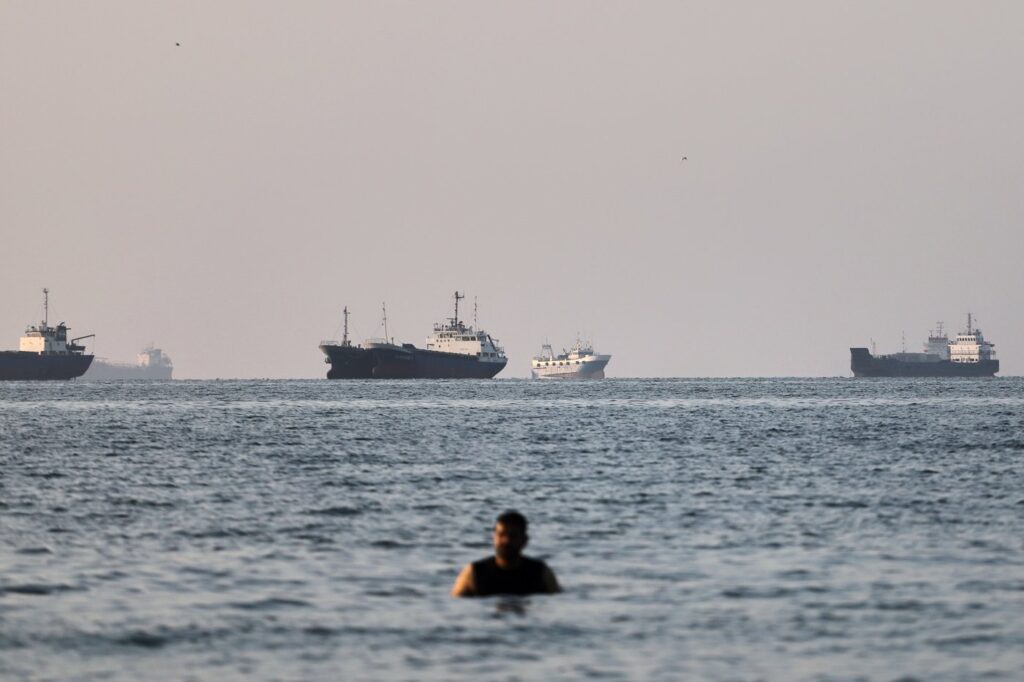
FRANKFURT, Germany (AP) – A tentative agreement to end the war in Iran and reopen the Strait of Hormuz has raised hopes for a positive impact on the global economy. Despite a drop in oil prices on Monday, uncertainty remains regarding when oil supplies will resume through this critical passageway for energy shipments, which previously accounted for a fifth of the world’s crude oil before the outbreak of the conflict. Analysts caution that it will take time for hundreds of ships currently trapped in the Persian Gulf to navigate the narrow strait, and Gulf oil producers may also require significant time to ramp up production levels again.
The reopening of the Strait won’t instantly restore oil prices, inflation rates, or energy flows to their previous levels. The process of navigating commercial vessels through the strait is complex. Even under optimal conditions, a complete passage is not just a simple matter of opening the strait; it involves tankers entering, loading, and making lengthy journeys to Asian markets—primary destinations for oil from Saudi Arabia, Iraq, Bahrain, the United Arab Emirates, Kuwait, and Oman. A typical round trip to Japan can take as long as 50 days.
Maritime experts note that ship captains, owners, and insurers will likely approach re-entering the strait cautiously, mindful of the ongoing risks. Richard Meade, editor-in-chief of Lloyd’s List, emphasizes that there’s no rush to resume operations. Many in the shipping industry believe the clearance of mines and the safe navigation of internationally recognized transit lanes are prerequisites for secure passage.
Currently, around 500 commercial vessels remain stranded in the Persian Gulf, unable to exit en masse through the narrow strait. Amena Bakr from Kpler estimates that the process to clear mines could take six months, while transitioning vessels could recommence their operations in two to three months. Additionally, restarting oil production to pre-war levels in various countries like Iraq could take up to a year due to extensive shut-ins and environmental challenges.
The nature of an “open” strait is still subject to interpretation. Iran has sought the right to collect fees from ships passing through the strait, creating ambiguity about potential tolls imposed on maritime traffic. Former President Trump mentioned on his platform that the deal included a "toll-free opening," but no confirmation from Iranian authorities has been provided. Experts highlight that compliance with Iranian toll collection could expose shipping operators to sanctions from the U.S. and European Union, as designated terror organizations like the Islamic Revolutionary Guard Corps, which has been placed under U.S. Treasury sanctions, could be involved in fee collection.
Furthermore, legal analysts argue that allowing Iran to manage navigation through the strait may contradict international maritime law established by the United Nations Convention on the Law of the Sea, which guarantees peaceful passage through territorial waters.
Oil producers in the Middle East also face challenges in readjusting their operations. Several countries halted oil extraction during periods when storage capacities were nearly full; restarting these operations is a meticulous process. Nations like Saudi Arabia and the United Arab Emirates, which have other export routes available, may be quicker to resume production. In contrast, Iraq’s unique challenges could complicate their recovery significantly.
Alan Gelder of Wood Mackenzie warns that while sentiment regarding the market may improve, productive supply won't rebound immediately. Economists from various firms, including Capital Economics, warn that even with a swift reopening of the Strait, inflation will not see immediate reductions and will likely remain above target levels in many significant economies through the year. The fading of government measures intended to mitigate energy price shocks could further exacerbate inflation conditions in regions like Germany, where temporary tax cuts are expected to expire.








