

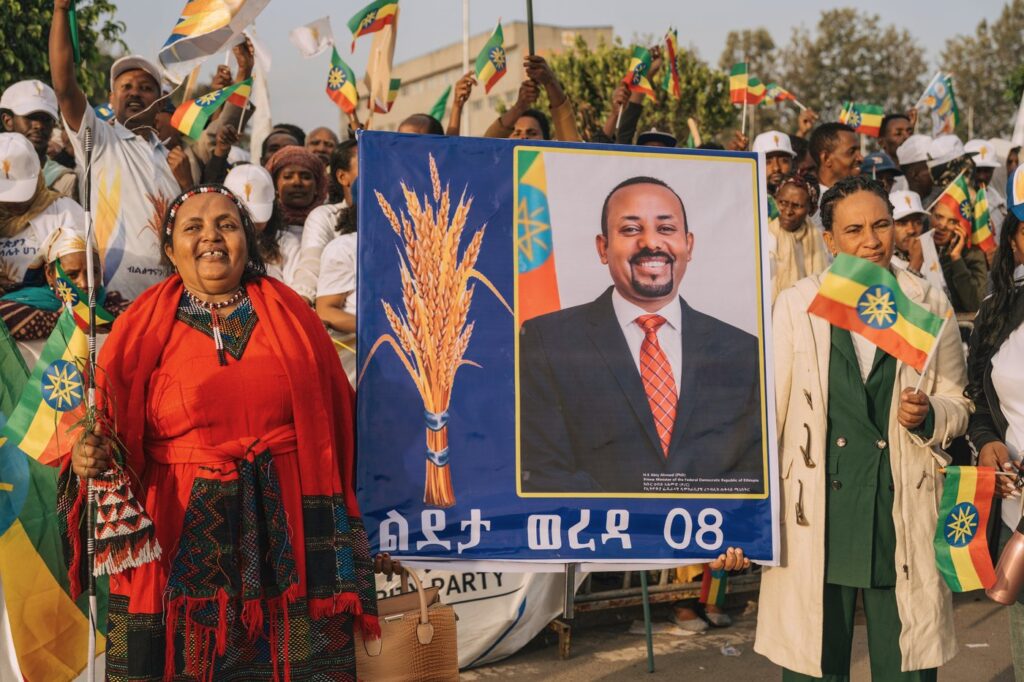
ADDIS ABABA, Ethiopia (AP) – Ethiopia’s ruling party has retained a significant majority in parliament following the June 1 election, as reported by the National Election Board of Ethiopia on Sunday. Prime Minister Abiy Ahmed’s Prosperity Party secured 438 out of 501 seats in the House of Representatives, paving the way for the new parliament to assemble in October for the anticipated re-election of Abiy for another five-year term.
The electoral process, however, was overshadowed by reports of a crackdown on dissent, particularly in the Oromia and Amhara regions. Insecurity led to the closure of 143 polling stations, which the election board confirmed. The ongoing conflict between the Fano armed group and the federal government in Amhara, as well as clashes involving the Oromo Liberation Army in Oromia, has been a primary source of instability as efforts to disarm these groups continue.
The voter turnout for the election was reported at an impressive 94%, with over 50 million people registered to vote in a nation with an estimated population of 130 million. Notably, the Tigray region, which has suffered extensive casualties in the ongoing conflict between federal forces and regional factions, was excluded from this election, further sidelining its representation in the national parliament. The Tigray region has been without federal representation for six years.
Melatwork Hailu, the chairperson of the electoral board, stated on Sunday that the board "maintained institutional neutrality" and conducted its duties based strictly on legal and electoral guidelines, without external interference. The presence of observers from regional organizations, including the African Union and the Intergovernmental Authority on Development, although criticized for their limited deployment primarily in Addis Ababa, contributed some degree of international legitimacy to the election.
The election drew considerable criticism, especially concerning the political environment that favored the ruling party. Most opposition party members were either barred from participating, imprisoned, or exiled, leading to widespread allegations that the election was neither free nor fair. Fear and intimidation reportedly permeated the political landscape, making it challenging for any dissenting voices to compete.
Yitayal Assefa, an opposition candidate representing the All Ethiopia Unity Party, expressed frustration after his defeat, indicating that the government maintained an overwhelming advantage and systematically harassed opposition members. Assefa emphasized that his participation in the election was not motivated by an expectation of victory, but rather by a commitment to advocate for his political ideals in a suppressed environment.
Merara Gudina, an opposition leader and professor at Addis Ababa University, opted not to participate in the election, labeling it a "sham" that produced unsurprising results favoring the ruling party. He warned that the election outcomes would worsen the already precarious stability of the country.
Abiy Ahmed’s administration has faced allegations of human rights violations against critics and journalists, despite earlier promises to foster democracy and peace in Ethiopia. In 2019, Abiy received the Nobel Peace Prize for resolving a long-standing conflict with Eritrea. However, relations between the two nations have soured recently, with Ethiopia accusing Eritrea of supporting rebel factions aiming to destabilize its government, while Eritrea claims Ethiopia poses a threat to its coastal port.








