

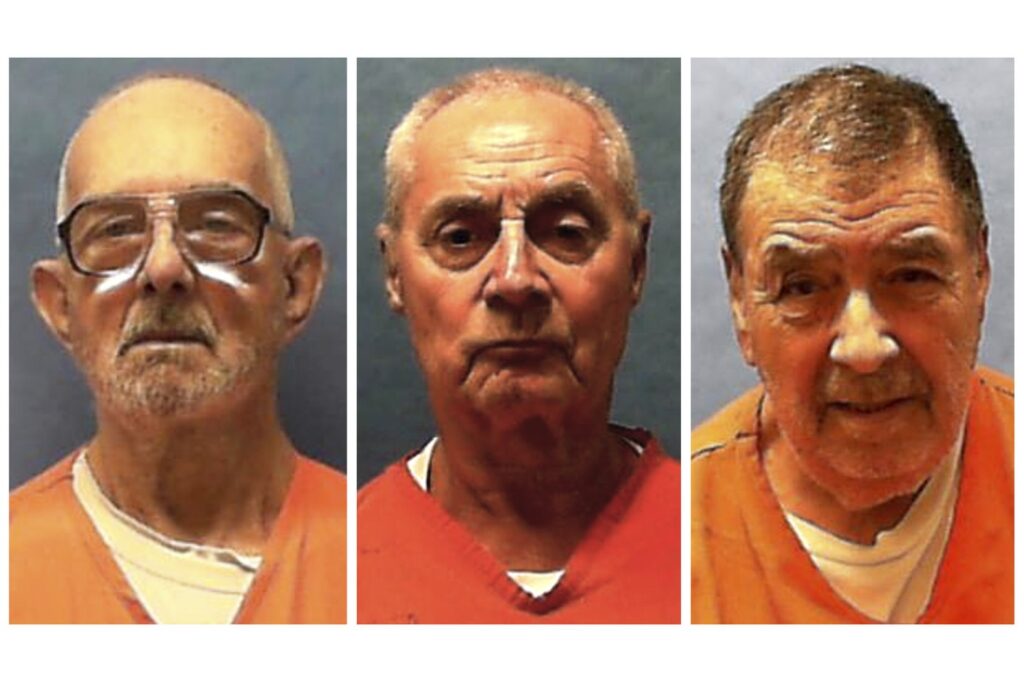
MIAMI (AP) The last individual executed in Florida's death chamber was 74 years old, marking a significant milestone as the oldest inmate executed in the state's modern history. However, the two upcoming executions involve inmates who are even older, raising concerns regarding the ethics of applying capital punishment to aged prisoners.
The cases of these aging prisoners highlight a trend within the U.S. death row population. An inmate scheduled for execution in July, convicted of murdering his ex-girlfriend's parents in 1986, is now 80 years old. If executed, he would become only the second known octogenarian executed in the United States. This circumstance has reignited debates over the humanitarian implications of executing elderly inmates who are nearing the end of their lives due to natural causes.
The Rev. Dustin Feddon, a Catholic priest who has been counseling Florida death row inmates since 2013, raised pressing ethical questions: “Is this intentional, as though to say, we’re not going to let a natural death help you escape executions?” He emphasized the cruelty of executing frail and elderly individuals, aligning with the church's commitment against capital punishment.
Conversely, some like Marilyn Gifford, whose sister's killer is scheduled for execution, feel different. Gifford expressed satisfaction that the execution is happening, as she believes it serves justice for her family. She reflected on her deceased mother and her wish to witness the execution.
The sequence of these executions follows years on death row. On June 25, Dusty Ray Spencer, convicted in 1992 for the murder of his wife, set a historical precedent as the oldest person executed in Florida. His appeal, which claimed his liver disease would lead to unbearable suffering during lethal injection, was denied by the U.S. Supreme Court.
Another inmate, Dennis Sochor, who was found guilty of killing 18-year-old Patricia Gifford shortly after a New Year’s Eve party in 1982, might face execution soon; he would be just a week older than Spencer. Gifford's family plans to attend the execution.
Dominick Anthony Occhicone, now 80 years old, has been on death row for nearly four decades following his conviction for the murders of his ex-girlfriend's parents. If executed on July 28, he would ascend to the position of the second oldest prisoner known to be executed in the U.S., following Walter Moody Jr., who was 83 when executed in Alabama in 2018.
The issue of why Florida has opted to schedule these executions back-to-back remains elusive. Legal experts note that in Florida, the governor holds near-total discretion over execution scheduling, unlike many other states where this power is vested in the courts. Roughly half of Florida's 242 death row inmates have exhausted their appeals and could receive death warrants at any time.
Florida Governor Ron DeSantis recently experienced public pressure from victims’ families, advocating for justice that has been long delayed. In 2022, he expressed that “justice delayed is justice denied,” emphasizing a commitment to deliver due process for victims who have waited decades for closure. Under his governance, 2025 marked a record with 19 executions—more than any Florida governor since the reinstatement of the death penalty in 1976.
The demographic of death row prisoners has aged over the past fifty years, with the average age of executed individuals increasing from the 30s to the 50s. Extended appeal processes contribute significantly to this phenomenon, with many inmates remaining on death row for decades, sometimes developing serious health conditions that complicate execution. Occhicone, for instance, suffers from kidney issues and requires assistance for daily tasks.
Despite recent rulings that prevent the execution of those who were under 18 at the time of their crimes, age alone does not exempt inmates from capital punishment. Legal experts clarify that a defense against execution must be rooted in other factors, such as mental incapacity or significant medical conditions that would result in undue pain during execution.
Instances have been noted where prisoners afflicted by dementia and other severe ailments have avoided execution, while legal actions continue for other inmates facing death despite their health issues. For instance, one inmate in Idaho received a stay of execution due to serious health problems like cancer.
As the debate continues, families affected by violent crimes maintain their own perspectives on the aging death row population. For some like Frank Frandel, who has a personal history with Sochor, the age of criminals does not inspire sympathy. He highlighted that Sochor's father remained alive at 99, asserting that the condemned could live on for many years yet, therefore, he does not believe they deserve mercy due to their age.








