

Ukrainian President Volodymyr Zelenskyy arrived in Paris on Monday for discussions with around two dozen European leaders who are supporting Kyiv in its struggle against Russia’s invasion, which has now entered its fifth year. This gathering underscores the ongoing commitment of European nations to assist Ukraine during this prolonged conflict.
In tandem with Zelenskyy's visit, European foreign ministers convened in Brussels to address Ukraine’s critical needs and evaluate Russia’s threats against the continent. Both Ukrainian officials and their European allies aim to capitalize on Ukraine’s recent military successes to pressure Russian President Vladimir Putin into negotiating an end to hostilities, despite Moscow’s lack of interest in compromise as evidenced by its refusal to engage in peace talks over the past year.
Recently, Ukraine has demonstrated significant advancements in drone technology, which have reportedly provided the country with a tactical advantage. By attacking supply lines located behind the front, Ukraine has diminished the Russian army’s operational momentum, according to analysts and Western officials. Notably, Ukrainian forces have focused on disrupting supplies to Crimea, leading to the worst fuel crisis in that region since its illegal annexation by Russia in 2014, thereby undermining the Kremlin’s narrative of victory in the war.
Zelenskyy emphasized the urgency of enhancing air defenses, expressing on social media, “Everyone in the world sees that Ukraine needs more air defense, more protection of life.” The recent commitment by U.S. President Donald Trump to grant Ukraine a license for domestic production of Patriot air-defense systems might represent a significant breakthrough. However, experts caution that the transition from concept to actual weaponry could take years.
The convening in Paris of the Coalition of the Willing, which consists of over 30 nations backing Ukraine, is particularly noteworthy given the participation of nearly 25 heads of state and government. This large showing signals a robust commitment to Ukraine’s cause and serves as a warning to Russia amid ongoing attempts to test European resilience. French Foreign Minister Jean-Noël Barrot announced his plan to summon the Russian ambassador and impose sanctions against Russian hackers involved in a widespread cyber campaign targeting ten European nations.
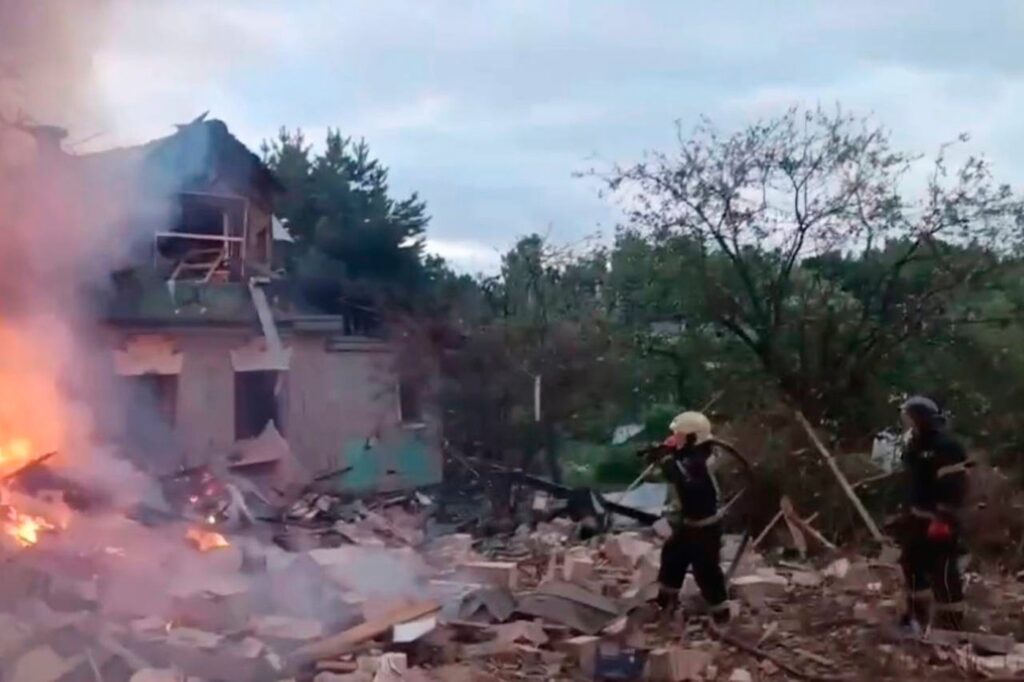
The war’s repercussions extend beyond Ukraine's borders. Recently, a drone launched during Russian overnight assaults on Ukraine struck Moldova, igniting concerns from the Moldovan Ministry of Foreign Affairs, which deemed the incident “serious and unacceptable.” Zelenskyy made his trip to Paris following the death of U.S. Senator Lindsey Graham, a prominent advocate for Ukraine in Washington, amidst a reshuffle of his government that resulted in the resignation of Prime Minister Yulia Svyrydenko.
In a display of its increasing capabilities, Ukraine is reported to have launched over 300 drones targeting deep into Russian territory, matching—or even exceeding—Russia's aerial attacks. Moscow officials reported the downing of 350 Ukrainian drones aimed at the capital over the weekend, claiming fatalities and injuries due to such attacks.
On the Russian side, the Federal Security Service declared that they had thwarted a significant Ukrainian drone operation targeting military air bases in the eastern Amur region and the southern Urals. They alleged that drones were smuggled into Russia via air balloons, capturing Ukrainian agents involved in this operation and seizing numerous drones intended for strikes on military installations.
This set of events reflects a rapidly evolving and volatile situation in which both Ukraine and Russia continue to leverage advanced military technology and tactics to gain the upper hand in the ongoing conflict.








