

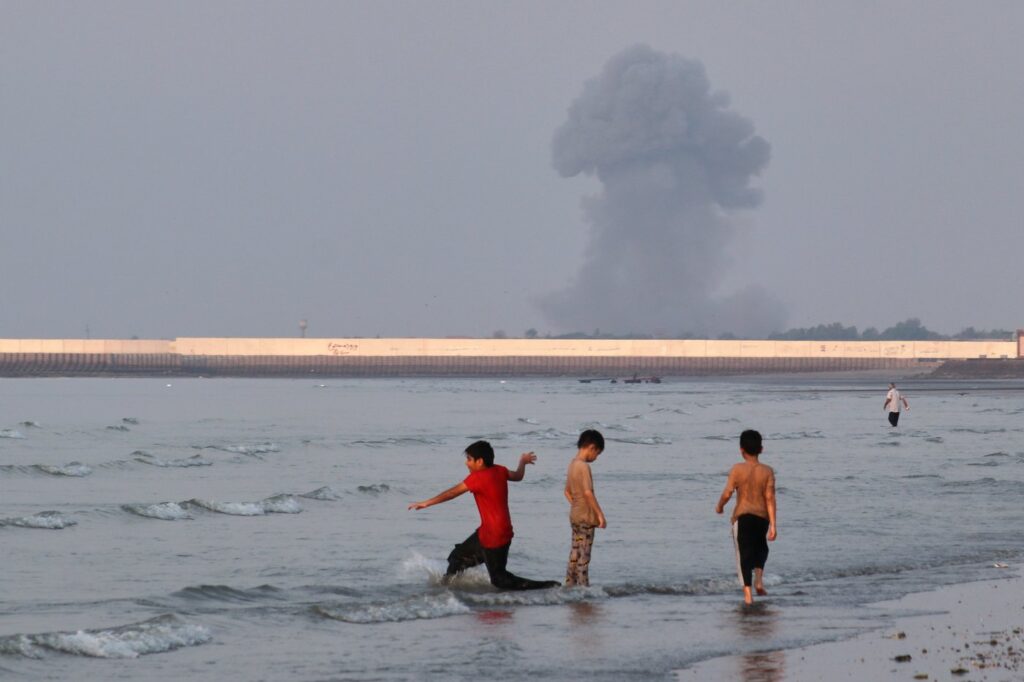
DUBAI, United Arab Emirates – The tensions in the Strait of Hormuz escalated significantly early Tuesday when the U.S. launched military strikes against Iran. This confrontation came just hours after President Donald Trump announced the reimposition of a blockade on Iran in the strategic waterway. Trump also suggested that the U.S. would begin charging other vessels for safe passage, a significant shift in over a century of American policy promoting freedom of navigation globally.
In retaliation, Iran targeted Bahrain and struck two tankers associated with the United Arab Emirates (UAE) traveling through the Strait of Hormuz, resulting in the death of one mariner and injuries to eight others. The UAE government warned that it would retaliate against Iran, which could risk further conflict with Tehran, particularly affecting the safety of its major cities, Abu Dhabi and Dubai.
The conflict is centered around the Strait of Hormuz, through which a fifth of the world's crude oil and natural gas typically passes. Following the recent attacks, the price of benchmark Brent crude surged by 7.8%, reaching $81.92 a barrel, although this level is still below the nearly $120 peak witnessed during previous escalations.
U.S. Central Command confirmed the initiation of strikes on Iranian positions, stating their intent to impose significant costs on Iranian forces and limit their capacity to target civilian shipping. President Trump described the military actions as "another major attack," indicating ongoing efforts to disrupt Iranian offensive capabilities and ensure control over maritime passage in the region.
Additionally, Trump clarified the U.S. stance on the Strait's accessibility. He indicated that the U.S. plans to collect tolls from vessels traversing the strait—a notable policy reversal from previous positions that upheld the right to free navigation. He declared, "We’re protecting a very rich portion of the world... we are going to be reimbursed for protection."
This shift in policy opposes longstanding U.S. assertions that the Strait should remain free for all traffic. There are growing concerns that any enforced tolls would contravene international norms and exacerbate tensions. Such developments may also trigger economic disruptions beyond the immediate region.
The UAE's Defense Ministry reported that the Iranian military launched two cruise missiles at the tankers identified as Mombasa and Al Bahiyah, igniting fires on both vessels. Iran's Revolutionary Guard claimed responsibility, asserting that the attacked tankers "ignored repeated warnings" and entered a hazardous area. The Iranian military statement emphasized the consequences of navigating through a "minefield."
Bahrain faced additional missile threats, prompting the national missile alert as the country braced for further confrontations. Although no immediate damage or casualties were reported from Bahrain’s response, the Emirati Defense Ministry maintained a firm stance, declaring that the UAE would take necessary measures to protect its territory and citizens.
Earlier, President Trump remarked that the current agreement with Iran was intended to be a test, asserting that Iran had not complied. The situation around the Strait remains fragile with both nations asserting their rights to manage traffic. The U.S.'s military actions have been met with reciprocal Iranian hostility, resulting in attacks on U.S.-aligned operations.
As the situation develops, both the American military and the United Nations’ International Maritime Organization are attempting to delineate a safe navigation route along the coast of Oman to avoid Iranian control. However, with recent engagements, the prospects for de-escalation appear slim as both the U.S. and Iran trade retaliatory strikes and assert their interests in this pivotal maritime corridor.
In summary, the renewed hostilities in the Strait of Hormuz mark a critical point in U.S.-Iran relations, with the potential for broader implications on global oil markets and regional stability.








