

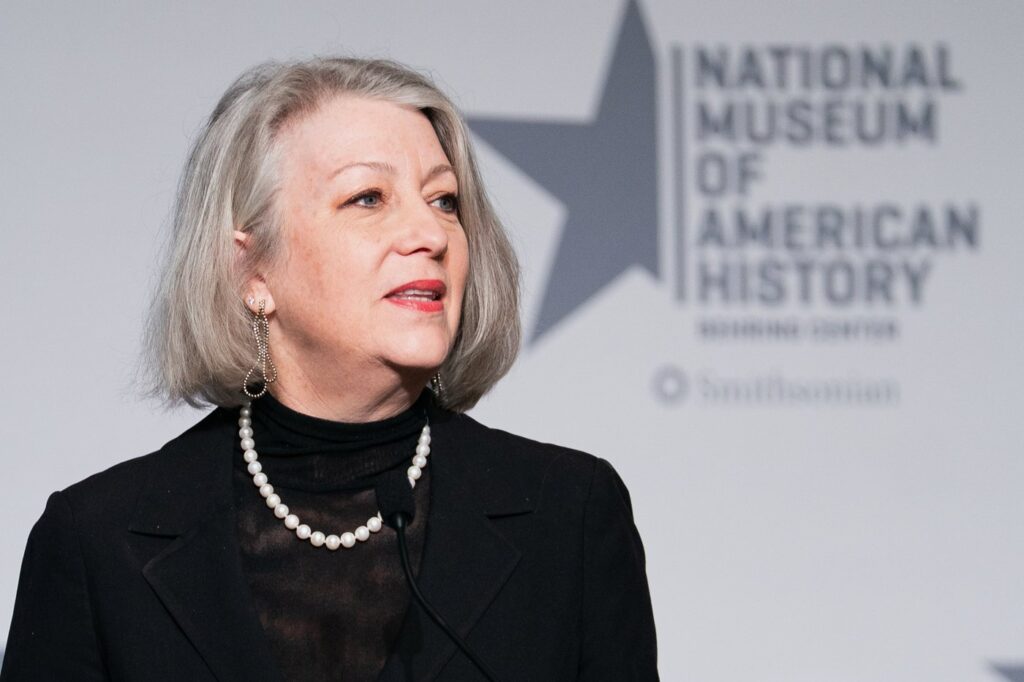
On Tuesday, Anthea M. Hartig, the director of the Smithsonian's National Museum of American History, responded strongly to a recent White House report that labeled the museum's leadership as radical activists unworthy of trust. Hartig addressed a House Oversight subcommittee, emphasizing that the report did not accurately reflect the museum's comprehensive body of work.
Hartig stated, "As we continue to fact check the report, we unwaveringly attest that it does not fairly or accurately characterize the full body of work at the museum." She acknowledged the potential for improvement but highlighted the enriching aspects of the museum's collections, exhibits, and programming, asserting their inspirational value.
This exchange coincides with the national conversation surrounding the 250th anniversary of American independence. The White House Domestic Policy Council published a report on July 4, criticizing the museum for its portrayal of history, claiming it lacks an inspiring and unifying narrative appropriate for the nation. The report aligns with a broader agenda by former President Donald Trump and his supporters, who have sought to influence how the nation’s history is interpreted, particularly concerning the topics of slavery, racism, and marginalized communities, such as LGBTQ individuals.
During the subcommittee meeting, Republican members reiterated concerns highlighted in the report. Representative Tim Burchett of Tennessee articulated his stance, claiming that the museum's narrative is overly focused on a power struggle between oppressors and the oppressed. He asserted that the museum's current exhibits and educational materials reflect a "woke" ideology held by its leadership.
In her defense, Hartig, who is the first woman to lead the National Museum of American History, clarified that the institution does not engage in taking sides in America's political debates. She stressed that the museum's approach to presenting the nation's story is an evolution that seeks to integrate a variety of voices rather than erase the historical narrative, as some critics allege.
Hartig noted, "When historians talk about reframing a traditional narrative, we don’t mean erasing it. We mean adding the evidence, the voices, the objects, that earlier tellings left out, so that more Americans can see themselves reflected in the national story." This statement underscores her commitment to inclusivity and the representation of diverse experiences within the historical context of the United States.
The ongoing debate highlights contrasting perspectives on how history should be conveyed in national institutions, with Hartig and her colleagues defending a comprehensive and inclusive approach against allegations of partisanship in historical interpretation. The discourse underscores the vital role of museums in shaping collective memory and understanding amid competing narratives in contemporary political and cultural landscapes.








