

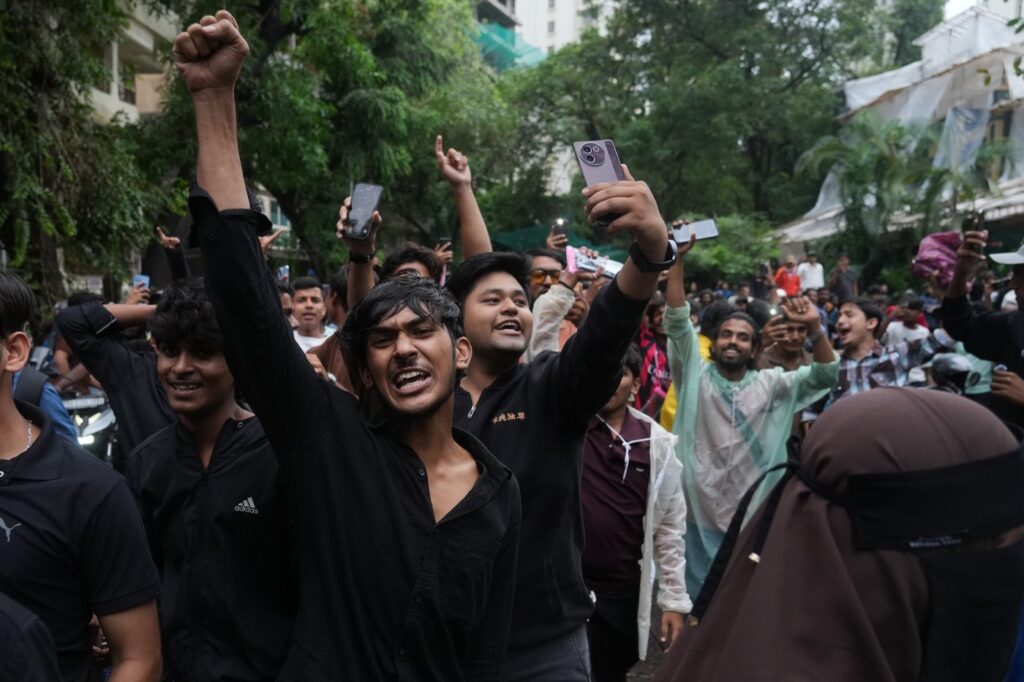
NEW DELHI (AP) — Indian activist Sonam Wangchuk concluded his 26-day hunger strike on Friday, a pivotal moment that galvanized a youth movement resulting in one of the largest protests in India in recent years. Protesters filled the streets, demanding the resignation of the Education Minister, amid an outpouring of public dissent against the government.
Wangchuk's fast became the focal point of India’s “Cockroach” protests, which ignited over a month ago in response to allegations of examination paper leaks concerning some of the nation’s most competitive entrance exams. Gradually, the protests began to reflect broader societal frustrations related to unemployment, government accountability, and economic opportunities. As a result, individuals from various demographics—including professionals, families, and activists—joined demonstrations not only in New Delhi but across other major cities.
This wave of demonstrations has emerged as one of the most sustained expressions of public dissent against Prime Minister Narendra Modi in recent memory. Tensions escalated earlier in the week when police used tear gas and batons to disperse marchers attempting to approach Parliament, resulting in a surge of participants on the streets.
The call for nationwide protests on Friday was issued in solidarity with students who faced police brutality during their march to Parliament. Wangchuk ultimately ended his hunger strike following the intervention of federal ministers and extensive negotiations, which he mentioned in a post on social media platform X. He refrained from detailing the content of his discussions with the ministers, citing concerns over potential violence in the country.
Protest organizers emphasized that demonstrations would persist until the resignation of Education Minister Dharmendra Pradhan was secured. They are demanding significant reforms regarding examination procedures and financial compensation for families of students who tragically lost their lives by suicide following the exam paper leaks.
After dialogues with two ministers on Friday, organizers reported that the government requested until Saturday afternoon to address their demands. Government minister J.P. Nadda confirmed that both parties would reconvene for discussions the next day.
Abhijeet Dipke, founder of the Cockroach Janta Party—the satirical group leading the initiative—asserted, “We won’t let Sonam sir’s sacrifice go in vain.” The group’s name derives from a comment made by the nation's Chief Justice likening some unemployed youths to cockroaches. This remark has since fueled the group's narrative and activism.
In his first public remarks addressing the protests, Modi announced that fast-track courts would be established to hasten legal proceedings regarding exam paper leaks. Along with this, he promised to introduce new legislation in Parliament to combat this issue effectively. However, these announcements failed to quell the unrest, with protesters arguing that they did not adequately address the broader concerns regarding government accountability.
Twenty-three-year-old Fabeha Sayyed expressed that while Modi’s video message indicated some level of attention to the issue, it raised questions about why he had not compelled the education minister to step down. “If he were so concerned about the protests, about the students and the families of students who committed suicide, then it is not hard for him to get a person to resign,” she asserted.








