

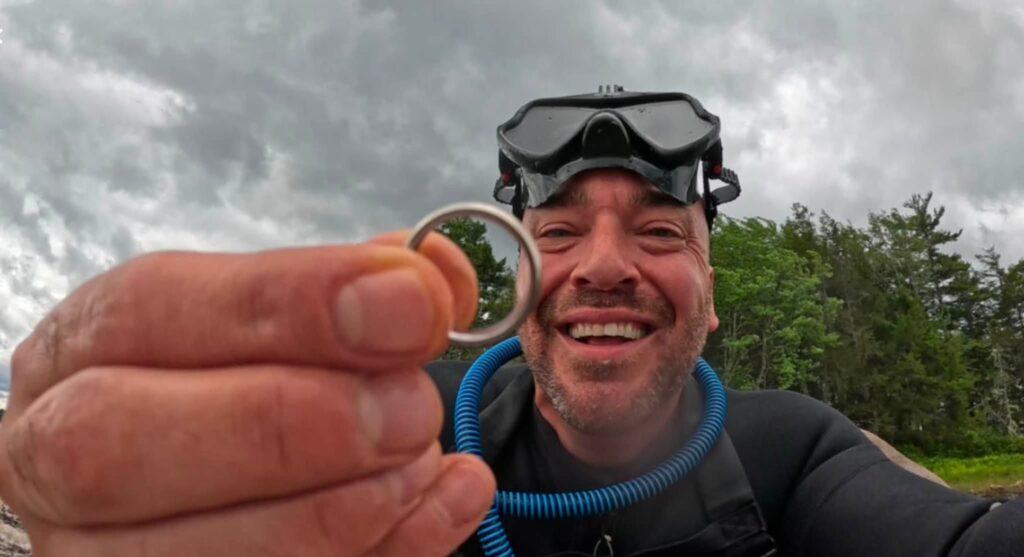
In Halifax, Louisiana resident, Jeff Daglaris, faced a distressing situation after losing his 14-karat gold wedding ring at the bottom of a lake in Nova Scotia. During a kayaking trip around an island in Kejimkujik National Park, roughly 130 kilometers west of Halifax, the ring slipped off his finger as he and friends engaged in recreational activities. Despite his initial consideration to secure the ring in a dry bag before entering the water, Daglaris's careless decision led to disappointment when he realized it was gone.
Daglaris, who had been married for three and a half years, attempted to recover the ring by diving into the dark waters but lacked the necessary equipment for success. In his search for assistance, he consulted the internet and found a solution: Nate McLagan, a seasoned metal detectorist with approximately two decades of experience. McLagan has developed a reputation for helping individuals locate lost items, especially wedding rings. This year, he dedicated himself to finding 25 lost items for others, prompting numerous requests, particularly for wedding rings.
Upon contacting McLagan, Daglaris provided specifics about the ring's location and even took pictures of the rocks surrounding the area. McLagan, equipped with a metal detector and diving gear, traveled two hours to the island the following weekend. Remarkably, he located the ring almost immediately, identifying it precisely where Daglaris had indicated. As Daglaris was at Halifax airport preparing to board a flight, McLagan sent him a photo of the recovered ring, eliciting utter disbelief and joy from Daglaris.
McLagan shared that he had begun focusing on diving for lost items three years prior to this incident, having participated in his first specific recovery mission last year at Porters Lake, Nova Scotia. He views these recovery missions as a hobby, often volunteering his time to help those who reach out to him. While he accepts a small fee to cover expenses such as gasoline, he primarily seeks to assist people without expecting significant compensation.
Last year, McLagan successfully found 13 lost objects and aims to increase that number to 25 in the current season. He is open to traveling long distances for recovery missions, expressing his willingness to reach out to beaches that are several hours away if necessary. His efforts primarily target personal belongings like cellphones, keys, and rings, yet he has also uncovered other intriguing items—including artillery fuse primers and a historical silver pin awarded to Canadian veterans after World War I.
In light of his experiences, Daglaris commended McLagan for his professionalism and honesty, encouraging others to consider his services when faced with similar needs. The successful recovery of Daglaris's wedding ring not only highlights McLagan's dedication to helping others but also underscores the emotional significance of personal items like wedding rings.








