

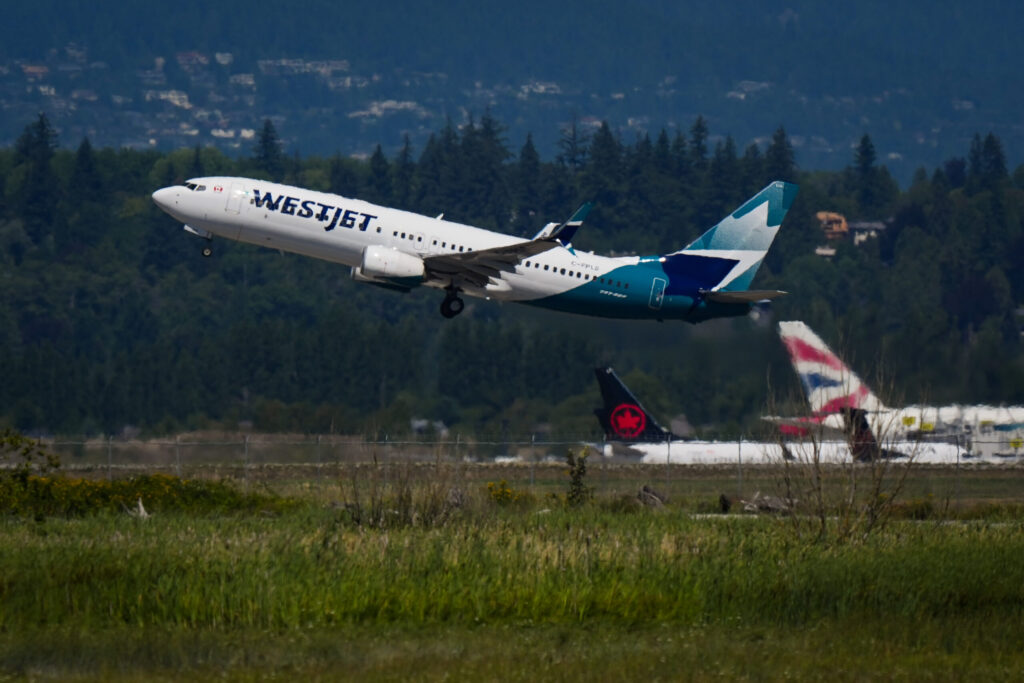
Air travellers considering a flight with WestJet are facing concerns about possible service disruptions due to an impending strike. The airline has already cancelled 81 flights scheduled for Saturday amidst tensions between the airline's management and its flight attendants, represented by the Canadian Union of Public Employees (CUPE).
The cancellation of flights comes in light of a looming work stoppage involving 4,400 flight attendants after CUPE issued a 72-hour strike notice early Thursday morning. In response, WestJet issued its own 72-hour lockout notice, indicating that if an agreement is not reached before the notice period expires, more cancellations and disruptions could follow.
As of now, the strike and lockout have not commenced. CUPE has indicated their readiness to initiate a strike, but both the union and WestJet are reportedly still engaged in negotiations. The notice period ends on Sunday at 12:01 a.m. MT (2:01 a.m. ET), marking the earliest moment that a strike could potentially commence should negotiations fail to result in a resolution.
WestJet communicated to the public on Thursday that they are actively negotiating to achieve a deal, with CUPE echoing this sentiment in separate statements. The airline has already scrapped flights, but it remains unclear whether all operations will be affected should the strike proceed.
In the wake of cancellations, WestJet reassured passengers that if the two parties do not reach an agreement before Sunday morning, further flight disruptions could happen. They also stated that communication will be sent out to ticket-holders regarding any changes or cancellations. Importantly, passengers travelling on WestJet's regional Encore service or code-share flights with partner airlines, such as Delta Air Lines, will not experience disruptions from the potential strike.
Passengers with upcoming travel plans during this turbulent time should note that WestJet has provided flexibility for those travelling between July 30 and August 4, allowing a one-time change or cancellation without incurring fees. In case of delays or cancellations, the airline promised either a refund or re-accommodation where necessary.
For those who booked directly with WestJet, notifications about travel changes will be communicated via the contact information provided during booking. Conversely, customers who utilized third-party platforms to book should reach out directly to those agencies for updates.
Passenger protection rules stipulate that it is the airline's duty to arrange for alternative transportation if needed. WestJet is grounding planes in advance of the potential strike or lockout to prepare for operational changes, as managing flight schedules necessitates timely planning.
The ongoing dispute arose from negotiations that have been less than favorable since July 15, when WestJet flight attendants overwhelmingly approved a strike mandate, with union members voting 99 percent in favor and a turnout rate exceeding 97 percent. Following this, CUPE organized nationwide rallies as part of a public-relations campaign to bolster support for their cause. Notably, the looming strike coincides with a long weekend in Canada.
The crux of the disagreement lies in compensation for flight attendants’ ground duties. The union has argued that certain tasks performed on the ground remain unpaid, a situation echoed in past disputes that led to work stoppages, such as the one involving Air Canada flight attendants last summer. CUPE is pressing for pay distinctions, as WestJet currently employs a "credit hour" system encompassing flight time and ground duties into a singular pay rate.
Under this system, the pay range is stated between $28.88 and $53.61 per credit hour, potentially resulting in a monthly income of $2,300 to $4,300 for full-time flight attendants. Other carriers have begun reforming their pay structures, with Delta Air Lines pioneering ground pay initiatives followed by American Airlines and Alaska Airlines.
This ongoing negotiation reflects a broader trend in the airline industry regarding fair compensation for labor, particularly as crew members advocate for benefits that align more closely with their workload. As discussions continue, the future of many travellers' plans relies heavily on the outcome of these negotiations.








