

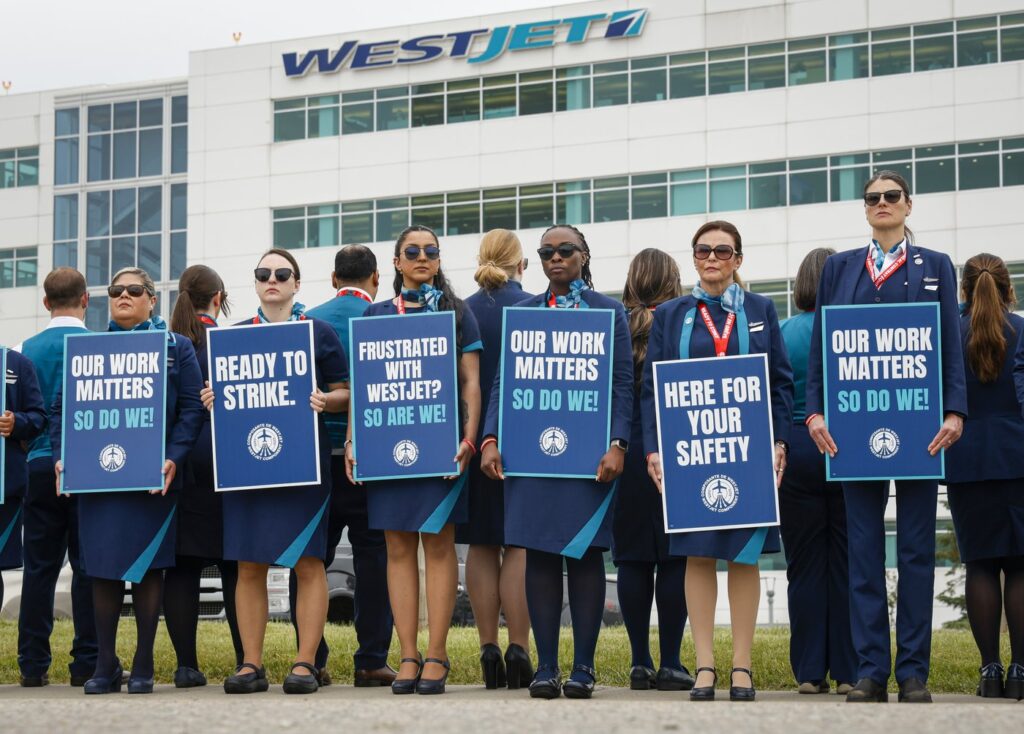
WestJet's 4,400 flight attendants initiated a strike early Sunday morning, ceasing airline operations during a busy summer travel weekend. This strike follows the failure of negotiations between WestJet and the flight attendants' union to establish a new contract.
In recent years, the Canadian aviation sector has seen significant labor unrest. Strikes from Air Canada flight attendants and WestJet mechanics have intermittently disrupted operations at the country's two largest airlines. Additionally, the threat of job action from pilots at both WestJet and Air Transat loomed during contract discussions, indicating a tense labor environment.
May 2023: WestJet Pilots
The negotiations between WestJet and the union representing its 1,800 pilots reached a critical point. In anticipation of a potential strike, WestJet canceled over 230 flights as the deadline approached. Fortunately, a deal was finalized just hours before the strike deadline on May 19, where pilots achieved a significant 24 percent salary increase over a four-year period. This contract raised hopes for similar labor improvements across the Canadian aviation sector and paralleled a recent agreement for Delta Air Lines pilots, who received a 34 percent pay increase over the same span.
June 2024: WestJet Plane Mechanics
Amid a backdrop of escalating tensions, WestJet plane mechanics unexpectedly went on strike, one day after the federal labor minister issued a directive for binding arbitration. The strike continued despite efforts for resolution through arbitration, concluding only when the union accepted a tentative agreement that promised wage increases exceeding 26 percent over five years. The three-day strike caught both WestJet and the federal government off guard, leading to the cancellation of more than 1,100 flights and affecting approximately 150,000 travelers, many of whom received little notice about their travel changes.
August 2025: Air Canada Flight Attendants
On August 16, 2025, about 10,000 flight attendants from Air Canada went on strike after failing to secure adequate gains in wages and boarding compensation, having not negotiated a new contract for ten years. Less than twelve hours into the strike, Canada's government intervened, with Jobs Minister Patty Hajdu invoking Section 107 of the Canada Labour Code to mandate binding arbitration and direct employees back to work. The union's decision to defy this order resulted in the strike being deemed unlawful by the labour board. Nonetheless, significant pressure was placed on Air Canada, which led then-CEO Michael Rousseau to agree to a tentative deal that resumed flight operations four days after the initial strike began. In the following months, the wage offer was rejected by the members and was subsequently sent to arbitration, resulting in a wage increase of 12 percent for junior mainline cabin crew in the first year and additional increases of between 2.5 and 3 percent for the remaining three years. The strike ultimately cost Air Canada an estimated $430 million in lost revenue.
December 2025: Air Transat Pilots
The union representing 750 pilots for Air Transat successfully negotiated a new contract just hours before the December 10 strike deadline. This agreement, ratified in January 2026, delivered substantial raises, exceeding 50 percent for most pilots across a five-year timeline. The airline managed to limit its cancellations to just 18 flights in anticipation of the potential work stoppage, highlighting the ongoing labor challenges within the Canadian aviation sector.
The increasing frequency of strikes within Canada's airline industry underscores the workforce's demand for compensation that aligns with escalating living costs and improved labor conditions across North America.








