

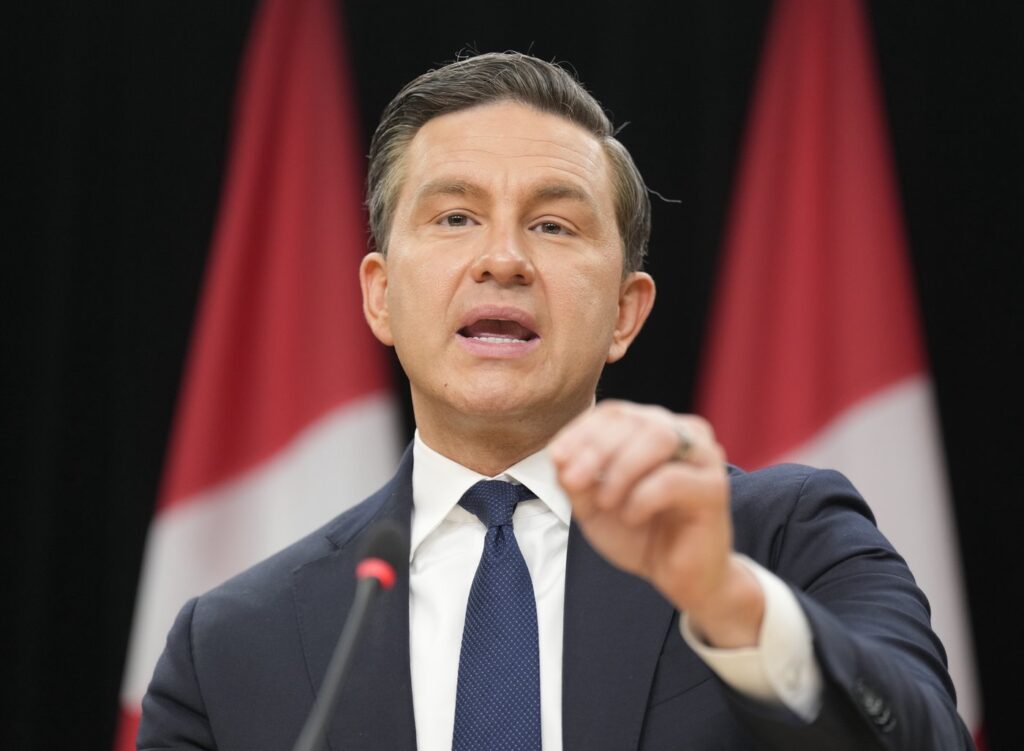
OTTAWA – Canada's Conservative leader, Pierre Poilievre, is urging the Canadian government to officially designate Kata'ib Hezbollah, an Iran-backed militant group, as a terrorist entity. This call comes in light of recent allegations that a member of the group contributed to an attack on a Canadian synagogue, as well as a shooting incident at the U.S. consulate in Toronto in March 2026.
In a letter to Public Safety Minister Gary Anandasangaree, Poilievre references findings by American authorities linking Kata'ib Hezbollah and its alleged commander, Mohammad Baqer Saad Dawood Al-Saadi, to coordinated attacks on Canadian soil. Al-Saadi, an Iraqi national, faces serious charges in U.S. Federal Court, where he has been accused of plotting at least 18 terror attacks across Europe and North America. These attacks are said to have been planned in retaliation for the ongoing conflict between the U.S. and Israel against Iran.
The court has documented that two of the planned attacks took place in Canada, specifically targeting a synagogue and the U.S. consulate in Toronto. Besides these charges, Al-Saadi is also implicated in conspiracy to provide material support to both Kata'ib Hezbollah and Iran's Islamic Revolutionary Guard Corps. Notably, both organizations are already designated as foreign terrorist entities by the U.S. government.
In his argument, Poilievre emphasizes the need for the Canadian government to take proactive measures against terrorism, asserting that it is the government's responsibility to protect its citizens from threats. He believes that officially listing Kata'ib Hezbollah as a terrorist organization would provide law enforcement with essential tools, including the ability to restrain or seize assets associated with the group, thereby enhancing Canada’s capability to prevent entry or residency of its members within the country.
“Canada should not wait for another synagogue to be shot or another foreign consulate to be attacked before shutting down the terrorist organization allegedly directing these attacks,” Poilievre states in his correspondence. He argues that swift action is necessary to fortify national security and safeguard Canadians from the threats posed by such militant groups.
This declaration and the concerning allegations surrounding Al-Saadi underscore a significant challenge facing Canadian authorities, particularly in light of the concerning trend of increasing global terrorism and threats emerging from militant organizations connected to geopolitical conflicts. The situation represents a complex intersection of domestic security and international relations that the Canadian government must navigate carefully.
The actions taken by Poilievre and the response from the Canadian government in the coming weeks will likely be closely scrutinized, reflecting broader public sentiments about safety and the appropriate measures to counter terrorism in an increasingly volatile world.








