Higher-than-usual temperatures are expected on Wednesday, with warnings from Environment Canada indicating that this heat could persist throughout the week.
Expected temperatures are projected to rise between 30 to 33 degrees Celsius; however, the humidity may cause it to feel as hot as 38 degrees. The weather agency has issued a message stating: "A hot and humid air mass is expected to move into the region today, bringing a period of persistently high daytime temperatures and elevated humidex values."
Overnight, residents can expect little respite, as temperatures are only anticipated to drop to around 19 degrees Celsius. Meteorologists predict that conditions may start to improve by the weekend, but some areas might still experience uncomfortable humidity levels.
In light of the rising heat, experts urge individuals to take necessary precautions, as excessive heat can pose health risks for everyone, particularly vulnerable populations such as older adults, individuals living alone, and those with pre-existing health conditions.
Nova Scotians are advised to be vigilant for signs of heat exhaustion, which include symptoms such as headaches, nausea, dizziness, thirst, and intense fatigue. The agency suggests that individuals should seek cooler environments, recommending public spaces such as cooling centers, community centers, libraries, or shaded parks if their living conditions become uncomfortably hot.
Long-range Forecast Shows Lack of Rain
Forecasts indicate that Halifax may not see rain until early next week. In addition to the oppressive heat, weekend temperatures are expected to remain in the high 20s, though it is not anticipated to be as muggy. The lack of precipitation poses concerns regarding wildfires and the agricultural sector.
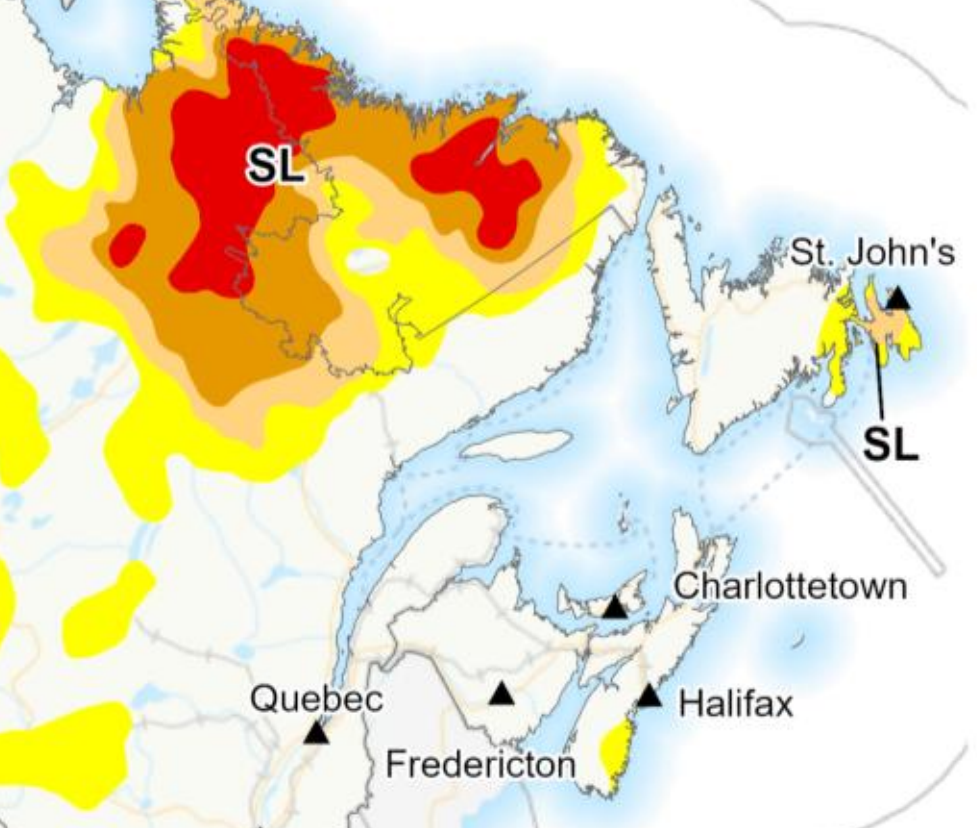
The most recent drought map released by Environment Canada indicates that the province is "notably dry." According to the map published on July 9, there have been significant variations in precipitation levels across the Atlantic provinces. Some areas have experienced above-normal rain totals, while others are below average, as noted by experts in the report.
Temperature patterns have also shown disparity, with western New Brunswick and Nova Scotia slightly warmer than average, whereas eastern areas of both provinces, along with all of Newfoundland and Prince Edward Island, have recorded cooler temperatures.