

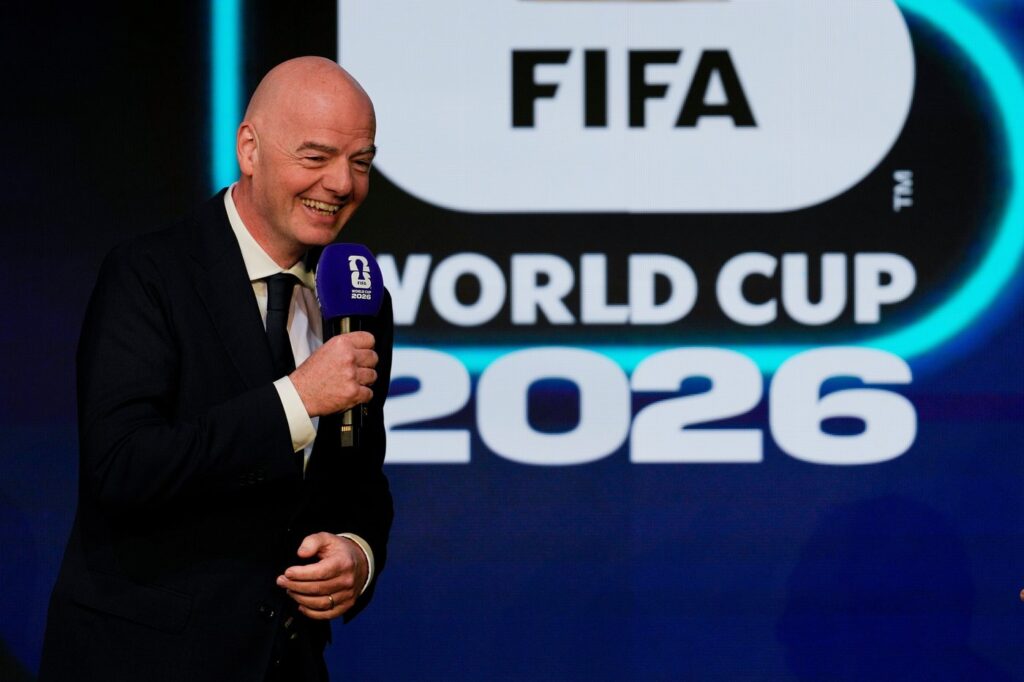
UEFA, CONCACAF, and the AFC have expressed their strong disapproval of FIFA President Gianni Infantino's recent proposal to sell stakes in the World Cup, labeling it a “fundamental breach of trust” with the football community. In an open letter released on Monday, these confederations stated that the breach of trust stemmed from deception, indicating that Infantino's actions demonstrated a disregard for the collective he was meant to serve.
UEFA oversees soccer in Europe, while CONCACAF governs the sport in North, Central America, and the Caribbean, and the AFC is responsible for the sport in Asia. The letter was co-signed by prominent leaders—including UEFA President Aleksander Ceferin, AFC President Salman Bin Ibrahim Al-Khalifa, and CONCACAF President Victor Montagliani—alongside their general secretaries.
The open letter emphasized that "football is the world’s greatest shared passion," asserting that it does not belong to any individual or institution but rather to players, fans, clubs, member associations, and the institutions that protect its future. The confederations asserted the importance of solidarity within the football community as they spoke collectively to address what they perceive as a serious issue.
Infantino's proposal to sell stakes in the World Cup to private equity investors has sparked significant backlash and is viewed as a catalyst for revolt against his presidency. The letter criticized Infantino's leadership, stating, “It is not the conduct of a custodian of the game, but of one who believes the game is answerable to him.” The confederations stressed that this type of leadership is unworthy of the sport and condemned Infantino's actions as a violation of the responsibilities entrusted to him.
Additionally, UEFA has previously issued threats to boycott the World Cup and other FIFA events, highlighting a growing rift between the governing bodies. They expressed disappointment even after FIFA apologized and retracted the proposal, indicative of deeper-rooted issues within the organization. Norway's soccer federation has even called for Infantino’s resignation, and the English Football Association has withdrawn its support for his re-election, further demonstrating the discontent among football’s stakeholders.
The letter urged for unity within the footballing world, advocating for leaders who prioritize serving the sport rather than dominating it. The sentiment conveyed by UEFA, CONCACAF, and the AFC resonates with a widespread belief in the importance of collective management in football.
In response to the backlash, FIFA issued an apology for the errors associated with the failed plan, stating that senior staff at a crisis meeting in Morocco “reaffirmed their full support” for Infantino. However, the letter from the three confederations criticized the nature of this meeting, noting that it was attended solely by FIFA management officials and lacked participation from FIFA Council members or member associations, raising questions about its transparency.
The confederations' letter further contended that FIFA’s attempts to frame the situation as a communication failure overlooked the true issue at hand: a significant failure of judgment. The decision to propose selling a stake in the World Cup was described as a severe breach of trust with the institutions FIFA is supposed to serve.
Moreover, FIFA has described the ongoing criticism of Infantino as part of a "concerted and ongoing effort" to undermine his leadership. This statement coincided with a report from The Daily Telegraph, which highlighted concerns regarding a departure package awarded by UEFA to a former staff member who previously collaborated with Infantino. UEFA confirmed the payment was in line with established regulations at that time.
Infantino, who previously spent 16 years at UEFA before becoming FIFA President, now faces an uphill battle to regain significant trust within the football community as the ramifications of the failed proposal continue to unfold.








