

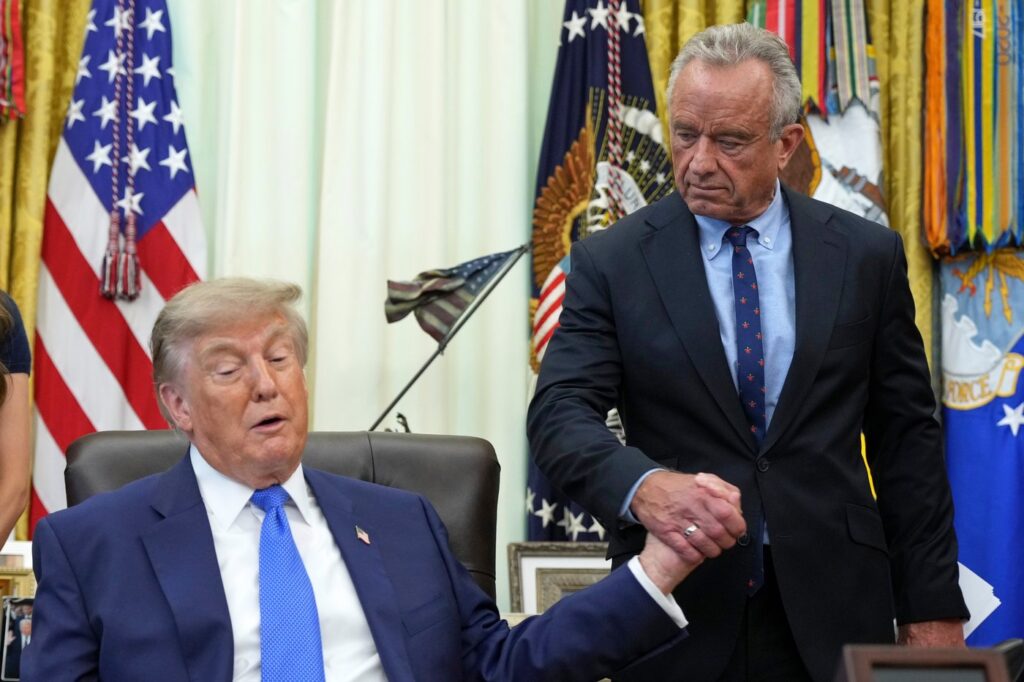
Doctors are expressing concern that President Donald Trump's recent executive order regarding vaccines is misguided and could lead to increased fear and confusion among parents, particularly as measles outbreaks are occurring and vaccination rates decline just as children prepare to return to school. Michigan pediatrician Dr. Molly O'Shea emphasized the importance of vaccine safety, stating, "To put into question the safety or efficacy of these vaccines right now is really unfortunate and ill-conceived."
The executive order, signed on Monday, advocates for the separation of the measles, mumps, and rubella (MMR) vaccine into three individual shots and recommends administering childhood immunizations in separate appointments when possible. It also proposes changes to existing childhood vaccination schedules that had previously been blocked by a federal judge. This initiative is backed by Robert F. Kennedy Jr., a prominent figure in the anti-vaccine movement.
Trump has previously suggested a link between the number or timing of vaccines and the rising rates of autism spectrum disorders, despite extensive research confirming that no such connection exists. He has even described the combined MMR vaccine as potentially "lethal," a statement that has drawn sharp criticism from health experts. Dr. Paul Offit from the Children’s Hospital of Philadelphia stated that the recommendations from Trump and Kennedy "are just not science-based," highlighting the danger of casting doubt on vaccines during a time of significant public health crisis.
Dr. O'Shea pointed out that the existing combined MMR vaccine has undergone comprehensive safety studies and is vitally important during the current measles epidemic, which represents the largest in over 30 years. She noted that the notion of separating the vaccines lacks scientific merit, as joint administration provides a better immune response. Presently, there are no separate vaccines for these diseases available for children in the United States; Trump's order, however, directs the health department to devise a plan to offer them individually.
Medical professionals have raised alarms about the potential revival of discredited theories surrounding vaccines and autism, especially in light of increasing autism diagnoses, with recent data indicating that approximately 1 in 31 children in the U.S. are affected. Experts assert that the causes of autism are multifactorial, involving both genetic and environmental influences. Dr. Andrew Racine from the American Academy of Pediatrics reiterated that numerous rigorous studies have found "unequivocally" no link between childhood vaccines and autism.
Medical experts warn that Trump's comments and executive order may generate further confusion about vaccination guidelines. During his term, Kennedy attempted to overhaul immunization recommendations, resulting in changes that were ultimately blocked by a federal judge. The pediatric academy continues to endorse a more comprehensive immunization schedule that aims to safeguard against 18 diseases, which has been carefully structured for the safety and protection of young children as their immune systems develop.
Concerns surrounding insurance coverage for vaccines should not pose an issue, as Medicaid and CHIP maintain coverage for vaccines recommended prior to the current administration, and private health insurance has generally followed suit through 2027.
Doctors fear that the current climate of confusion and fear may contribute to a rise in vaccine hesitancy among parents. Federal statistics reveal that U.S. kindergarten vaccination rates have been declining, with a record number of children receiving exemptions in the 2024-25 school year. There are apprehensions that families may delay necessary vaccines or skip appointments altogether, increasing the risk of vaccine-preventable diseases during the interim.
Experts advocate for clear, evidence-based guidance for families regarding vaccinations rather than conflicting recommendations arising from political processes. Michael Osterholm from the University of Minnesota highlighted that when families encounter mixed messages, their confidence in vaccination diminishes, which ultimately puts children's health at risk.
In summary, medical professionals are highlighting the gravity of providing coherent, scientifically grounded guidance on vaccinations. With rising measles cases and a backdrop of misinformation, the health of children could be significantly impacted if vaccine hesitancy continues to increase.








