

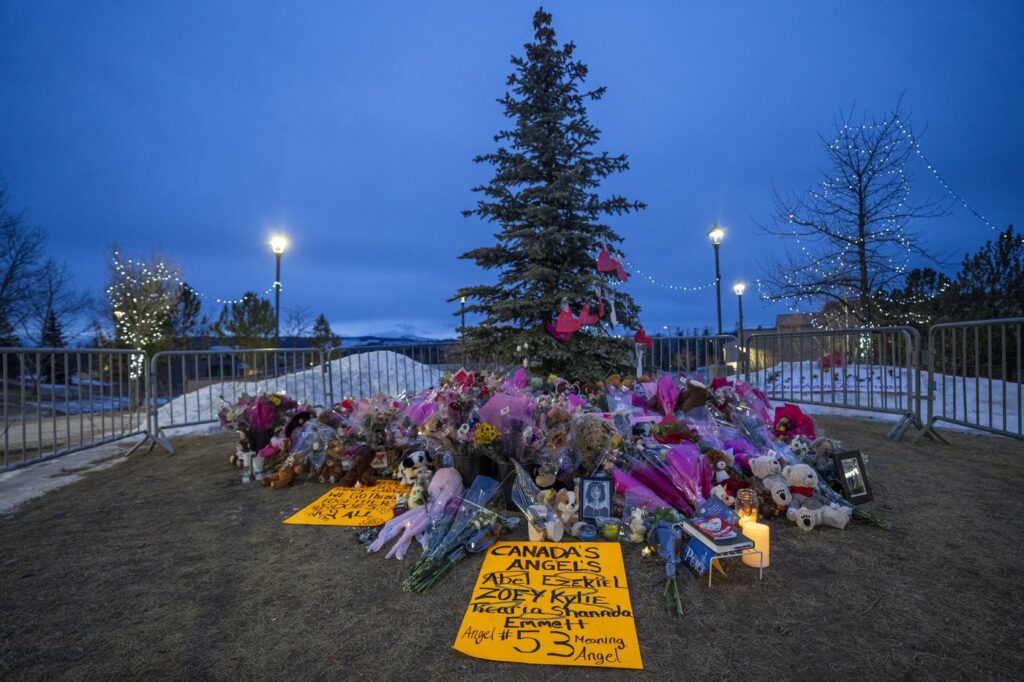
VANCOUVER — Following the tragic mass shooting that occurred on February 10 in Tumbler Ridge, British Columbia, police initially faced significant confusion regarding the number of shooters involved. In the immediate aftermath, the Royal Canadian Mounted Police (RCMP) received varying reports that led them to believe there could have been multiple attackers, complicating the response efforts.
This confusion is documented in legal documents that have been made public as part of a court challenge by a media consortium, which includes The Canadian Press. The heavily redacted documents comprise several "information to obtain" (ITO) requests that police filed while seeking warrants related to the case.
One notable document, an ITO from March, clarified that the artificial intelligence company OpenAI was not under investigation concerning the mass shooting. The police sought an order for OpenAI to provide data related to the shooter’s ChatGPT accounts, indicating a focus on digital evidence as part of the investigation.
The documents detail the chaotic moments when police arrived at the scene and report that the initial confusion around names of the suspect led officers to erroneously suspect that Jesse Van Rootselaar, a teenage shooter, was not acting alone. The shooter was reported to have killed her mother and brother, with the bodies found amid scattered shotgun shell casings and an empty shotgun.
The violence then escalated at Tumbler Ridge Secondary School, where five schoolchildren and an education assistant were shot dead, inciting a wave of national grief and outrage. According to an ITO dated February 11, just a day after the attack, incident commander Inspector Chris Riddle identified the suspect as Jesse Jacobs, a case characterized as a "male that identified as female" with an "obsession with guns."
The ITO recounted calls received by police about a vehicle, specifically an SUV, that was seen leaving the home where the bodies were discovered. Witnesses noted the SUV had backed into a snowbank, showing rear damage before being driven away in a reckless manner. A caller identified the driver using a nickname, "Steezy," describing the individual’s gender expression and presence of firearms in the home.
In the aftermath of the tragedy, the police continued their investigation and eventually confirmed via school surveillance footage that one individual was responsible for the shootings. Van Rootselaar was later found dead from a self-inflicted gunshot wound, leading investigators to pursue extensive digital footprints for context and motive.
Another ITO filed on February 20 expressed requests for access to electronic devices and other pertinent items, including Van Rootselaar's phone. Investigators sought to review documents believed to outline mental health issues and an obsession with firearms. Notably, it mentioned "biological evidence" being recovered alongside various items establishing residency for the suspect.
The investigation revealed the shooter's mental health struggles and a fascination with firearms. While many witness statements in the documents remain redacted, the redactions extend to a detailed account of what police observed on school camera footage. It was on February 15 when investigators were informed by the FBI that OpenAI had found two ChatGPT accounts that they believed belonged to Van Rootselaar, which could contain crucial information for the ongoing investigation.
A subsequent ITO on March 6 detailed the efforts to obtain records from OpenAI regarding the identified ChatGPT accounts, indicating that the company had voluntarily disclosed their existence to law enforcement. This document also included police statements describing attempts to trace several firearms connected to the crime; however, specific details relating to the weapons remain redacted for privacy and investigatory reasons.
Reports indicate that within weeks of the massacre, police had gathered 80 statements from a diverse group of individuals, including teachers, students, and first responders. A significant portion of the documents continues to be withheld, including details on Van Rootselaar's social media activities, raising questions about the extent of digital influence on the attack.
This investigation continues to evoke significant public interest and concern about the intersections of mental health, firearms access, and the role of digital platforms in violent incidents. The material released provides a glimpse into the complexities law enforcement faced during the immediate stages of a devastating tragedy.








