

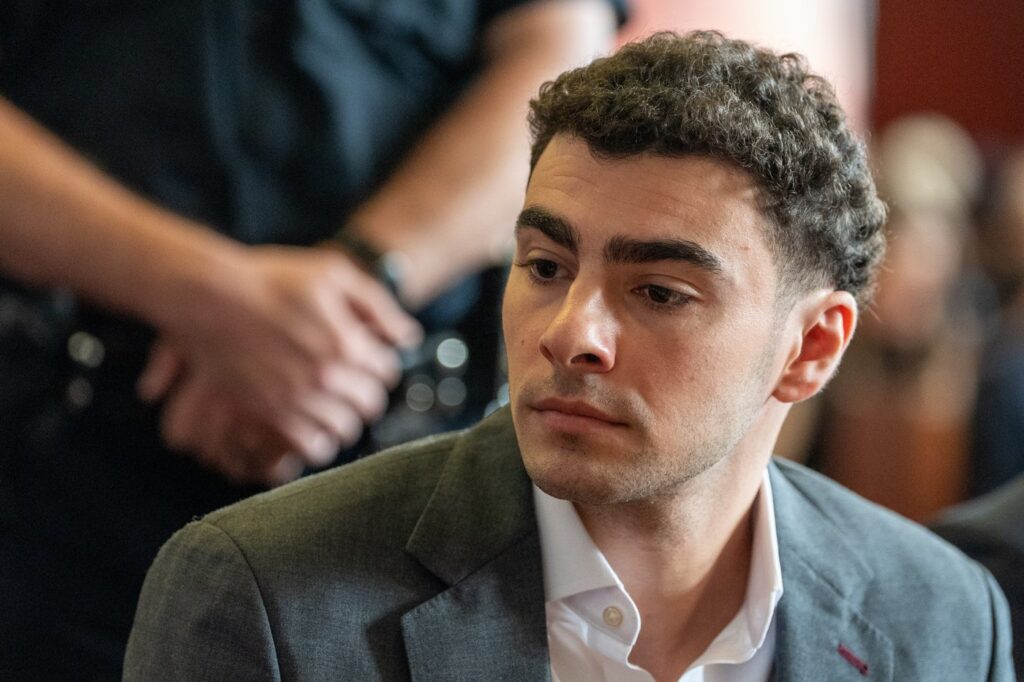
NEW YORK (AP) – Luigi Mangione is anticipated to plead guilty as soon as Friday in a federal case that accuses him of stalking and murdering UnitedHealthcare CEO Brian Thompson. This information comes from a source familiar with the legal proceedings who requested anonymity as they were not authorized to speak publicly about the case.
The potential guilty plea marks a significant turn in a case that has stirred considerable anxiety among business leaders while also energizing critics of corporate practices. Mangione's legal team, along with representatives from the Justice Department and Manhattan federal prosecutors, declined to provide any comments on the matter.
Mangione is charged with traveling to New York City with the intent to ambush the 50-year-old Thompson. He allegedly shot Thompson outside a Manhattan hotel on December 4, 2024, as the CEO was on his way to UnitedHealth Group’s annual investor conference. Mangione is set to appear in court on Friday for a hearing that was scheduled on short notice, concerning two counts of stalking. The specific charges Mangione plans to plead guilty to remain unclear, but discussions between his legal counsel and federal prosecutors have been ongoing regarding a possible resolution to one of the two criminal cases linked to Thompson's death.
Currently, Mangione, 28, faces charges in both federal and state courts in New York and still has the chance of facing a trial in his unresolved state case. His state murder trial is scheduled to begin on September 8. The charges in both courts carry the potential for a life sentence.
Despite his charges, Mangione has maintained a not-guilty plea and has publicly expressed his concerns about facing two separate trials. In February, he addressed the presiding judge, stating, "It's the same trial twice. One plus one is two. Double jeopardy by any commonsense definition." Under New York law, if the federal case concludes first, it could block the state prosecution, although it is not automatically guaranteed.
The state's protections against double jeopardy would apply if a jury is sworn in a prior trial, like a federal case, or if that prior case concludes with a guilty plea. The charges against Mangione are distinct but arise from the same chain of events. Following a guilty plea, Mangione's legal team may request the state judge to dismiss the state charges, citing double jeopardy, but state prosecutors maintain their case is independent and does not fall under double jeopardy protections.
Mangione's federal charges allege that he crossed state lines by bus to both stalk and kill Thompson, utilizing various means such as a cellphone, the internet, interstate highways, and booking a hostel to carry out his plans. The state charges specifically relate to the murder and associated firearms offenses. State prosecutors previously indicated their opposition to the idea that a guilty plea in federal court should negate the state's case.
In a letter sent last month, state prosecutors remarked on the necessity of any guilty plea to reflect the severity of Mangione's actions, the irreversible loss of Thompson's life, the consequences for the victim's family, and the broader implications for state interests surrounding homicide charges.
Claims that Mangione might pursue a psychiatric defense in state court were briefly mentioned in June but were retracted shortly thereafter. This defense, based on the assertion of extreme emotional disturbance at the time of the killing, is not permissible in federal court. Surveillance footage has revealed a masked assailant shooting Thompson from behind, with evidence suggesting the words "delay," "deny," and "depose" were inscribed on the ammunition, echoing terminology sometimes linked to tactics employed by insurers to evade claims payments.
Mangione, an Ivy League graduate from a wealthy Maryland family, was apprehended five days post-incident at a McDonald’s located in Altoona, Pennsylvania, approximately 230 miles from Manhattan. He has garnered substantial support and attention from individuals displeased with the health insurance sector.
An online campaign aimed at funding his legal defense has successfully raised over $1.5 million, with dozens of supporters attending his court appearances, some displaying green attire reminiscent of the character Luigi from the iconic Mario Bros. video game series and t-shirts bearing the message "FREE LUIGI."








