

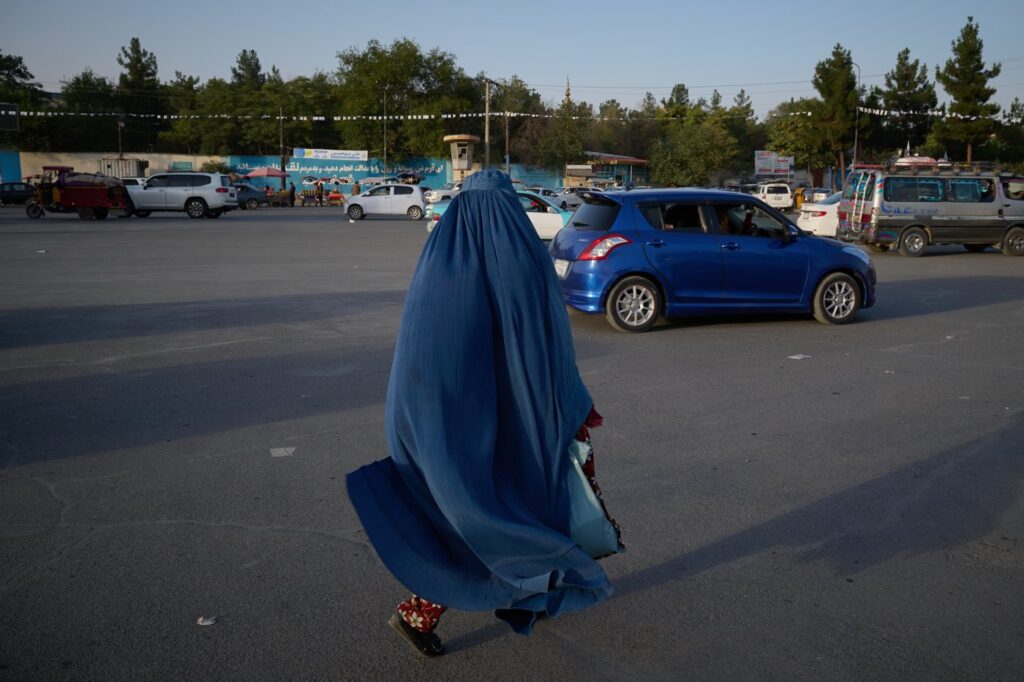
OTTAWA — Five years after the Taliban's dramatic takeover of Kabul on August 15, 2021, advocates are calling for renewed attention to the severe oppression of women in Afghanistan. Murwarid Ziayee, senior director of the Calgary-based charity Right to Learn Afghanistan, emphasizes the urgent need for international action and questions why Afghan women should solely bear the burden of resilience and pursuit of opportunities.
The Taliban's resurgence led to chaotic scenes as desperate citizens attempted to flee the country, clinging to foreign military jets. Canadian troops were heavily involved in Afghanistan for 13 years as part of a NATO stabilization mission following the September 11 attacks in 2001. Over 40,000 Canadian Armed Forces personnel were deployed, with 158 soldiers losing their lives, alongside others who suffered from mental health issues and physical injuries upon returning home.
During Canada's mission, efforts were made to empower Afghan girls through the establishment of schools and promoting women's roles in sports, politics, and media. However, since regaining control, the Taliban has systematically excluded women from nearly all aspects of society. Despite promises to allow women access to education and employment according to their interpretation of Islamic principles, girls have been banned from schooling beyond Grade 6, with increasing restrictions on job opportunities, parks, gyms, and sports facilities.
Currently, an alarming 2.4 million girls are unable to pursue education, with many not reaching Grade 6 due to financial barriers. The United Nations has pointed to significant economic hardships exacerbated by global sanctions and natural disasters leading to widespread malnutrition among children. There has also been a troubling rise in child marriage within the country.
The UN Assistance Mission in Afghanistan highlights that the restrictions imposed on women and girls hinder the nation’s economic recovery and its reintegration into the international community, noting that only Russia currently recognizes the Taliban government. In contrast, some Afghans report a sense of enhanced safety due to reduced crime and terror incidents since the Taliban took power.
UN Women warns that Afghan women and girls are living under the most severe restrictions globally, which have intensified over the past year. They noted that Afghanistan has methodically dismantled the rights of half its population, marking it as a significant outlier in the contemporary world.
In response to the dire situation, initiatives like Ziayee’s charity aim to provide virtual learning opportunities for Afghan girls, with programs including virtual classrooms, self-directed learning modules, scholarships, and online libraries. Students involved in these programs have shared their experiences, with one reflecting the realities of life under Taliban rule through art, illustrating a woman in a burqa with shackled hands while holding a book, symbolizing hope despite substantial barriers.
Ziayee also expressed appreciation for Canada's ongoing support of Afghan girls, noting that Ottawa has consistently encouraged the UN to consider women's voices in engagements with Afghanistan. However, she believes Canada can expand its support by offering scholarships for Afghan girls and taking firmer actions against the Taliban, such as instituting travel bans and freezing assets of regime officials.
She argues that Taliban leaders should be made to participate in negotiations via video call, mirroring how girls currently attend classes virtually. Furthermore, she advocates for countries to officially label the Taliban's actions as gender apartheid under a new legal framework to enforce sanctions, despite concerns about potential adverse effects on aid to Afghanistan.
Ziayee calls for continued awareness of the plight of Afghan women, stating that as media focus dwindles, Afghanistan and its women may fade from important discussions and negotiations.








