

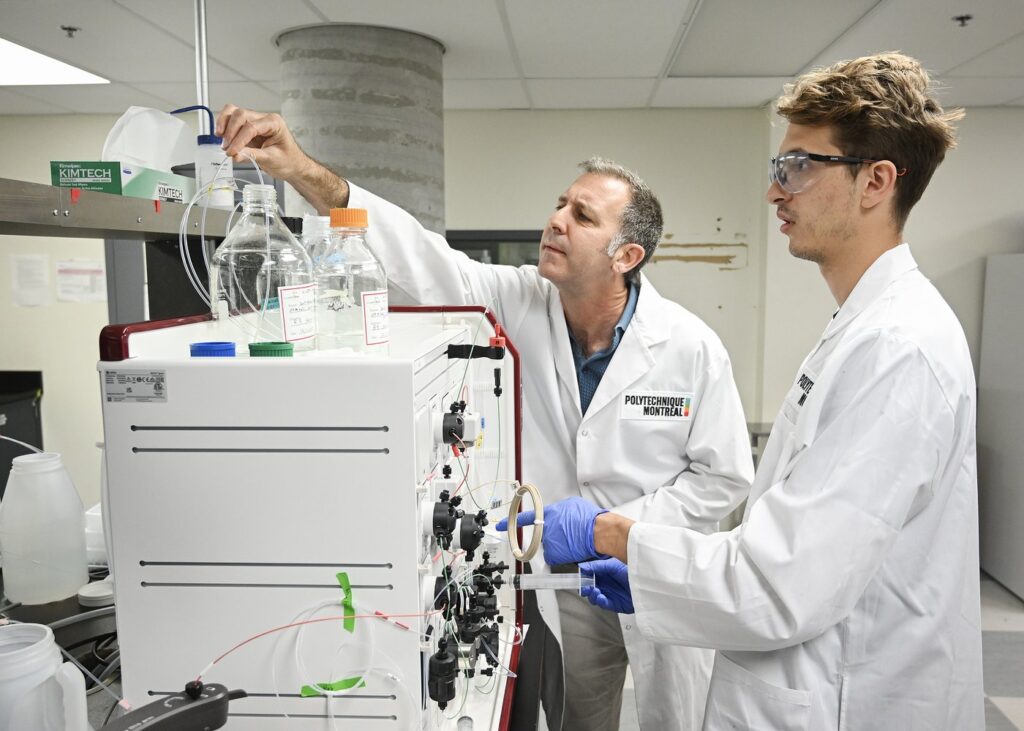
In a biomedicine laboratory at Polytechnique Montréal, researchers are actively engaged in producing animal proteins within a vibrant orange solution. Their work, conducted while donning white lab coats, involves taking samples with large syringes. The laboratory is equipped with neatly-labelled glass bottles full of clear liquid, and scientists analyze the antibodies produced by cells using advanced computer monitors.
Located down the hall is a large cryogenic freezer containing tubes filled with samples of proteins and cells. These materials are crucial for the development of vaccines and medicines. Six years following the unexpected global spread of COVID-19, the Polytechnique lab has taken a leading role in preparing Canada for future pandemics through a federal initiative known as Ramp Up, which collaborates with various research institutions nationwide to address deficiencies within the biomanufacturing sector.
Head researcher Gregory De Crescenzo emphasizes the importance of preparation, stating, “It’s not a matter of if, but when,” as he conducted a tour of the lab, which encompasses multiple rooms at the downtown Montreal engineering school. Amidst the proliferation of vaccine misinformation during the pandemic, De Crescenzo is hopeful that by allowing the public to glimpse inside his lab, trust in medicine can be rebuilt.
The Ramp Up initiative aims to accelerate vaccine and biomedical processes while concurrently providing training for students. Although scientists primarily work with viruses such as influenza and bird flu, De Crescenzo notes that the research has broader applications across numerous diseases. A crucial aspect of Ramp Up’s mission is to ensure that the mistakes made in Canada during the COVID-19 pandemic are not repeated, particularly the isolation of government, academics, and industry stakeholders. He stressed that Canada’s biomedical production capacity was notably limited during the pandemic.
One of the main challenges identified by Ramp Up is the vaccine supply chain, as Canada lacked the capacity for large-scale vaccine production and faced limitations in imports. Students and researchers at Polytechnique utilize the same equipment found in commercial labs, including tubes for cell growth and industrial freezers for long-term preservation of samples and bacteria. Partner laboratories play an important role in identifying key components, such as antibodies or viral proteins, which the Polytechnique team subsequently produces and works to scale for industrial output.
De Crescenzo likens the lab's function to that of creating recipes, stating, “Everything is normalized, is written, carefully verified, approved, transferred to the industries.” He expresses confidence that Canada is significantly better prepared now compared to the situation before COVID-19, crediting the government for addressing previous gaps. However, he acknowledges that more work remains to ensure that the lab’s processes are scalable to industry standards, and advocates for enhanced collaboration among government, academia, and industry actors.
Isaac Bogoch, an infectious disease specialist at the University of Toronto, highlights the necessity of a coordinated, multi-sector approach to pandemic preparedness. He asserts, “It’s a whole of government and a whole of society response. There’s not one lab that’s going to do it.” While Bogoch finds the government’s investments in biomedicals encouraging, he points out that improvements are also needed in areas such as transportation, food safety, and public health infrastructure. For instance, he cites Canada’s effective response during the hantavirus outbreak on a cruise ship in May as an illustration of successful cross-sector collaboration.
Launched in 2024, the Ramp Up initiative collaborates with multiple educational institutions including Université Laval, Université de Montréal, HEC Montréal, Simon Fraser University, and the BRIDGE Research Consortium, with the aim of bridging existing gaps in Canada’s biomanufacturing landscape. The Ramp Up website indicates that by 2029, Canada will require more than 15,000 highly skilled workers in this field. Health Canada reports considerable investments aimed at enhancing the nation's pandemic response capabilities, dedicating $712 million to upgrade biocontainment facilities and establish research hubs led by notable institutions across Canada, including the University of British Columbia, the University of Alberta, the University of Ottawa, McMaster University, and Polytechnique Montréal.
Since 2020, the government has invested $2.5 billion in vaccine, therapeutic, and biomanufacturing projects, focusing on supply chain resilience. Moderna’s vaccine production facility in Laval, Quebec, built in 2024, is notable for producing its first doses of the COVID-19 vaccine last year. According to Health Canada, these advancements are designed to guarantee timely access to life-saving medicines for Canadians during future public health emergencies. Mark Johnson, a spokesperson for Health Canada, emphasizes that preparation for epidemics and pandemics is an inevitable task, despite their unpredictable timing.
Master’s student Marie-Gael Tchummo shares her experience working with Ramp Up, stating that it has helped her address vaccine hesitancy among her peers and family members who were initially skeptical about the rapid development of COVID-19 vaccines. She explains, “When I was open to tell them about what my study was and what is going on, the skepticism came down.” Both Tchummo and De Crescenzo recognize the necessity of public trust for the success of initiatives like Ramp Up, advocating for transparency in the processes of vaccine creation and the materials involved.








