

On Monday, Iran’s state media reported that a new ballistic missile, characterized by enhanced capabilities, is a part of Tehran's evolving military doctrine, asserting that the country will actively counter any potential threats preemptively. The report emphasized remarks from Mohsen Rezaei, the head of Iran's Supreme National Security Council, who proudly highlighted the missile’s capabilities, claiming it had been tested against a U.S. warship. However, details regarding whether the missile involved in the test was the Qassem Basir, a solid-fueled missile, remain ambiguous.
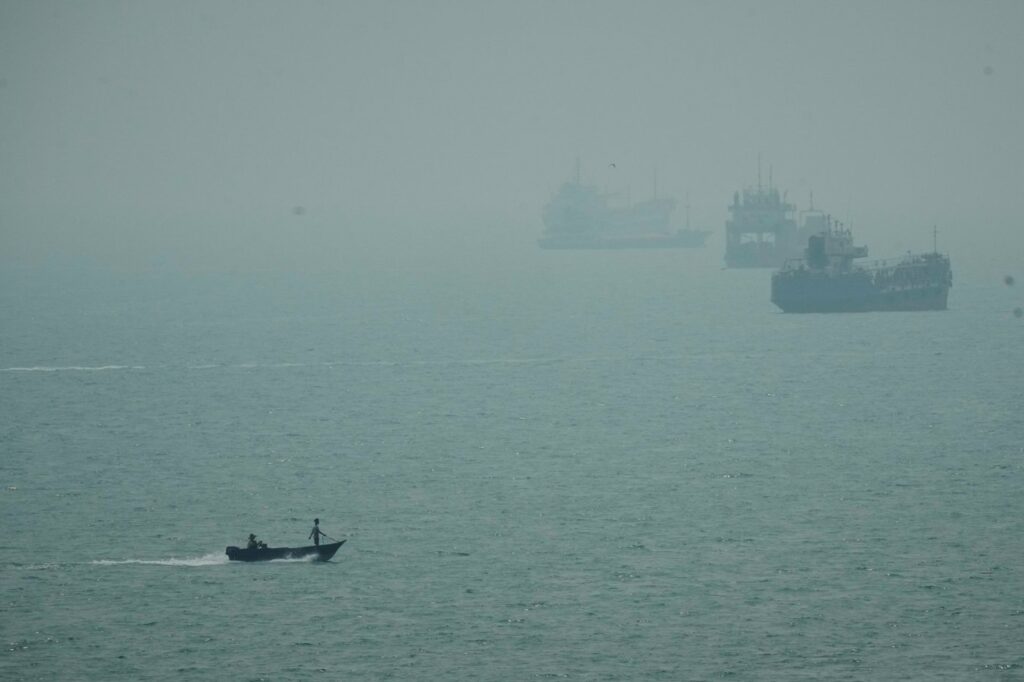
This declaration comes in the wake of escalating tensions as the U.S. reported that ballistic missiles were fired at American warships, which, in retaliation, struck three Iranian oil tankers over the weekend. Analysts labeled this missile launch a significant escalation in hostilities, noting that prior to this incident, Iran's maritime assaults had chiefly targeted commercial shipping amid an ongoing six-month conflict. According to U.S. sources, the American warships successfully evaded the missile attacks.
Iran's position appears increasingly defiant as recent statements assert that the Qassem Basir missile represents a pivotal shift in the nation’s defense approach. This missile reportedly features enhanced range and accuracy, along with a warhead weighing half a ton. The Qassem Basir was unveiled last year, boasting a range of at least 1,200 kilometers (approximately 745 miles).
Concerns regarding Iran's ballistic missile program have fueled U.S. and Israeli military actions against Iran earlier this year, an important factor in the ongoing war. The White House reacted unfavorably to Rezaei's announcement about establishing an "exclusion zone" near the strategically significant Strait of Hormuz, asserting that this waterway remains open and under U.S. control. U.S. officials also confirmed that the Navy has cleared mines from the strait, and tanker traffic bound for non-Iranian ports is expected to rise. Despite the ongoing U.S. blockade targeting Iranian ports to inflict economic damage by restricting oil exports, the military noted that as of Monday, 94 commercial vessels had been redirected and three disabled.
Tehran is insisting that vessels adhere to routes it designates through the strait, which was previously considered an international waterway prior to the conflict. Rezaei recognized that the U.S. is facilitating a limited number of ships passing through a route offshore of Oman, adding that Iran has refrained from sinking these vessels due to environmental concerns related to their oil cargo.
As both the U.S. and Iran continue to assert conflicting claims regarding the Strait of Hormuz and shipping rights, global commerce information firm Kpler observed a significant decline in vessel transits through the waterway last week. This follows a deadly attack on a Saudi-owned tanker that resulted in two crew members’ deaths and seven others unaccounted for, marking potentially the most lethal assault on a commercial ship since hostilities escalated on February 28 with U.S. and Israeli strikes.
Regional frustration has become palpable as uncertainties loom over the crucial Strait of Hormuz, which is integral for routing global oil, natural gas, and fertilizer supplies. Anwar Gargash, a diplomatic adviser to the UAE president, underscored the need for shared control of the strait during a forum in Abu Dhabi, emphasizing that no single nation should dominate the passage. He declared that the UAE’s energy exports and trade activities must not be held hostage amidst the ongoing conflict. The UAE, a close ally of the U.S., has experienced Iranian missile and drone attacks during the war, leading it to suspend all trade with Iran following renewed hostilities last month.
Building trust between Iran and Gulf nations could take decades, Gargash warned, while Nabil Fahmy, the secretary-general of the Arab League, expressed unsatisfied sentiment at a ministerial meeting in Cairo, stating that the maritime corridors should not become bargaining chips in broader regional negotiations, condemning Iran's unprovoked attacks against Gulf states.








