

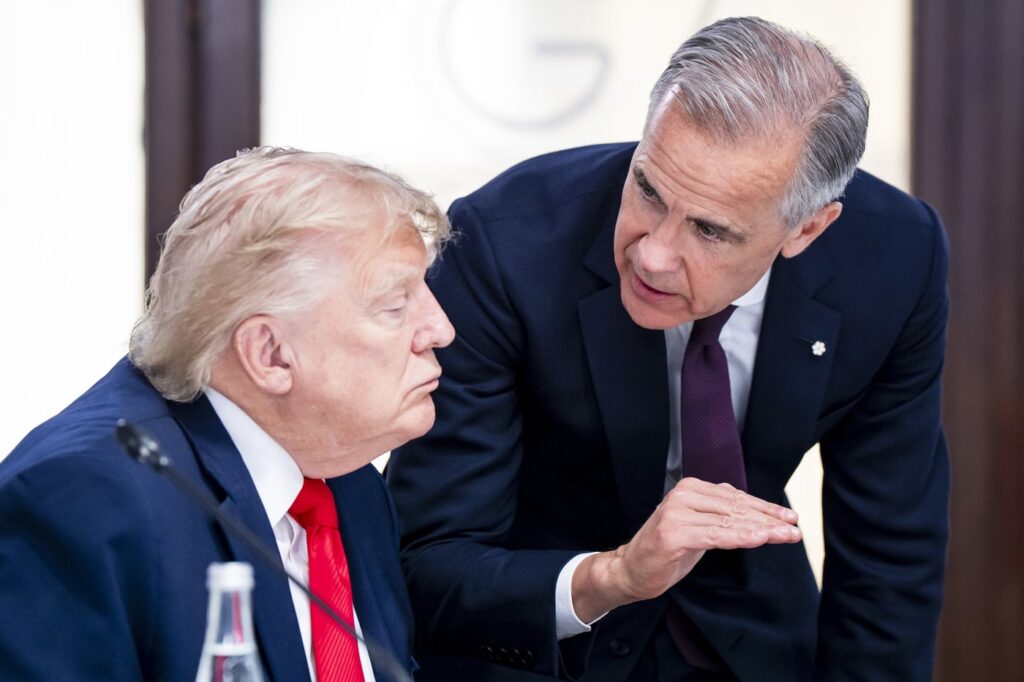
As the United States prepares for crucial midterm elections in November, there is an unexpected issue gaining traction among voters in several states: President Donald Trump’s escalating trade war with Canada. This situation has cast a shadow over the electoral prospects of certain Republican candidates, particularly in states that have historically strong trade ties with Canada.
Maine Republican Senator Susan Collins articulated her concerns regarding the trade policies, stating, “Canada is our friend, our closest ally and our biggest trading partner.” Collins emphasized that the tariffs imposed by Trump, aimed at various Canadian goods, are detrimental to Maine’s economy, particularly industries such as seafood and lumber that are closely integrated with Canadian markets.
Collins has acknowledged that Trump’s tariffs have made her re-election efforts substantially more difficult. While her seat in Maine might be the most at risk, other Republican candidates in battleground states are also feeling the effects of the trade conflict. Political-science professor Matthew Lebo noted that midterm elections are usually challenging for the party in the White House and highlighted that the trade war could jeopardize Republican seats in states like Alaska, Iowa, Michigan, and Ohio.
The U.S.-Canada relationship has shifted dramatically under Trump's administration, with Canada now facing tariffs on a wide range of products, including hockey sticks and cement, along with heated rhetoric from the U.S. president. This shift has not gone unnoticed in Canada; however, many Americans have remained largely uninformed about the implications of this trade war until recent escalations in tensions and negotiations fell through.
After the breakdown of talks, Trump imposed steep tariffs on Canadian goods, and his administration has attempted to shift blame for the failure of negotiations onto the Canadian political leadership. Prime Minister Mark Carney responded by stating that U.S. officials are not qualified to comment on Canadian politics, emphasizing the complicated dynamics at play.
Recent polling data indicates that the American public is largely disapproving of Trump’s trade policies; an Ipsos/Reuters poll revealed that two-thirds of Americans opposed the renaming of Lake Ontario to "Lake America," and only 20% supported higher tariffs against Canada. This unpopularity has instigated concerns within the Republican Party, particularly among candidates from border states, prompting discussions about finding alternatives to the ongoing trade conflict.
Democratic candidates are leveraging the situation to highlight the potential economic fallout of the trade war. Michigan Senate candidate Abdul El-Sayed remarked, “this vanity war is not a war with Canada. It’s a war on Michigan,” pointing out the increased costs Americans face due to tariffs. Some Republican candidates are attempting to distance themselves from Trump’s policies, recognizing the political risk associated with the trade war.
While New York Governor Kathy Hochul has been vocal in her opposition to Trump’s trade tactics, her opponent Bruce Blakeman has taken a more cautious approach to the issue. In contrast, Republican Anthony Constantino praised the renaming of Lake Ontario as a "marketing genius," showcasing the varied Republican responses to the trade conflict.
The broader economic landscape, influenced by the trade war with Canada, rising gas prices, and tensions elsewhere, is contributing to uncertainty leading up to the November elections. Christopher Sands, from the Johns Hopkins University’s Center for Canadian Studies, suggested that while neither party is likely to have an easy path, Trump’s actions provide Democrats with an opportunity to unite various factions under the banner of opposing what they perceive as a senseless trade war.
As the midterm elections approach, the political ramifications of Trump’s trade policies with Canada are becoming increasingly tangible, affecting electoral strategies and shaping voter sentiment in pivotal states across the country.








