

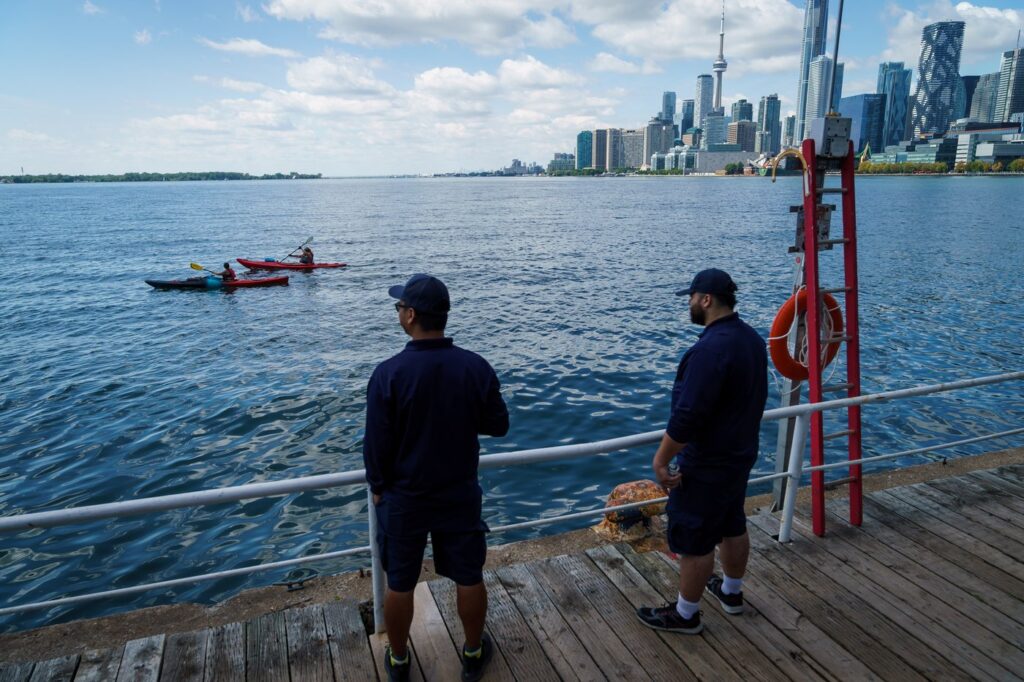
The Associated Press (AP) has declared its intention to continue referring to Lake Ontario by its original name, despite a recent executive order from U.S. President Donald Trump to change it to Lake America. The agency emphasizes the importance of using familiar place names to ensure recognition by a global audience. In its guidance note, AP highlights that Canada will not adhere to this proposed name change, underscoring the unique international nature of geographic identifiers.
According to the note, AP staff are instructed to use Lake Ontario as the primary designation. However, they are also advised to acknowledge and explain the name change suggested by Trump when it is relevant to a story. This approach signifies AP's commitment to journalistic integrity while navigating the complexities of international naming conventions.
The agency points out that there is no singular authority governing the names of international bodies of water. Although Trump holds substantial power over how the U.S. government recognizes geographic locations and landmarks, AP maintains that historical context and public recognition should guide naming conventions. The note lists several other locations where Trump has attempted name alterations through executive order, including the renaming of North America’s tallest peak back to Mount McKinley from its indigenous name, Denali. Additionally, Trump’s suggestion to rename the Gulf of Mexico as the Gulf of America is referenced.
In the case of Mount McKinley, AP acknowledges the name change as it solely pertains to the U.S. domain, where Trump has legitimate authority to modify federal geographic names. Conversely, the agency continues to refer to the Gulf of Mexico, recognizing its shared border between Mexico and the United States, thus emphasizing the collaborative international context.
AP's guidance reinforces the historical significance of Lake Ontario, noting that it has been known by that name for over 400 years. The term 'Ontario' originates from the northern Iroquoian language family, highlighting the indigenous roots of the region. Furthermore, AP illustrates the connection between the lake and the province of Ontario, which in turn derives its name from the lake itself.
This policy of adherence to historically established names reflects a nuanced understanding of geography, culture, and the implications of name changes in a globalized world. The Associated Press seeks to balance governmental authority with historical context and public recognition as it reports on these issues.








