

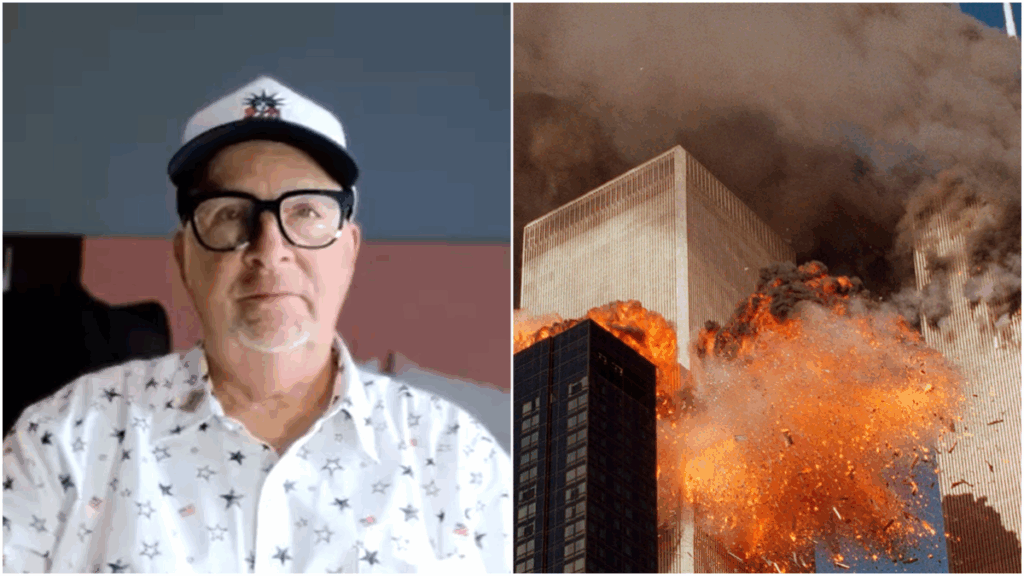
On the 25th anniversary of the September 11 attacks, Joseph Dittmar, a survivor from the South Tower, recounted his harrowing experience during CityNews' coverage of the events that unfolded on that fateful day. Dittmar, who was a commercial underwriting executive from Chicago, found himself on the 105th floor of the South Tower when the first plane struck the North Tower at 8:46 a.m. He was in a windowless conference room with 53 others, where the lights flickered, providing the only indication that a tragedy had occurred.
“We couldn’t see anything. We didn’t hear anything. We didn’t feel anything – just that flicker of lights,” Dittmar recalled in an interview. Just then, a volunteer fire marshal entered the room and insisted on evacuating everyone. Dittmar, who remained skeptical along with his colleagues, was ultimately the last person to exit.
“Fifty-four of us all said the same thing. ‘We’re fine, it’s New York. Stuff happens, don’t worry about it. Let us have our meeting.’ This gentleman was firm and said, ‘Listen, I am a volunteer fire marshal… I can’t leave until all of you leave, and I want to leave,’” he explained, emphasizing the urgency of the situation.

‘We didn’t have a clue’ — the descent begins
After receiving the evacuation order, Dittmar and his colleagues were directed to descend 105 flights of stairs. They quickly realized that their cell phones had no service, as the North Tower was already burning, and they were unaware of the true scale of the attack.
“All of you knew way more of what was going on than any of us that were right there. We didn’t have a clue,” he expressed. Upon reaching the 90th floor, Dittmar and others exited the stairwell against fire-safety protocol and witnessed the unimaginable chaos—flames, aircraft debris, and destruction in the North Tower.
“My first thought was, ‘My God, how did the pilot not see this building?’ He didn’t miss. He did exactly what he intended on doing. An unbelievable, gruesome sight,” Dittmar lamented, before rushing back into the stairwell, frightened and desperate to get home.
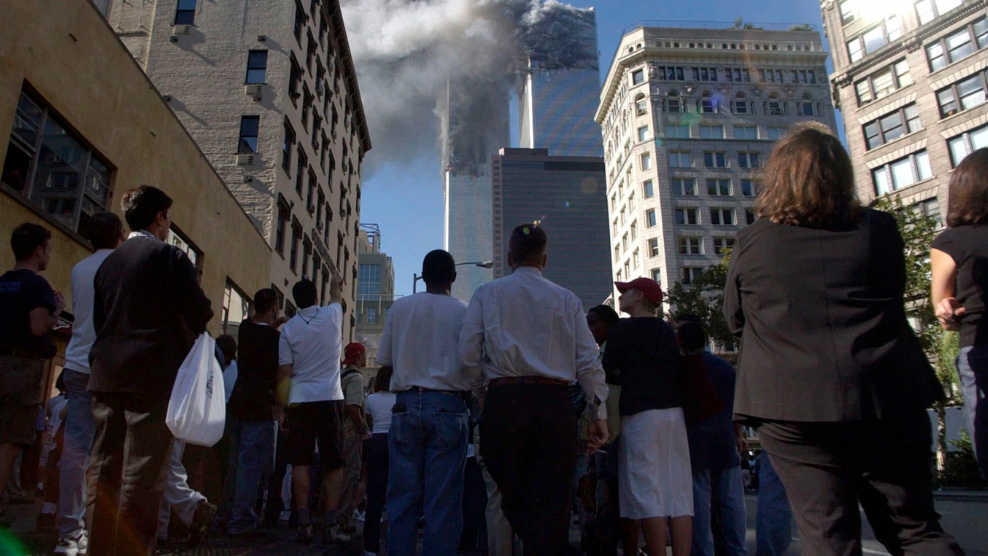
The second plane hits the South Tower
As Dittmar reached the 78th-floor sky lobby, many people were opting to take elevators, but he chose to remain in the stairwell—a decision that ultimately saved his life. While descending, between floors 74 and 72, the second plane struck the South Tower at 9:03 a.m.
“Never felt anything like that in my life. The stairwell was shaking violently… handrails breaking… concrete spidering… steps undulating like waves,” Dittmar recounted. A “heat ball” from the impact passed him, and the smell of jet fuel filled the air.
“Ignorance was bliss. We didn’t know a plane had gone through our building,” he added. Despite the chaos, evacuees continued to help one another on their descent, showing immense bravery in the face of peril. When Dittmar eventually reached the lobby, he was confronted with devastation—twisted steel, crumbled concrete, and distressingly clear signs of the horror outside.
Due to falling debris and bodies, security personnel directed evacuees into the underground concourse for safety. “I’ve never seen such an outpouring of caring and love… firefighters, paramedics, cops everywhere,” he noted. Just eight blocks north, Dittmar heard the ominous sound of the South Tower collapsing.
“You hear this unmistakable sound of twisting steel and crumbling concrete, and this would sound like a freight train just coming at us. That was the South Tower coming to the ground,” he shared, recalling the collective scream of terror from thousands of onlookers on the streets of New York.
Hours later, upon watching the coverage and seeing footage of the plane hitting his tower, Dittmar was overcome with disbelief. “My God, how did I even get out of there? I almost fell to my knees when I saw that because I couldn’t get over the fact that that’s just where I was,” he expressed.
The razor-thin margins of survival
Dittmar recounted that one of his colleagues from the meeting perished after deciding to stop at a restroom on the 90th floor. “That delay and his exiting cost him his life that day. The margins were razor-thin, razor-thin,” he said, attributing his escape to crucial decisions, luck, and what he referred to as “divine providence.”
He expressed deep gratitude for the response from Canada during the crisis, particularly to first responders who traveled to New York and the citizens of Gander, Newfoundland, who sheltered thousands of stranded passengers in the days following the attacks.
“Every ounce of help we got from Canada was greatly appreciated. We can’t have greater friends,” Dittmar asserted. He also acknowledged the sacrifices made by Canadian soldiers who served and lost their lives in Afghanistan after the attacks, stating, “Those who served helped make the world a little bit safer. Their efforts were not in vain.”








