

On Thursday, Canada’s Army implemented a significant structural transformation, transitioning from geographic divisions to purpose-driven ones. This change marks one of the most substantial overhauls in decades, with a focus on enhancing the army's operational capabilities.
The ceremony at Canadian Forces Base (CFB) Edmonton celebrated the establishment of the 1st Canadian Division, which is set to be the principal force for conducting large-scale combat operations and responding to various crises. This maneuver division will consolidate several military capabilities under one command, including tanks, artillery, light infantry, paratroopers, and engineering units.
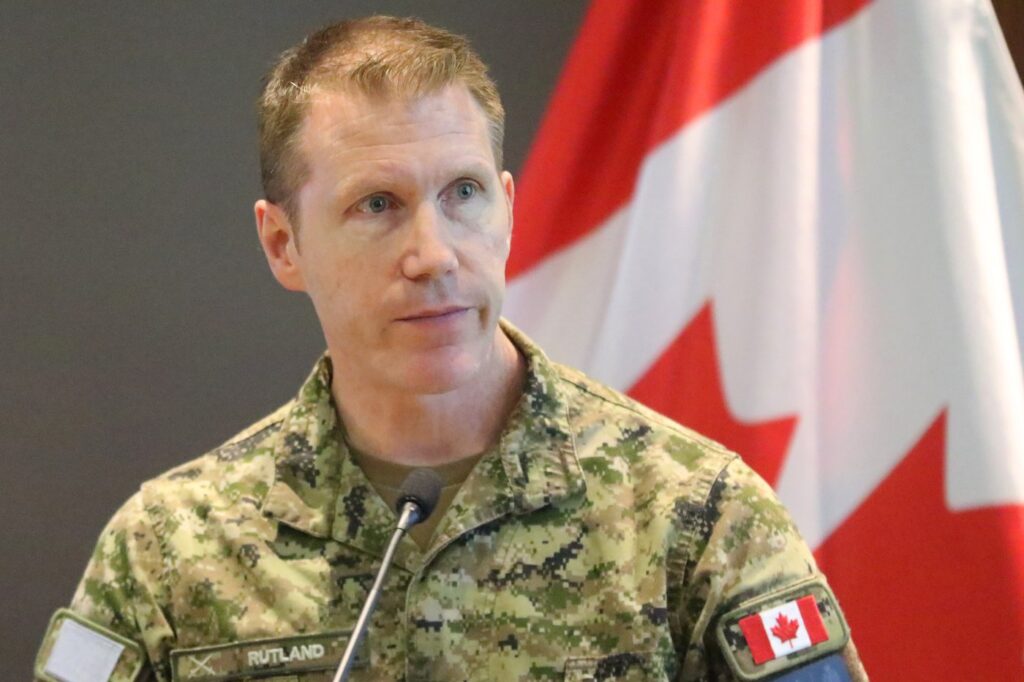
Maj.-Gen. Wade Rutland, the commander of the new 1st Canadian Division, emphasized the importance of this change, stating, "This is a big change. This is not an exercise in restructuring the deck chairs. We’re doing this in order to be more agile, more lethal, more relevant to defend Canada." The restructuring is in response to the evolving global threat environment, which he noted is characterized by a return to large-scale combat operations, referencing the ongoing situation in Ukraine.
Rutland highlighted the necessity of creating what he termed a "war fighting division" capable of mobilizing thousands of troops who can integrate air, cyber, and space capabilities effectively. This proactive approach aims to position Canada as a trusted ally in potential future conflicts. The changes are part of a comprehensive modernization plan articulated by Army Commander Gen. Michael Wright in a 2025 strategy document titled "Inflection Point."
In addition to forming the 1st Canadian Division, the Army is also establishing a support division headquartered in Kingston, Ontario. Furthermore, a "defence of Canada" division, designated as the 2nd Canadian Division, will be based in Montreal. This division will comprise largely part-time soldiers and will focus on national emergencies and domestic defense issues.
The restructuring also involves the retirement of the 3rd Canadian Division, which has its origins in World War I and played a significant role during the 1944 D-Day invasion at Juno Beach. While the 3rd Division will now be placed in the supplementary Order of Battle—remaining administratively active for potential future mobilization—its regular force troops will be integrated into the 1st Canadian Division. Meanwhile, the division's reserves and rangers will join the 2nd Division, and support personnel will be transferred to the newly formed support division.
Under the new organizational structure, the 1st Canadian Division, which itself dates back to 1915 and is historically known for its key role at Vimy Ridge, will oversee three Canadian Mechanized Brigade Groups located in Edmonton, Petawawa, Ontario, and CFB Valcartier in Quebec. Additionally, it will command various support and combat units, including the 3rd Light Infantry Regiment, the Canadian Artillery Brigade, the 6 Canadian Combat Support Brigade, and the 1 Canadian Sustainment Brigade.
Maj.-Gen. Rutland expressed pride in the 1st Division's legacy, noting, "It means a lot to us. You know, the 1st Division was the first one into the fight in the Second World War. They were the first ones in the major combat in Italy and Sicily during the Second World War."








