

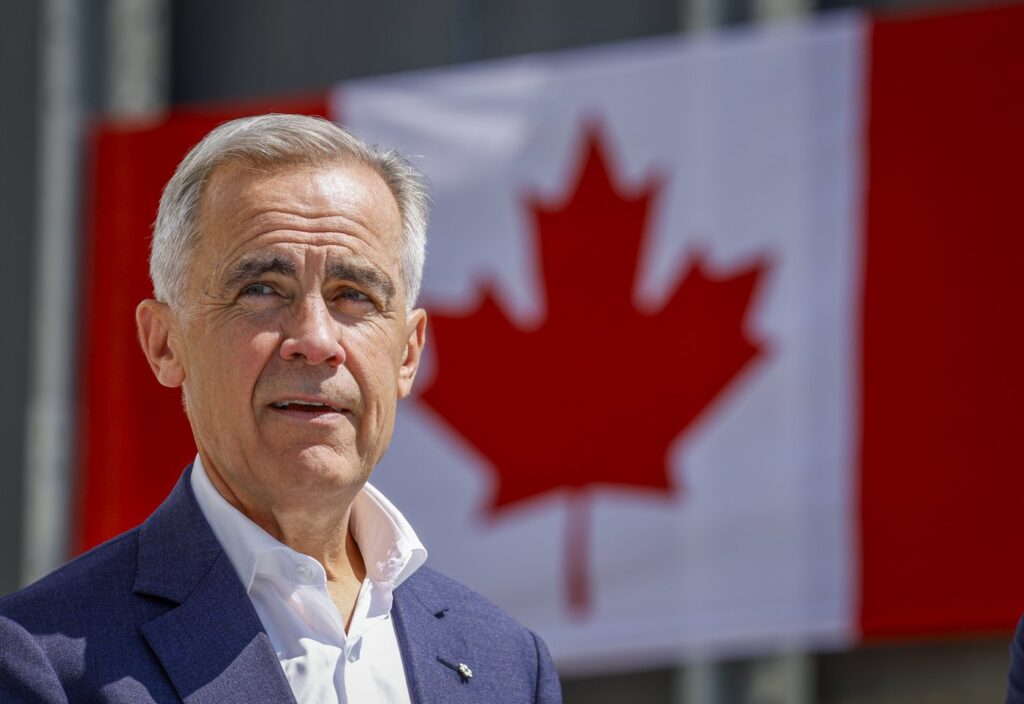
OTTAWA - Prime Minister Mark Carney is set to convene a significant group of wealthy investors in Toronto next week to address Canada’s “Achilles heel” - the ongoing lack of business investment that is adversely affecting the economy. Over the dates of September 14 and 15, hundreds of both global and domestic investors, collectively managing trillions of dollars in assets, will gather at a downtown Toronto hotel for Canada’s inaugural national investment summit.
Attendees will include Carney, cabinet members, provincial premiers, and other Canadian business leaders, all bringing lists of major projects to present to investors. Alberta's Premier, Danielle Smith, will showcase 34 proposed projects, while Saskatchewan's Premier, Scott Moe, will present opportunities within his province’s energy, critical mineral, defense, and agriculture sectors. New Brunswick Premier, Susan Holt, plans to highlight various initiatives, including a port expansion, a data center in Lorneville, and the rehabilitation of the Mactaquac power plant.
This investment summit is a collaboration between the Prime Minister's Office, the Canada Pension Plan Investment Board, and Public Sector Pension Investments, which are among the largest asset managers in Canada. This event represents the realization of the capital-focused agenda that Carney outlined 18 months ago upon his election. Since then, efforts have been made to realign federal policies and budget frameworks to prioritize spending on crucial infrastructure and other significant projects.
Carney has ambitiously set a goal of “catalyzing” $1 trillion in investments in Canada over the next five years. Mahmood Nanji, a fellow at the Ivey School of Business at Western University, noted that the country has experienced a persistent shortage of business investments over the previous decade, contributing to stagnant productivity and sluggish economic growth. “This has been a bit of Canada’s Achilles heel over the last couple of decades,” Nanji stated, emphasizing the significance of this investment initiative as a key component of Carney’s strategy for economic revitalization.
Critics often attribute the shortfall in investments to regulatory burdens, lengthy project approval timelines, and the uncertainty surrounding such processes in Canada. A report released by the CPP Investment Board's Insights arm also examined the perspectives of 65 major asset managers on Canadian investment opportunities. While Canada’s energy sector emerged as an attractive area for investment, it is accompanied by notable risks, including potential policy reversals and regulatory complexities.
The Conservative Party has accused the Liberal government of implementing “anti-development laws” and imposing levies like the industrial carbon price, which they argue hinder the resource extraction and manufacturing sectors. Conversely, the CPP survey revealed Canada’s relative advantages in attracting global capital, particularly its perceived openness and execution capabilities concerning the energy transition. It ranked just behind Singapore for policy stability and predictability, with nearly 70 percent of investors citing these factors as crucial in their investment decisions.
Jeremy Kronick, president and CEO of the C.D. Howe Institute, highlighted several initiatives Carney spearheaded to signal that Canada is “open for business” since he took office in March 2025. These include a major projects office and the One Canadian Economy Act, aimed at expediting approvals for large-scale projects. However, Kronick also pointed out that, while the shift in tone is encouraging, challenges such as interprovincial trade barriers continue to generate regulatory uncertainties.
Political sentiment appears to be shifting favorably towards major projects, as evidenced by July polling from Angus Reid, which indicated wide support for a new pipeline from Alberta to the B.C. coast. Nonetheless, significant projects often attract legal challenges, and Nanji noted the necessity for officials to engage Indigenous stakeholders proactively before making commitments to investors. “There are still risks. They’ve not been eliminated, but they’re not as significant as they were perhaps a decade ago,” he commented.
Interest from external capital is reportedly rejuvenating in Canada, with Statistics Canada indicating that foreign direct investment reached $96.8 billion in 2025, marking the highest level since 2007. BMO chief economist Doug Porter observed that while this influx primarily comprises mergers and acquisitions, the type of greenfield investments sought by summit organizers has yet to materialize fully. He remarked that the foreign investment figures are particularly promising amid the Canada-U.S. trade war, which many anticipated would deter investment inflows.
Experts concur that the recent escalation of the tariff conflict will be a pertinent topic at the summit, although it may not prove detrimental to overall investment prospects. Projects including ports, pipelines, and critical mineral extraction are anticipated to be at the forefront of discussions. Nanji suggested that many opportunities may focus on exporting Canadian goods to markets outside the United States, which could mitigate investor concerns regarding U.S. relations.
In remarks made during a Liberal cabinet retreat in Banff, Carney emphasized Canada’s role as a reliable supplier in an unpredictable global landscape. “Canada is about so much more than being next to the United States. We have what the world wants,” he asserted.








