

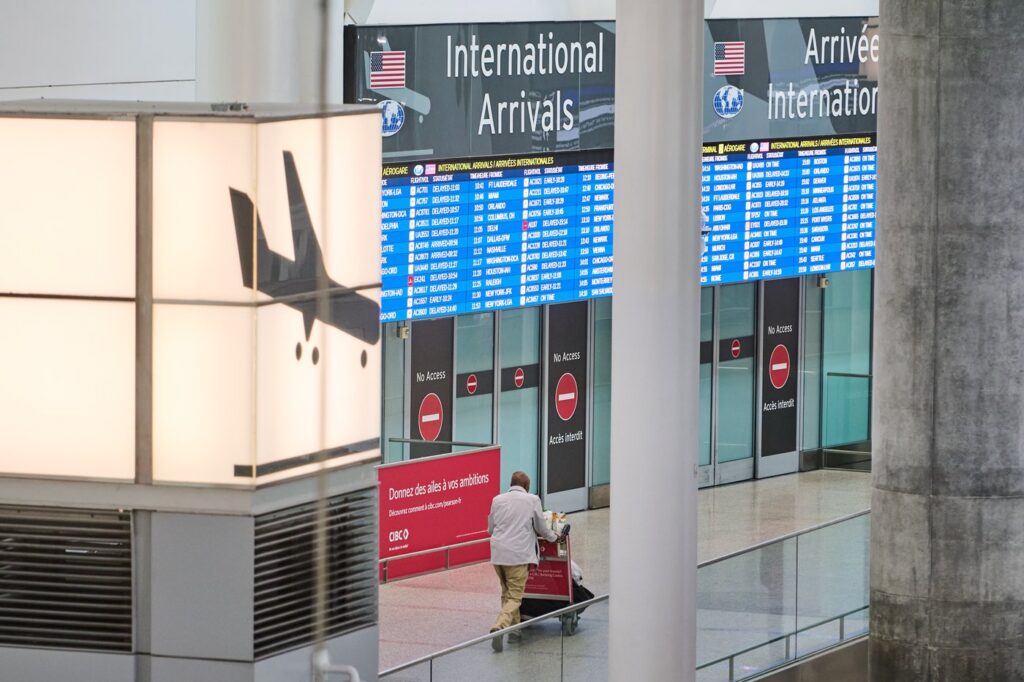
OTTAWA - Prime Minister Mark Carney has announced plans to shift the operations of Canada’s four largest airports—located in Toronto, Montreal, Calgary, and Vancouver—into the hands of private investors. Speaking at a government-led investment summit in Toronto, Carney articulated that this policy change would sustain federal ownership of airport lands and assets while reallocating funds typically directed toward major airports to bolster smaller regional airports. He believes this approach could ultimately lead to a reduction in travel costs at these lesser-known destinations.
Currently, Canada’s airport landscape is managed by private, not-for-profit authorities that lease airports from the federal government. These authorities operate independently, managing everything from runway upkeep to baggage handling, while also being responsible for setting fees and recuperating operating costs. Under Carney's proposed model, private investors would manage the airport operations for specific lease periods, although regulatory oversight would remain the domain of Transport Canada.
Karen Hennessey, a partner in the business law group at Gowling WLG in Ottawa, emphasized that Carney’s plan would likely necessitate legislative amendments. She explained that the prime minister's proposal resembles a concession agreement, akin to a lease, in which government expectations regarding service quality, performance metrics, public safety, passenger costs, and employee management would be key contractual elements. Hennessey noted, “This isn’t going to be the situation where the concessionaire is allowed to just take over and run it the way they would run any other business.” The concession holder would also seek clarity on investment obligations and the prevailing regulatory landscape.
Hennessey remarked that, while such agreements could potentially take shape in six to nine months if both parties are motivated, the process might extend significantly longer. She underscored the significance of establishing the correct structure over the urgency to finalize arrangements, indicating that immediate transference of operations might not occur in the near future.
Globally, the privatization of airports varies, with privately operated airports being uncommon in North America. However, a study published in the Journal of Air Traffic Management revealed that, as of 2018, 51% of the world’s top 100 busiest airports had some form of private sector involvement. Europe leads in privatization with 43%, followed by Asia and the Pacific at 26%. During the summit, Carney highlighted that Canadian pension funds are already invested in international airports, and he aims to harness that expertise domestically.
In a related note, the Australian Competition and Consumer Commission reported that passengers experience price hikes when airports transition to privatization, leading to local monopolies. The commission’s findings suggested that while enhanced infrastructure spending may cause higher fares, customer satisfaction regarding services generally remains high. A 2023 study from the University of Alberta indicated that privately operated airports tended to operate more efficiently, yielding fewer flight cancellations and higher customer satisfaction, albeit with increases in fees—averaging an additional $20 per passenger.
Responses to the proposed privatization have been mixed within Canada. Deborah Flint, CEO of the Greater Toronto Airports Authority, stated that while the public ownership model has benefitted travelers, she is open to “enhancements” that could attract private-sector investment. Monette Pasher, CEO of the Canadian Airports Council, adopted a cautious stance, expressing openness to discussions on investment that would prioritize the affordability of air travel for Canadians.
Opposition parties such as the NDP and Bloc Québécois have voiced firm opposition to the privatization plan, arguing that it would lead to higher costs for travelers. NDP Leader Avi Lewis stated, “We should be making air travel more affordable, protecting good airport jobs and improving public infrastructure, not turning critical public assets into decades-long money printing machines for CEOs and their shareholders.” Conservative Leader Pierre Poilievre expressed the need to review the policy details before forming a conclusion, ensuring that it would not result in advantageous deals for corporate elites at the expense of ordinary Canadians.
This is not the first time airport privatization has been considered in Canada. Former Prime Minister Justin Trudeau’s government initiated a study on privatizing major airports, and a 2016 review suggested that the federal government could auction long-term leases for airports like Toronto Pearson to raise revenue. However, in 2018, following mixed feedback from stakeholders, the federal government decided against pursuing privatization efforts.








