

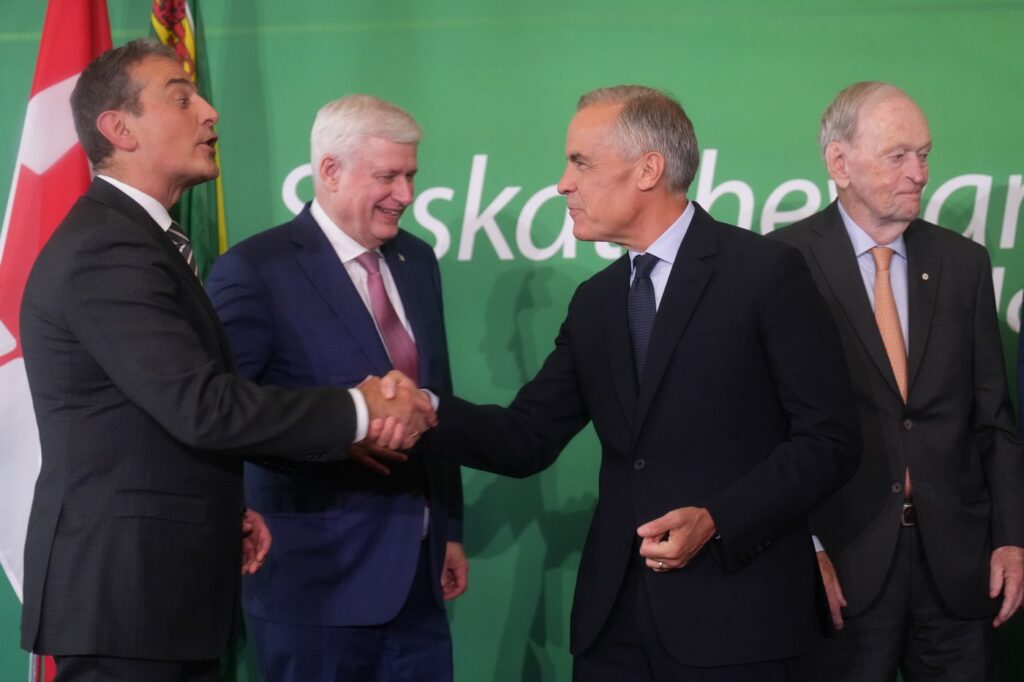
Former Prime Minister Stephen Harper stated that the Canadian government had “no choice” but to withdraw from trade negotiations with the United States. During his closing remarks at Canada's inaugural national investment summit held in Toronto on September 15, 2026, Harper emphasized the necessity of this move, as he believes it is essential for Canada to reduce its economic dependence on the U.S.
Harper argued that the current U.S. administration perceives Canada's economic integration as a threat to its sovereignty. “Thus, to maintain that sovereignty, we must pursue diminished reliance upon the United States,” he mentioned. He urged Canadians to prepare for significant costs associated with this effort, which he believes are necessary for the country's future.
Despite deeming the collapse of the trade talks as “sad,” Harper views it as a chance for Canada to explore new opportunities. The discussions aimed at reaching a new trade agreement with the U.S. broke down in August 2026 after Prime Minister Mark Carney suspended them, citing unacceptable last-minute demands from American negotiators. This decision resulted in the imposition of 50 percent tariffs on billions of dollars worth of Canadian exports by the U.S., prompting Ottawa to retaliate similarly on American products.
At the investment summit, attended by numerous executives and global asset managers, the Carney government aims to attract $1 trillion in new investment over the next five years. Harper expressed concern over the risk of the Trump administration undermining Canada’s industrial capacity and highlighted that Canada has barely tapped into its full potential, especially regarding its natural resources, which he identified as its “special comparative advantage.”
Harper urged Canada to take responsibility for its economic situation instead of blaming external factors. “Today, more than ever, Canada must become more internally competitive, more externally connected, and more truly sovereign than it has been,” he asserted. In his speech, he commended the federal government for its initiatives to expedite approvals for major projects, particularly within the energy sector, but stressed that further action is necessary to alleviate regulatory burdens that inhibit investment.
He warned that if Canada fails to enhance its economic framework, it would continue to rely on the U.S. as its primary market, which would ultimately serve American interests more vigorously than Canada’s. Meanwhile, Conservative Leader Pierre Poilievre expressed his skepticism regarding the investment summit's outcomes, questioning the tangible results of what he called “18 months of speeches, summits, and symbolic signing ceremonies,” pointing out that Canadians are facing rising costs for food, gas, and housing.
In response to the summit's achievements, the Prime Minister's Office announced that the event had established important foundations for new investments and strategic partnerships, resulting in commitments nearing $500 billion. Canada's leading pension funds, insurers, and institutional investors pledged nearly $100 billion in new capital for Canadian assets, while the top banks committed almost $325 billion in fresh financing for Canadian businesses and infrastructure projects.
The event also witnessed announcements of concrete investments, such as the expansion of Bell Canada’s AI data center project in Saskatchewan and Manitoba's decision to waive the provincial sales tax on significant capital spending at the Port of Churchill to draw international investment. When asked about Harper’s participation in the summit, Poilievre reaffirmed that Conservatives prioritize putting Canada first in economic matters.








