

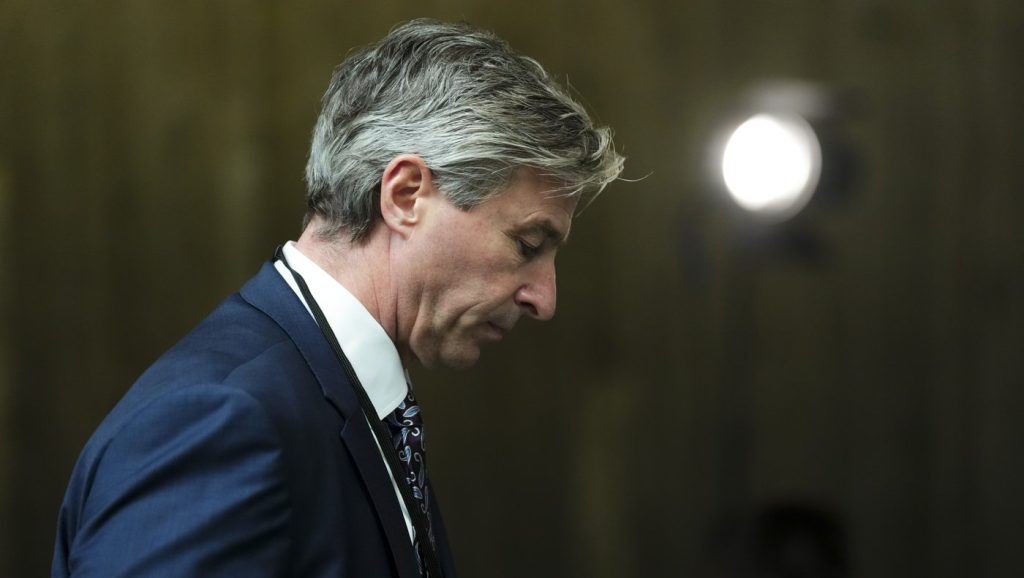
While the ongoing trade war between Canada and the U.S. has positively influenced the approval ratings of some provincial premiers, it has not been sufficient for Nova Scotia Premier Tim Houston to escape the bottom of the rankings, despite a slight improvement. A recent survey conducted by the Angus Reid Institute, released on September 16, 2026, indicates that the approval ratings for Ontario Premier Doug Ford and British Columbia Premier David Eby have increased since June, largely due to their direct and vocal responses to U.S.-related incidents.
The survey reveals that Houston's rating remains precarious, with 55 percent of respondents disapproving of his leadership. According to researchers, "Houston's personal popularity has not recovered from the spring's unpopular provincial budget," highlighting the challenges he faces after restoration of funding to essential services following public backlash against budget cuts.
Earlier this year, Houston faced significant criticism for budgetary decisions that cut approximately $54 million from programs aimed at supporting people with disabilities, seniors, and marginalized communities, including African Nova Scotian and Indigenous students. Intense public protests, including violent confrontations in Wolfville, have plagued his administration, complicating his recovery in popularity.
Despite restoring some funds, frustration over arts and culture cuts, such as museum and library closures, persists among the populace. Houston's standing has seen a slight uptick, reportedly increasing by three points this quarter, but he still ranks low among his peers.
Meanwhile, Doug Ford and David Eby have experienced notable increases in their approval ratings—each seeing a rise of 10 percent, raising Ford's approval to 31 percent and Eby's to 41 percent. Ford has been active in the escalating trade war's rhetoric, initially taking a combative stance against former U.S. President Donald Trump, although he later moderated his tone to promote diplomatic relations.
However, Ford still holds the lowest approval rating among the premiers. The survey attributes this to lingering public discontent from a recent spending scandal involving his government, where 20 Progressive Conservative members were criticized for misusing public funds for hotel stays despite living close by. Despite challenges, both Ford and Eby appear to have gained by positioning themselves firmly during the trade war's escalation, with Eby possibly benefiting from being viewed as a preferable alternative to B.C. Conservative Leader Kerry-Lynne Findlay, who is facing internal party struggles.
Over the broader landscape of Canadian provincial politics, Manitoba Premier Wab Kinew holds the highest approval rating at 63 percent, followed by Newfoundland and Labrador Premier Tony Wakeham and Saskatchewan Premier Scott Moe at 48 percent. Approval for Quebec Premier Christine Fréchette remains steady at 39 percent, while Alberta Premier Danielle Smith's ratings declined slightly to 38 percent amid fallout from a recent by-election defeat and preparations for significant referenda.
The Angus Reid survey was carried out from September 8-15, 2026, using a randomized sample of 4,310 Canadian adults, with margins of error ranging from +/-3% to +/-7%. The data collected provides insight into the fluctuating public sentiment surrounding premier performance during tumultuous economic conditions.
Poll methodology: The Angus Reid Institute conducted an online survey from September 8-15, 2026, among a randomized sample of 4,310 Canadian adults. The provincial margins of error range from +/-3% to +/-7%.








