

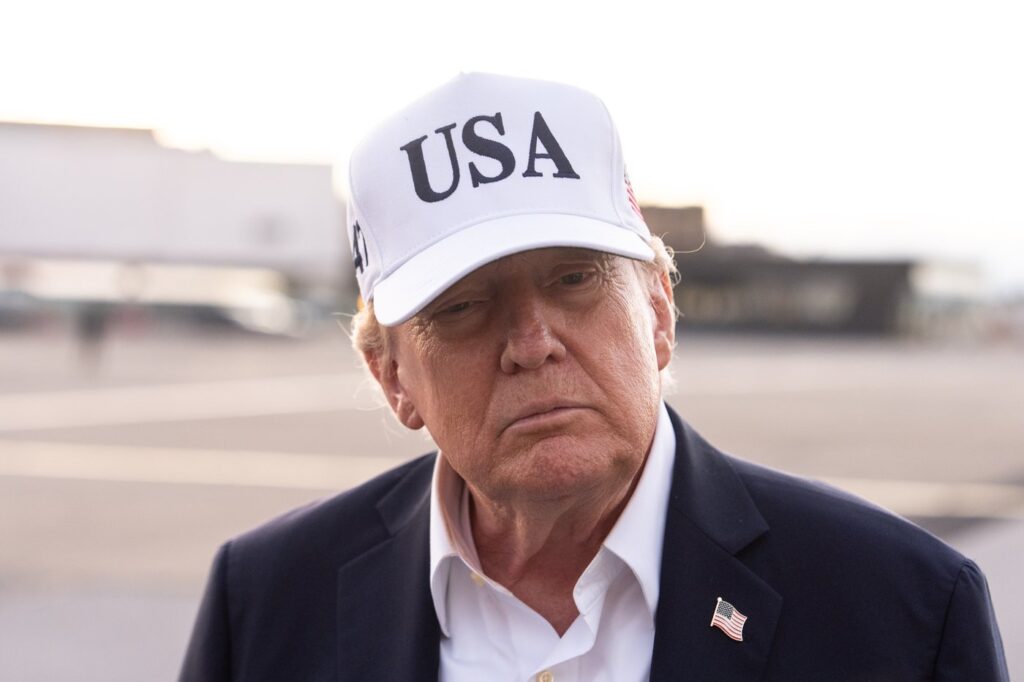
WASHINGTON — U.S. President Donald Trump has once again targeted Canada for its alleged insufficient efforts in combating drug trafficking. However, in a notable development, Canada was not included in the latest annual list of major drug-producing countries, which was released today. This year’s list specifically highlights countries like Afghanistan, China, Colombia, Guatemala, Haiti, and Mexico as key players in global drug production.
In a declaration submitted to Congress, President Trump commended the current administration of Mexican President Claudia Sheinbaum for its initiatives aimed at curbing the inflow of illegal drugs and dismantling drug labs. Despite this acknowledgment, Trump emphasized that both Mexico and Canada must enhance their actions in the war against drugs.
During his remarks, Trump alleged that fentanyl is being manufactured in clandestine laboratories located in Canada and is subsequently smuggled into the United States. He also claimed that Chinese gangs are operating along the U.S.-Canada border, further complicating the drug trafficking situation. This assertion aligns with Trump’s ongoing narrative surrounding the opioid crisis and its connection to cross-border drug inflows.
Data from the U.S. government indicates that the volume of drugs seized at the northern border is significantly lower in comparison to that at the U.S.-Mexico border. This observation raises questions about the extent and veracity of Trump's claims regarding Canada’s role in the drug trade, as the statistics suggest that Canada is not a primary source of the drugs flooding into the U.S.
Trump previously used the fentanyl crisis to justify imposing tariffs on Canada, although these duties were ultimately struck down by the U.S. Supreme Court. His administration has maintained a focus on the ongoing opioid epidemic, which has been a critical issue in U.S. public health discussions, and aims to hold neighboring countries accountable for their contributions to the problem.
The President's comments come at a time when the drug crisis continues to affect countless American communities. His administration’s approach to drug enforcement remains contentious, particularly regarding the complexities of international drug trafficking and the roles different countries play in this illicit trade.
In summary, while Trump's administration paints Canada as a potential threat in the fight against drugs, the statistics challenge the severity of Canada's involvement compared to other nations named in the report. This dynamic presents an ongoing narrative in U.S.-Canada relations and highlights the complexities of addressing the drug crisis faced by the United States.








