

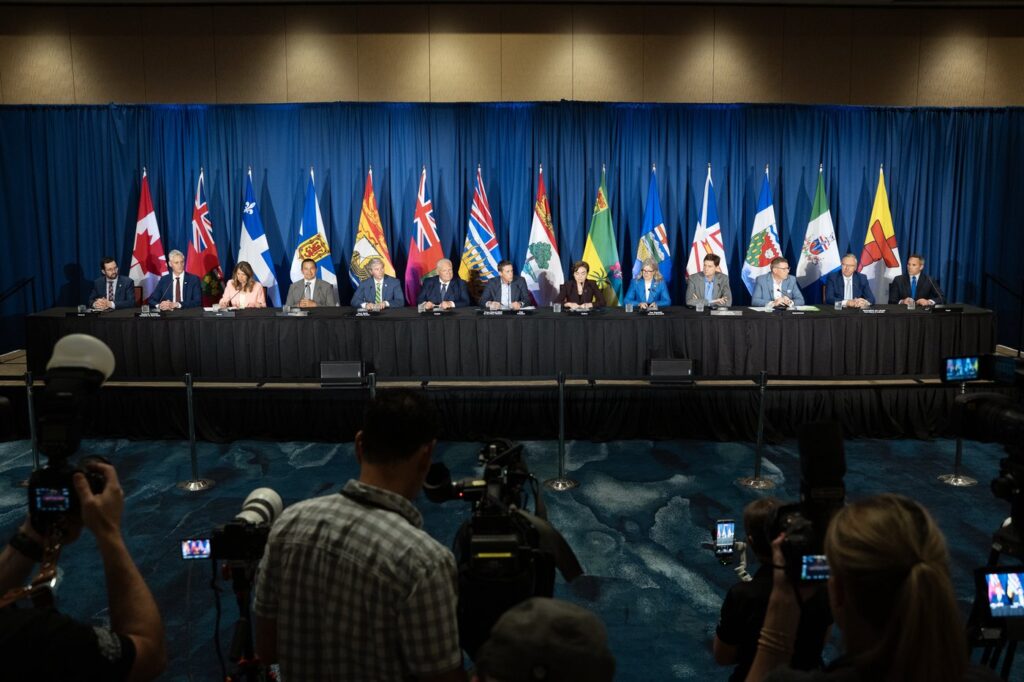
EDMONTON – Alberta Premier Danielle Smith is facing a cautious response from her fellow provincial leaders regarding significant constitutional reforms that she plans to present to Albertans via a referendum set for October 19. Smith's proposals include contentious amendments that could alter the relationship between Alberta and the federal government.
Smith's four major proposals generally aim to reshape Alberta's legal landscape and its relationship with Ottawa. They are to: abolish the Senate, allow Alberta to choose its own King's Bench and Court of Appeal judges rather than relying on federal appointments, permit the province to opt out of federal programs while retaining associated funding, and assert the precedence of provincial laws over federal statutes during jurisdictional disputes. The first proposal, related to abolishing the Senate, requires unanimous support from all provinces and the Senate itself, a prospect Smith acknowledges is unlikely.
Despite the challenges, the Premier's office asserts that there is significant support for the other three proposals among various provinces. Ryan Fournier, a communications adviser to Smith, emphasized that provinces are increasingly frustrated with what they perceive as federal overreach and would appreciate greater autonomy within Canada's federal structure. He stated, "We believe this conversation is a vital step towards a fairer Confederation."
The Canadian Press reached out to several provincial premiers to gauge their support for Smith's proposals, but many chose to remain silent. Some, like Saskatchewan's Premier Scott Moe, outright declined to comment, while others, like Northwest Territories Premier R.J. Simpson, directed the question back to Albertans. Simpson stated, "This is a matter for Albertans to consider through their referendum process." Nunavut Premier John Main noted they are closely observing the referendum's results and mentioned Nunavut's similar resource-focused aspirations. Yukon Premier Currie Dixon expressed anticipation for the referendum outcome but reiterated his hope for Alberta to remain a part of Canada, indicating apprehensions about potential separation.
Constitutional law expert Gerard Kennedy acknowledged that Smith might indeed have enough backing from some provinces, especially concerning the judicial appointments and opting out of federal programs. He highlighted that increased provincial power would likely foster interest among other jurisdictions. However, he also warned that any such attempts might face significant resistance from the federal government, which would be reluctant to relinquish its authority.
In March, Smith, Moe, Ontario Premier Doug Ford, and former Quebec Premier François Legault jointly urged Ottawa to permit provinces to choose their superior and appellate court judges from a pre-approved list. However, Federal Justice Minister Sean Fraser dismissed these propositions, arguing that the existing advisory committees already allow provinces some level of influence over the judicial appointment process.
Kennedy remained skeptical about the feasibility of asserting provincial laws' superiority over federal laws, noting that no other federal systems worldwide operate under such principles. He remarked that constitutional negotiations could lead to complicated dynamics, with provinces leveraging their agendas in exchange for support, causing potential roadblocks for Alberta’s proposals. Kennedy suggested Alberta could pursue amendments that do not require interprovincial agreement, as evidenced by the uncomplicated change in 2001 when Newfoundland's name was modified, although any deviation from equal treatment for provinces could lead to legal challenges.
Despite these discussions, some observers doubt Smith’s commitment to actual constitutional reform. Calgary-based political scientist Duane Bratt expressed concern that the constitutional questions feel secondary to the referendum, overshadowed by Smith's focus on immigration proposals. He noted an apparent absence of energy or emphasis dedicated to the constitutional issues during Smith's campaigns.
Opposition NDP Leader Naheed Nenshi has also criticized Smith's motives, alleging that she seeks new adversaries to blame while showing no genuine interest in resolving constitutional grievances. He implied that Smith anticipated negative responses from other provinces rather than working towards meaningful reform.








