

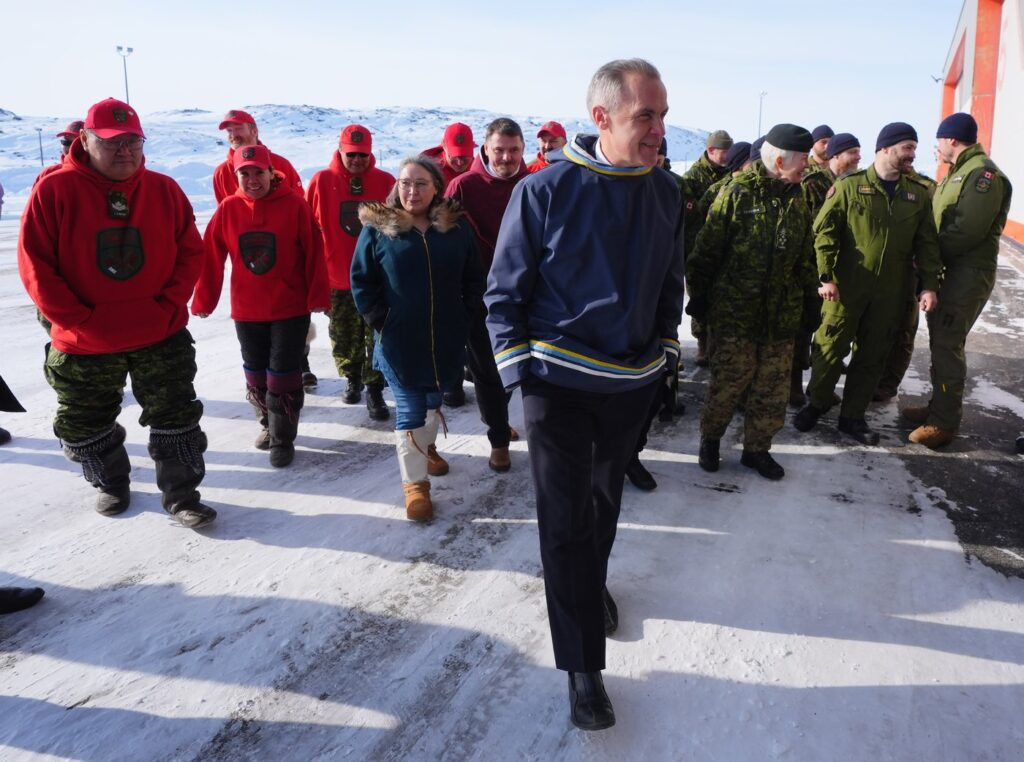
OTTAWA — As Canada embarks on an expansive initiative to enhance defense and economic activities in the Arctic, regional experts are raising concerns about whether the country has sufficient diplomatic resources to foster the desired relationships in the North.
Natan Obed, the president of Inuit Tapiriit Kanatami, emphasized the strategic importance of the Arctic, labeling it a "geopolitical hot spot." He highlighted that Global Affairs Canada lacks substantial expertise in Arctic diplomacy, noting that the department’s bench strength is not robust enough to navigate the complexities of Arctic relations effectively.
The Canadian government, led by Prime Minister Justin Trudeau, made noteworthy decisions regarding Arctic diplomacy in recent years, involving both cuts and reinvestments in staffing and resources. In 2023, the Trudeau administration shut down the Canadian International Arctic Centre (CIAC), which had served as a crucial diplomatic hub within Canada’s embassy in Norway since its inception in 2009. The closure was justified by claims of "high costs in Oslo" and projected annual savings of $550,000. Officials argued that the Arctic team would function more efficiently from Ottawa, especially in developing policies that align with the Biden administration.
Former Ambassador to Oslo, Artur Wilczynski, criticized the closure as "incoherent," asserting the need for a skilled cohort capable of understanding the intricacies of the Arctic region. He emphasized the inadequacy of remote communication methods like Zoom for building substantive relationships in such a complex environment.
In December 2024, the Trudeau government launched a comprehensive Arctic foreign policy aimed at enhancing domestic and international cooperation to combat rising foreign threats. This policy underscores the amplified geopolitical tensions in the Arctic, especially following Russia’s invasion of Ukraine. To support these efforts, Virginia Mearns was appointed as Arctic ambassador last year, and new consulates in Greenland and Alaska were promised as part of the strategy.
Historically, the role of Canadian ambassador for circumpolar affairs was created during Jean Chrétien's administration in 1994 but was discontinued by Stephen Harper in 2004. The release of the recent Arctic policy coincided with various incidents in the region, underscoring the need for increased presence and funding for defense and infrastructure in the North.
In a significant step towards enhancing diplomatic presence, Foreign Affairs Minister Anita Anand inaugurated Canada’s inaugural consulate in Nuuk, Greenland, in February. However, due to limited available facilities, this consulate operates from the Icelandic consulate. Initial estimates pegged the operational costs at $8.76 million over five years, approximately $1.75 million annually. Despite plans for three full-time positions, the current staffing situation is unclear, with only one employee reportedly on site, raising questions about potential budget constraints.
The objectives of Canada’s Arctic diplomacy extend to empowering northern communities, ensuring their interests are represented at international platforms. The Global Arctic Leadership Initiative facilitates this by linking Inuit and northern citizens with international projects, offering them opportunities to engage in global discussions. However, an internal audit by Global Affairs Canada revealed that the closure of CIAC resulted in the loss of vital contacts and expertise, hampering outreach efforts and reducing opportunities for Indigenous and northern participants in international forums.
Experts like Obed stress the importance of addressing the unmet potential in the Arctic and the necessity for more administrative and diplomatic engagement to forge effective connections in the region.
Furthermore, Marc Lanteigne, a political scientist and professor in Norway, noted that Canada’s diplomatic visibility in Nordic countries has improved through larger delegations to events like the annual Arctic Circle assembly. Despite this increased visibility, concerns persist regarding the abrupt rise in international interest following the geopolitical tensions sparked by Donald Trump’s remarks about Greenland. Lanteigne emphasized that Canadian Arctic diplomacy doesn’t require a large diplomatic persona in places like Nuuk and Anchorage; rather, the focus should be on establishing robust relationships with Indigenous communities and various stakeholders engaged in climate research and development.
In conclusion, while Canada is acknowledging the need for increased diplomatic efforts in the Arctic amid rising global attention, experts advocate for a strategic approach that enhances connectivity with local communities and builds upon existing relationships to address the complex challenges facing the region.








