

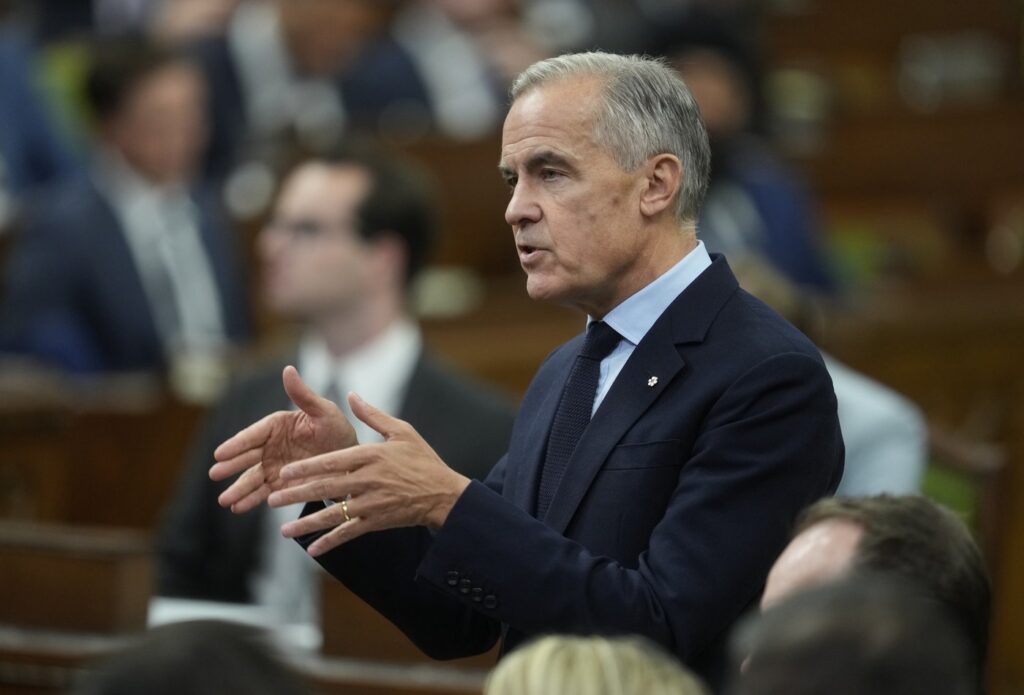
OTTAWA Prime Minister Mark Carney has stated that with Canada's immigration system now under control, the focus is shifting to when the country should initiate a "controlled increase" in its population. This statement came during an interview with the New York Times, coinciding with the impending release of the government's immigration levels plan for the next three years, which is mandated by law.
Carney emphasized the importance of resuming a controlled population growth, asserting, "Now the question starts to become, when do we resume some controlled increase in the population, which is the nature of Canada?" He reiterated his views on the government's responsibility to manage immigration effectively and align it with national capacity.
In July, Carney expressed that the government had successfully "taken back control" of the immigration system after witnessing rapid population growth under Prime Minister Justin Trudeau's administration. Initially, the government intended to ramp up the annual intake of permanent residents to 500,000 people. However, with the new immigration plan for 2024/25, there has been a noticeable shift in strategy, leading to a reduction in the number of admissions.
The administration has also introduced limits on the number of temporary workers and international students entering Canada. These measures were taken in response to concerns that the soaring numbers in these categories were putting pressure on housing, job markets, healthcare, and other essential services. To manage these challenges, the government aims to cap the temporary resident population to five percent of the total population by the end of the next year.
The most recent immigration levels plan outlined an admission target of 385,000 permanent residents for the current year, with subsequent targets of 370,000 for both 2027 and 2028. Despite the overall reduction in targets, the government announced two temporary initiatives that are set to welcome approximately 148,000 additional permanent residents over the next two years, which are not included in the broader annual plan.
According to the C.D. Howe Institute's immigration targets council, which comprises leading academics specializing in immigration policy, the government should continue to lower the number of arrivals over the next three years. Their recommendations suggest admitting 380,000 permanent residents in the coming year, followed by 350,000 in 2028 and 340,000 in 2029.
The council emphasizes the need for a more transparent approach, urging the government to consolidate all permanent resident admissions into a single target number annually. This step is meant to clarify the number of individuals planned for admission in any given year. Additionally, they advocate treating the five percent target for temporary residents as a ceiling, with a more ambitious goal of reducing this population to three percent of the total populace.
Furthermore, the council advocates for improved tracking of work and study permit renewals and the outflows of temporary residents to enhance the management of Canada’s immigration framework. Historically, the Immigration Department has released its immigration levels plan concurrently with the federal budget, and it remains to be seen how these recommendations will influence future policy decisions.
As of the latest update, The Canadian Press has reached out to Lena Diab's office, the Immigration Minister, to ascertain whether considerations for increasing permanent residency will be included in the upcoming levels plan. A response has yet to be obtained.








