

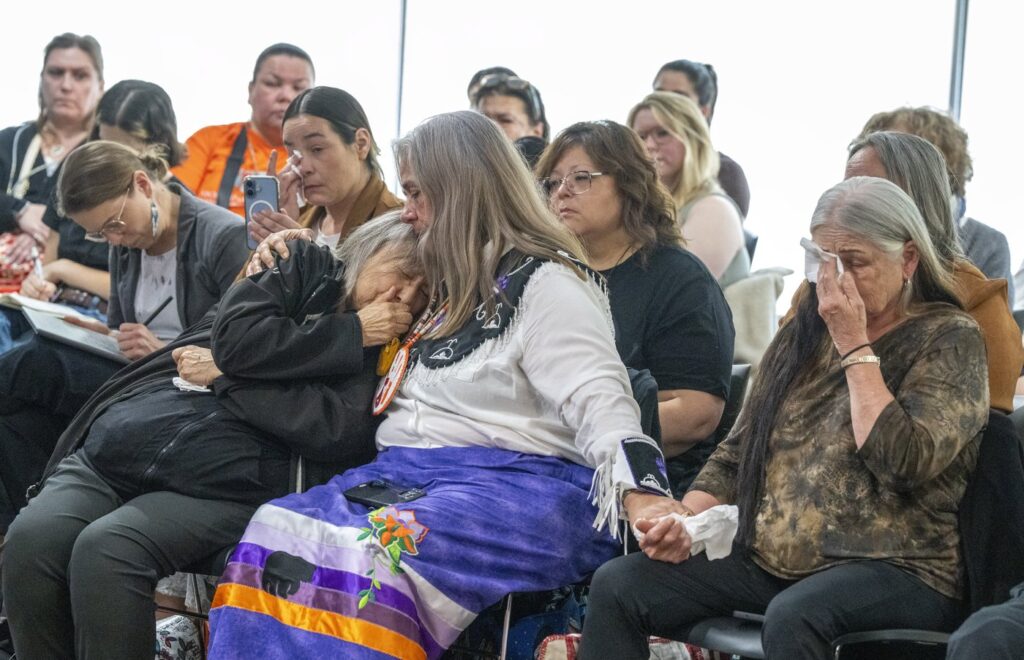
The Permanent Peoples’ Tribunal (PPT) has concluded that Canada is violating international law due to its failure to investigate and prosecute crimes against Indigenous peoples. This ruling was issued Wednesday, coinciding with the sixth annual National Truth and Reconciliation Day. The tribunal emphasized Canada’s "deliberate state of contempt" for its neglect in signing and enforcing major international human rights treaties concerning genocide, enforced disappearances, and apartheid.
Established in 1979 to address crimes against humanity and human rights violations, the PPT's decision follows public hearings conducted in May 2026 in Montreal. The panel highlighted that despite former Prime Minister Justin Trudeau's acknowledgment in 2019 of genocide in the context of the Missing and Murdered Indigenous Women and Girls (MMIWG) National Inquiry, and a subsequent motion passed in the House of Commons in 2022, Canada has seen no substantial accountability or systemic reforms regarding the treatment of Indigenous Peoples.
During a live-streamed announcement, PPT judge Andrew Woolford remarked, "We observe that genocide persists largely not because Canada continuously reiterates a murderous intent towards Indigenous peoples, but rather, the ongoing nature of these prohibited acts reflects persistent and institutionalized relations of genocide, driven by government efforts to maintain the settler status quo." The judges found evidence of Canada's responsibility for various crimes against humanity, including enslavement, forcible transfers, severe deprivation of liberty, torture, and enforced sterilizations, among others.
The 78-page judgment asserts that Canada has failed to fulfill its obligations as outlined by the Truth and Reconciliation Commission (TRC) in 2015. In light of extensive violations of human rights, the judges called upon the state to restore and guarantee victims’ fundamental rights. This includes the imperative to investigate, prosecute, and punish perpetrators while ensuring victims are provided with truth, reparations, and measures to prevent recurrence of such violations.
The tribunal particularly emphasized the need for comprehensive investigations into the deaths and disappearances of approximately 150,000 Indigenous children who were forcibly taken to residential schools and other institutions. It called for reparations for survivors and their families, highlighting that the TRC's findings regarding cultural genocide have been undermined by insufficient criminalization of genocide within Canadian law.
Moreover, the PPT stressed the importance of funding and supporting Indigenous-led investigations into burial sites of residential school victims, in tandem with the TRC's Calls to Action. The judges also underscored the necessity of safeguarding documentation related to historical abuses, including stopping the planned destruction of survivor records slated for 2027.
The tribunal also highlighted the critical issue of forced and coerced sterilization of Indigenous individuals, calling for the federal government to further investigate these practices, implement existing laws against forced sterilization, and amend the Criminal Code to categorize such acts as aggravated assault.
For the MMIWG, the PPT urged the implementation of prior recommendations from various bodies for greater transparency in investigations and unsolved cases, as well as increased funding for Indigenous women's shelters and healthcare. It called for culturally safe training for law enforcement personnel.
In regards to the child welfare system, the tribunal called for significant reforms to address the disproportionate representation of Indigenous children, ensuring culturally appropriate care and preventing family separations. Recommendations included the effective implementation of Jordan’s Principle and the Joyce Principle.
Additionally, the PPT called on governments to improve the living conditions of Indigenous communities through adequate funding for housing, healthcare, and water infrastructure, while respecting treaty rights. The tribunal insisted on recognizing Indigenous sovereignty, condemning the criminalization of land defense efforts, and urged that the Building Canada Act be rescinded. Furthermore, the panel demanded compliance with both Canadian and international legal obligations, including an amendment to the Criminal Code to better define genocide.
Finally, the PPT called upon the Catholic Church to release relevant documents related to the deaths in residential schools it operated and to acknowledge the harm caused to Indigenous peoples due to the Doctrine of Discovery, as well as to return lands previously held by the church to Indigenous communities.








