

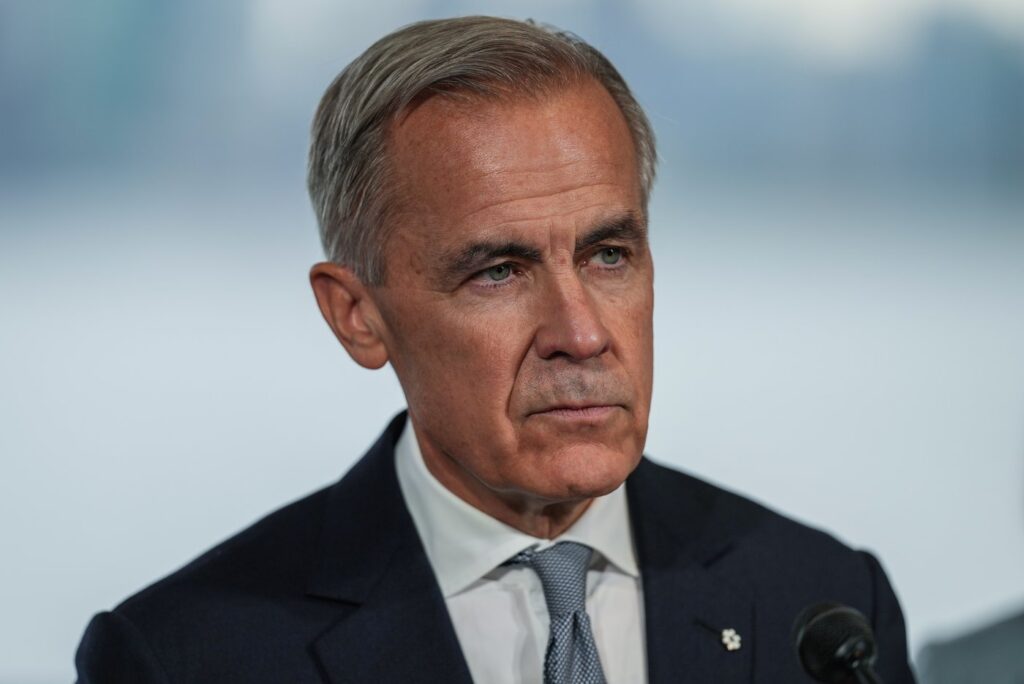
OTTAWA – Prime Minister Mark Carney is set to announce on Thursday that a proposed oil pipeline to the West Coast will be designated as a project of national interest under the Building Canada Act. Carney’s announcement will take place in Fort McMurray, Alberta, alongside Alberta Premier Danielle Smith. This designation marks the first instance since the passing of Bill C-5 over a year ago, which empowers the federal government to impose specific conditions on projects to facilitate their advancement through various federal laws.
In November 2025, a significant energy pact was signed by Ottawa and Alberta, committing the federal government to classify the proposed pipeline from Alberta to the West Coast as a matter of national importance. In May 2026, Carney and Smith established an implementation agreement that outlined an Oct. 1 deadline for deciding on the pipeline’s designation. This agreement also highlighted the interdependence of the pipeline’s construction and the Pathways carbon capture project.
In August 2026, the federal government announced its intentions to move forward with the national interest designation, indicating that Indigenous consultations were already underway. Energy Minister Tim Hodgson expressed optimism, stating that the Major Projects Office is expected to complete its work on schedule for the project to receive its designation timely.
When the pipeline project was first announced in 2025, Carney assured that taxpayers would not bear the financial burden. However, as of now, no private sector entity has emerged to fully finance the project. Pembina Pipeline Corp. is the sole private-sector player, having entered a non-binding agreement earlier this year for a 10 percent stake in the construction phase, with an option for an additional 10 percent interest once the project becomes operational.
The financial burden for the remaining costs will be shared by Ottawa and Alberta through the Trans Mountain Corporation and the Alberta Petroleum Marketing Commission. With the uncertain investment climate, Lance Mortlock, managing partner at EY Canada, pointed out the “chicken and egg” situation surrounding the construction of a significant new pipeline and the associated need for expanded oilsands production to fill the pipeline in the long term.
In recent years, producers have been hesitant to make large investments due to inadequate pipeline infrastructure to transport their oil to market. Mortlock remarked that many producers have been waiting for favorable conditions to evolve. Industry stakeholders welcomed the government’s efforts to streamline the regulatory process, roll back previous environmental policies under Prime Minister Justin Trudeau, and enhance tax incentives for new investments. Smaller-scale pipeline projects aimed at the United States and West Coast are currently in progress.
He added, “We will start to see companies develop large capital projects again. I don’t think we’ll witness the mega mines from a decade ago, but I am confident we will see in situ expansions of 150,000 to 200,000 barrels per day.” This refers to operations utilizing steam with a smaller environmental footprint, highlighting a shift in the industry’s approach to development.
On Tuesday, the partners of the LNG Canada natural gas export facility in Kitimat, British Columbia, made headlines by approving an expansion that will double the facility's capacity. Mortlock expressed optimism for Canada's energy sector, likening the current developments to historic railroads built across the nation and framing these as once-in-a-generation investment opportunities that could define the direction of the country for future generations.
He concluded with a vision for Canada’s potential, stating, “If we play our cards right and make the right trade-off decisions while prioritizing correctly, we will create a strong, independent, and prosperous country for future generations.”








