

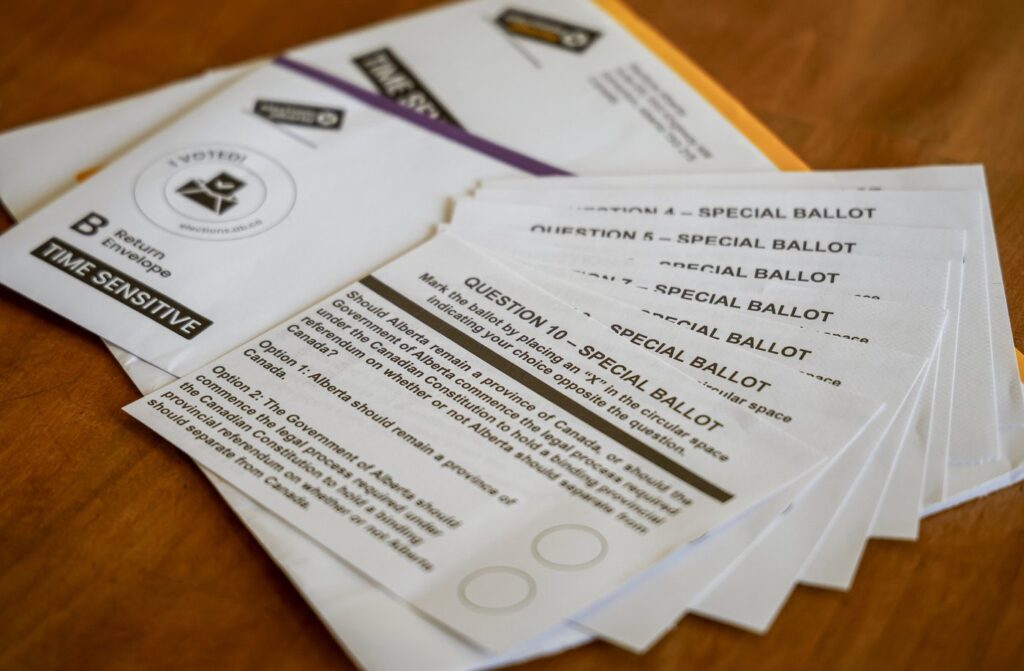
In less than a week, residents of Alberta will head to the polls to cast their votes on a series of 10 referendum questions. One of these questions notably addresses the issue of the province's sovereignty, which has become a focal point in recent political discussions. In the months leading up to this referendum, public support for separation from Canada has noticeably declined. This trend has prompted both current and former politicians to rally Albertans, urging them to rethink the idea of secession.
A prominent figure who has remained relatively silent amid this dialogue is Conservative Leader Pierre Poilievre. While he has participated in several speaking events, his overall engagement in advocating for federalism has not been as pronounced as that of other political leaders. His muted presence raises questions about the impact that his voice could have on the upcoming referendum and the prevailing sentiments regarding Alberta’s position within Canada.
In an analysis of this situation, Caryn Ceolin, the host of a political discussion program, engages with Duane Bratt, a political scientist at Mount Royal University. Their conversation delves into the significance of having a robust Conservative perspective articulated at this critical juncture. The discussion also explores the potential for influencing the opinions of those Albertans who are firmly convinced of their stance regarding the province's autonomy.
This political climate is marked by a confluence of factors, including economic conditions, sentiments about provincial versus federal governance, and the historical context of Alberta's relationship with Ottawa. In recent years, voices advocating for greater provincial autonomy have gained traction, fueled by a perception that Alberta's unique needs are overlooked by the federal government. However, as the referendum approaches, the tide of public opinion appears to be shifting, with many Albertans reconsidering the implications of a separatist movement.
The referendum, set against a backdrop of societal debates and political maneuvering, represents an opportunity for Albertans to express their views. Support for separation has waned significantly, which has not gone unnoticed by political leaders across the spectrum. The discussions surrounding this referendum have brought forth a variety of opinions, with calls for unity and calls for independence coexisting in the public discourse.
As the election date nears, the role of influential political figures like Pierre Poilievre becomes increasingly critical. His involvement, or lack thereof, may very well sway undecided voters who are currently navigating their feelings about the province's sovereignty. The potential for a shift in voting patterns highlights the importance of effective communication from leaders within the Conservative Party, emphasizing the values of federal cooperation and collaboration with the national government.
Ultimately, the referendum poses a significant decision for the people of Alberta, one that may reshape the province's political landscape for years to come. As conversations unfold, voters are challenged to reflect deeply on their identity, their governance preferences, and the implications of their choices. In this climate of uncertainty and potential change, the power of political rhetoric and engagement cannot be underestimated.








