
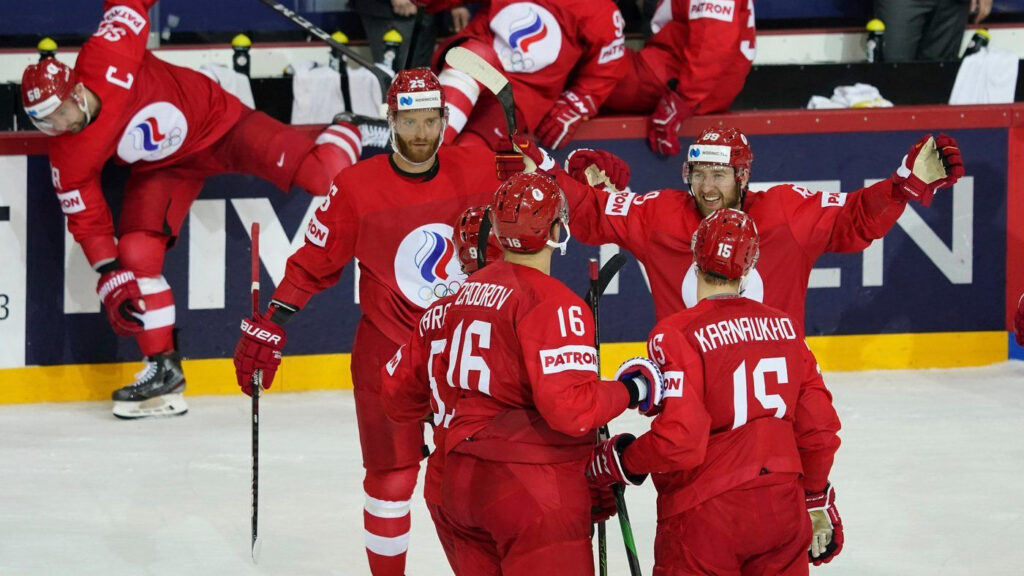
The Court of Arbitration for Sport (CAS) ruled on Friday that Russia must be allowed to return to international ice hockey tournaments, thereby overturning an exclusion that has been in place since its full-scale invasion of Ukraine in 2022. This ruling represents a significant victory for Russia amidst ongoing efforts to bar it from international sports due to the war.
Russian President Vladimir Putin, a prominent ice hockey enthusiast, has participated in exhibition matches with former stars in the past. The CAS ruling specifically reverses decisions made by the International Ice Hockey Federation (IIHF) that previously banned Russia from participating in various events during the 2026-27 season, including the men's and women’s world championships as well as the World Juniors. Consequently, Russia also missed participating in the Olympic tournaments this year.
The return of Russia complicates the logistics of the men's world championship scheduled for next year in Germany, where Ukraine has also qualified. CAS cited a lack of substantial evidence to uphold the IIHF's security concerns, stating that its ruling does not pertain to whether Russia should compete under a neutral banner, similar to other Olympic sports, or other potential organizational issues.
The IIHF expressed its disappointment with the ruling, emphasizing that its previous decisions were made in the interest of the safety and integrity of all participants. Russian Sports Minister Mikhail Degtyaryov noted that CAS recognized the Russian Hockey Federation's demands as justified in key aspects.
New IIHF President Franz Reindl faces immediate challenges following the ruling, especially with the men's world championship poised to take place in Germany. Reindl acknowledged the need to implement the ruling responsibly, as the upcoming championships involve numerous stakeholders including players, teams, organizing committees, and host cities. Meanwhile, German hockey federation chairman Frank H. Lutz reiterated Germany's opposition to Russia's participation, highlighting the significant security, political, and financial implications.
As the draw for the tournament has already been determined, concerns arise regarding how Russia would be integrated back into the competition. Adding an extra team could result in uneven groupings and extend the tournament, whereas displacing a qualified team could provoke backlash, particularly if that team is Ukraine, which has only recently returned to the men's worlds after a 20-year absence.
The Ukrainian Hockey Federation has expressed its disagreement with the ruling, asserting that security concerns have intensified since 2022 but did not specify how it would proceed regarding the world championship. The IIHF has indicated that practical arrangements following the ruling will be decided afterwards.
National hockey federations from Sweden, Finland, and the Czech Republic have expressed their disappointment with the CAS ruling but confirmed that a boycott is not currently being considered. Finland suggested that individual players might opt out of competitions involving Russia. Hockey Canada indicated that the implications of the ruling are still unclear and is in communication with the IIHF for further information.
Russia could potentially make its return at the men's world junior championship set to take place in Canada beginning December 26. The ruling also impacts other upcoming events, including the women's world championship in Canada, slated for November 2027, and several under-18 championships. However, the women's worlds occurring the following week in Denmark will not be affected, as it falls under a different seasonal classification.
Historically, Russia has held impressive achievements in ice hockey, with 27 titles at the men’s worlds, second only to Canada’s 28, while its best result in the women’s worlds is a bronze medal. Since the onset of the invasion, Russia has engaged in exhibition games with developmental squads against neighboring Belarus and Kazakhstan, both of which remain excluded from IIHF events.
Notably, the CAS ruling does not influence the NHL, where officials have stated they would observe the international community's stance regarding Russian participation. As the NHL and its Players' Association prepare for the 2028 World Cup of Hockey, they have separated from the IIHF and national federations in their operations.
The ruling's implications extend beyond hockey, reflecting a broader trend within the Olympic movement regarding the potential reintegration of Russia. Swimming and volleyball have allowed Russian athletes to compete under their national flag, and the International Olympic Committee has relaxed its policies regarding Russian representation at upcoming events.
As Russia continues its pursuit of reinstatement in other sports like soccer and athletics, the sports community remains in a delicate balance of navigating political sensitivities while addressing competitive fairness. Russian officials stress the need for a unified approach in the treatment of athletes across all sports disciplines.